
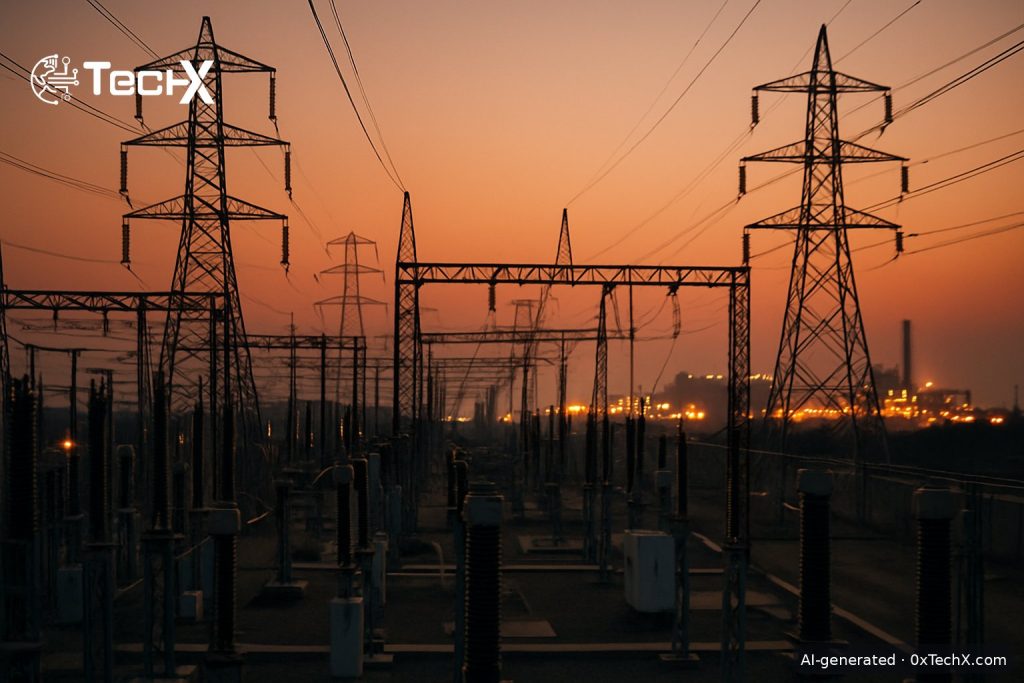
Pakistan’s competitive electricity market has moved from policy paper to real life. On September 20, 2026, the Power Division issued Pakistan’s first-ever Request for Proposal for an electricity wheeling auction, letting large businesses buy power straight from producers. For data centres, cloud hosting operators, and EV charging networks, this is the most important energy policy change in a generation.
What Is the Competitive Electricity Market and How Did We Get Here?
NEPRA approved the CTBCM model back in 2020. The idea was simple: instead of the government buying all electricity and selling it to everyone, large consumers would be free to pick their own supplier. For decades, the single-buyer model served as the backbone of electricity procurement, but it gradually revealed real limits in efficiency, pricing signals, and market responsiveness.
With the achievement of the Commercial Market Operation Date (CMOD) on January 22, 2026, Pakistan formally transitioned from a centrally managed, single-buyer framework towards a competitive electricity market model. Then, in September, the government moved from planning to actual procurement.
The 400 MW Wheeling Auction Explained
The Power Division has issued a Request for Proposal for Pakistan’s first wheeling auction, allowing eligible businesses to purchase electricity from power plants on competitive terms.
Electricity wheeling allows power generated by one producer to reach a consumer through the existing transmission and distribution network. In plain words: a factory or data centre in Lahore can sign a deal with a solar farm in Sindh, and the national grid physically carries that power to them for a fee.
The Power Division has invited proposals for an auction under which 800 megawatts of electricity are planned to be auctioned over the next five years, with 400 megawatts offered in the first phase. Under the first auction, interested participants have been asked to submit their proposals by November 20, 2026.
The Competitive Electricity Market Rules Tech Businesses Must Know
The new mechanism will initially target industrial and large consumers, particularly those with electricity consumption exceeding one megawatt. Most commercial data centres, large web hosting facilities, and fast EV charging hubs already cross this threshold.
NEPRA has set clear pricing. Uniform variable grid charges for consumers range from Rs6.23 to Rs19.62 per unit, depending on the consumer category. Consumers will also pay a fixed grid charge of Rs1 per kW per month based on sanctioned load. More importantly, there is a cost penalty for staying out. Industries and bulk consumers who opt for open access through a competitive wheeling auction will pay much lower grid charges. Those who bypass the auction will have to pay an additional stranded cost of up to Rs16.35 per unit. That penalty is a strong push to participate early.
Potential participants must also register on ISMO’s electronic auction platform to take part in the process. ISMO, the Independent System and Market Operator, is the new government body running the auction. Bid values will have no prescribed upper or lower limit and will remain fixed for one year.
Why This Matters for Data Centres and Cloud Hosting in Pakistan
Electricity is not just a utility for a data centre, it is the single biggest operating cost. Data centres are AI’s infrastructural layer, and that layer runs on power. In Pakistan, high and unpredictable tariffs have slowed investment in local hosting and colocation. The competitive electricity market changes that equation.
Independent power producers are already permitted under CTBCM to sell directly to consumers. Operationalising this for collocated compute would push surplus power straight to data centres, sidestepping politically fraught power purchase agreement renegotiations. A data centre operator that locks in a direct contract with a cheaper renewable producer can predict its power bill for a full year and price its hosting services with real confidence.
The EV sector faces a similar opportunity. Pakistan’s local EV assembly industry is growing fast, the country’s first locally assembled EV, the BYD Sealion 6, recently rolled out of a Pakistan plant. As EV charging networks scale up, electricity costs will determine whether charging stays affordable. A direct supply deal under the competitive electricity market framework could lock in lower rates and reduce dependence on expensive grid electricity.
The competitive market could also encourage the use of renewable energy and battery storage while helping Pakistan make better use of cheaper local energy resources. For hosting companies planning to pitch green credentials to international clients, this is the regulatory door they have been waiting for.
The IMF Connection and What Comes Next
This reform is not just local ambition. The development also fulfils key milestones under Pakistan’s IMF programme, under which approval of the auction guidelines and NEPRA’s uniform wheeling charges had been targeted for completion in late 2025 and January 2026, respectively. That IMF link means the government has a strong reason to keep the process on track and not reverse course.
The model could eventually allow an independent power producer to sign a direct contract with an industrial buyer without requiring the government to enter into another long-term power purchase agreement. That would be a fundamental shift in how Pakistan’s power economy works. The government has also said it will not enter into further traditional electricity procurement agreements as it moves toward the competitive market system.
For Pakistani tech entrepreneurs and investors, the timeline to watch is November 20, 2026, the proposal deadline. Companies that register early on the ISMO platform and study the auction rules will have the best shot at cheaper, more predictable power.
You can find official regulatory updates and auction documents on the NEPRA website.
Frequently Asked Questions
Who can take part in the competitive electricity market auction?
According to NEPRA, the model was designed to give bulk electricity consumers with a load of 1 megawatt or above the option to buy electricity from their distribution company or another competitive supplier. Large industrial users, data centres, and major commercial facilities qualify.
Will ordinary households benefit from this reform?
For household consumers, the change is unlikely to bring an immediate option to select any electricity producer. The first phase focuses entirely on large bulk buyers. Residential benefits, if any, would come later as the market matures and overall system efficiency improves.
What happens if a large consumer does not join the auction?
NEPRA has approved a two-tier structure for Use of System Charges, making it up to Rs16.35 per unit more expensive for large electricity consumers to wheel power without participating in competitive bidding. Staying out of the auction is not free, it comes with a significant financial penalty.
How does this connect to Pakistan’s renewable energy goals?
The competitive electricity market framework aims to ensure transparency, open and non-discriminatory access to the transmission network, and enhanced accountability across the electricity value chain. Because buyers can contract with any licensed producer, including solar and wind farms, the framework naturally favours cheaper renewables over imported-fuel generators.