
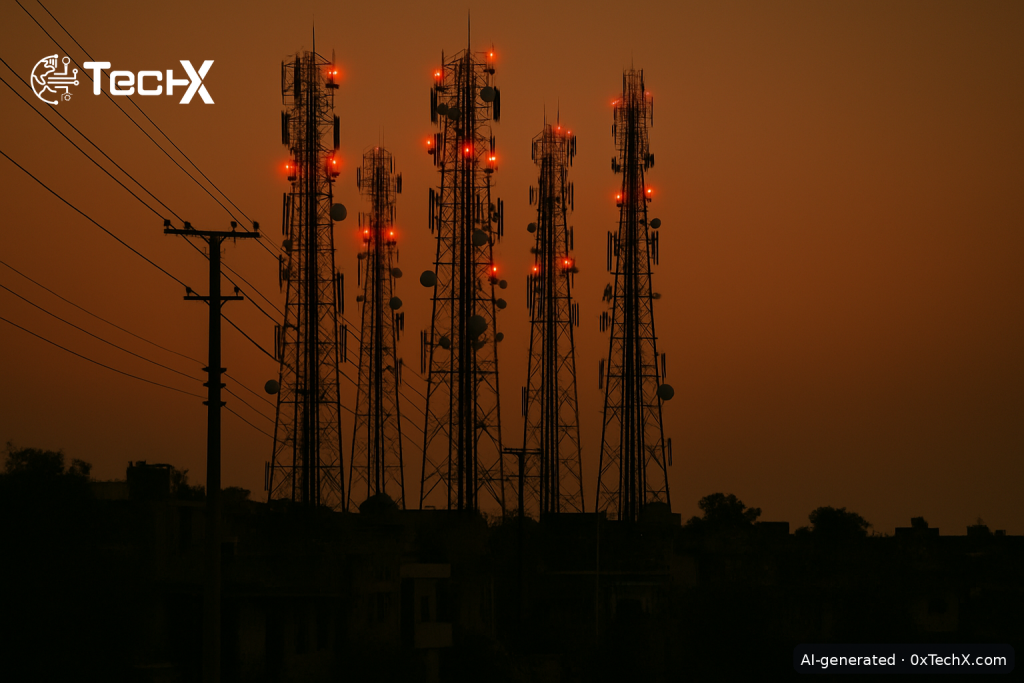
Pakistan’s telecom towers load shedding crisis has finally forced a formal response at the highest level of government. Prime Minister Shehbaz Sharif has constituted a special committee to find a way to keep mobile towers powered around the clock, after the Pakistan Telecommunication Authority (PTA) told parliament that power cuts were directly damaging the country’s network quality and putting the 5G rollout at risk.
What the PTA Told Parliament
Pakistan experienced an average of 10 hours of electricity load shedding in May, while some areas faced outages lasting up to 18 hours. The PTA chairman made these figures public at a meeting of the National Assembly Standing Committee on Information Technology and Telecommunications, where lawmakers were already frustrated about poor internet quality.
Members of the committee said internet problems have become a nationwide concern, extending beyond underserved rural areas to major urban centres, including Karachi. They noted that poor connectivity is disrupting businesses, online education, remote work and everyday communication.
PTA briefed the committee that the total available spectrum in the country previously stood at 274 MHz; however, following the 5G spectrum auction, it has increased to 754 MHz, significantly enhancing network capacity. The problem is that more spectrum means nothing if the towers carrying those signals keep going dark.
Why Telecom Towers Load Shedding Is a Bigger Problem Than It Looks
Most people assume mobile towers just switch to a backup generator when the power goes out. The reality is much worse. Operators are facing up to twelve hours of load shedding daily, which their infrastructure simply cannot absorb. Battery backup at telecom towers cannot sustain operations beyond one to two hours. After that, diesel generators must run.
Diesel is now both expensive and unsafe. Over 9,200 incidents of diesel theft from telecom towers occurred in the past eleven months alone, averaging out to more than 800 incidents per month, roughly 27 every single day. Rising petroleum prices are making this practice prohibitively expensive for operators who were already paying full electricity bills without getting reliable supply in return.
Authorities confirmed that telecom companies are not defaulting on electricity payments and continue to pay their power bills in full. Despite maintaining a 100 percent payment record, telecom operators are still affected by scheduled load shedding.
For the average Pakistani, the result is familiar: dropped calls, slow data, and buffering videos, not because the technology is bad, but because the tower serving your area simply has no power. You can read more about how these network infrastructure gaps are slowing down Pakistan’s digital progress in our earlier coverage of the Pakistan 5G rollout across 22 cities.
Who Is on the Committee and What Will They Decide
The federal government has constituted a committee, headed by the IT secretary, to examine proposals for exempting telecom towers from load shedding. The committee includes the PTA chairman, a member of the National Electric Power Regulatory Authority (NEPRA), and representatives of the Power Division and the telecom industry.
It has been tasked with recommending smart solutions to ensure uninterrupted electricity supply to telecom infrastructure and will submit its report to the federal government within three months.
Three specific ideas are already on the table:
- Express feeders: Telecom towers could be connected to express feeders, dedicated power lines that are exempt from load shedding schedules and maintain a continuous supply even when surrounding areas are cut off.
- Separate supply during cuts: One proposal under consideration is to provide telecom towers with a separate power supply when electricity feeders are switched off.
- Industrial tariff: The committee will also examine the possibility of granting telecom infrastructure an industrial electricity tariff to help improve operational sustainability.
The IT Ministry has also proposed a longer-term fix. Ministry of Information Technology and Telecommunication officials proposed making it mandatory for telecom operators to install solar power systems at tower sites. These measures could help telecom companies save around 10 million litres of fuel annually. That is a significant saving, and it would also cut the diesel theft problem at its root.
The 5G Rollout Is Already Under Pressure
5G has now been launched on 440 towers in Pakistan as part of ongoing efforts to modernize the country’s telecom network. That sounds promising, but it is a small number for a country of 240 million people. Mobile data consumption has increased considerably over the past several years. Pakistan had previously been operating with 274 megahertz of spectrum, and an additional 480 megahertz was auctioned in March. The completion of the spectrum auction means that the next stage is the expansion of the 5G rollout.
But expanding 5G to more cities while towers are going dark for half the day is like building more roads while the petrol stations stay closed. Lawmakers argued that Pakistan’s digital ambitions cannot depend on an unstable power grid. Federal IT Minister Shaza Fatima Khawaja put it plainly: “We request that telecom towers be provided electricity 24 hours a day.” The minister argued that consumers continued to pay for internet services even during power outages and should therefore not lose connectivity because telecom towers lacked electricity.
Pakistan’s telecom sector also faces a separate hurdle in smartphone affordability, which means the users who do get reliable coverage often cannot afford the devices needed to benefit from faster speeds. Both problems need to be fixed together for digital access to actually improve.
What Needs to Happen Next
The committee has three months to report back. What it recommends will matter a lot. Simply writing letters to power distribution companies (DISCOs) has not been enough so far. The Ministry of IT and Telecom previously wrote a formal letter to power distribution companies across Pakistan, directing them to prioritise express feeders for critical telecom infrastructure, yet the outages kept coming.
The PTA is also upgrading how it tracks the problem. The regulator is now collecting network data from operators every 24 hours to identify tower outages. Real-time monitoring means the government will at least know exactly which towers are down and why, giving the committee better evidence to work with.
For ordinary users, the practical test is simple: does your call drop less? Does your video load faster? Until the power problem is fixed, the answer will keep being no, regardless of how many spectrum megahertz are auctioned or how many 5G towers are switched on. You can check the current state of PTA’s network quality reporting and track NEPRA’s actions on the power side at NEPRA’s official site.
Frequently Asked Questions
Why is telecom towers load shedding such a serious problem in Pakistan?
Tower batteries last only one to two hours without grid power. After that, generators need diesel, which is expensive and frequently stolen. When generators fail, towers go offline and users lose calls and data. With 10-hour average daily outages, this is happening to millions of people every day.
What is the PM’s committee supposed to do?
The committee, headed by the IT secretary and including PTA, NEPRA, the Power Division, and telecom industry reps, must recommend concrete steps to ensure towers get uninterrupted electricity. It has three months to submit its report to the federal government.
What solutions are being considered for telecom towers?
Three main options are on the table: connecting towers to express feeders that bypass load shedding, providing separate power during outages, and giving towers an industrial electricity tariff. Solar power at tower sites is also proposed as a long-term fix that could save 10 million litres of fuel per year.
How does load shedding affect the 5G rollout?
5G has launched on 440 towers so far, but rolling it out to more cities is difficult when existing towers keep losing power. Better spectrum and more towers only help users if those towers stay on. The power problem has to be solved before 5G can deliver real, measurable improvements to everyday users.