
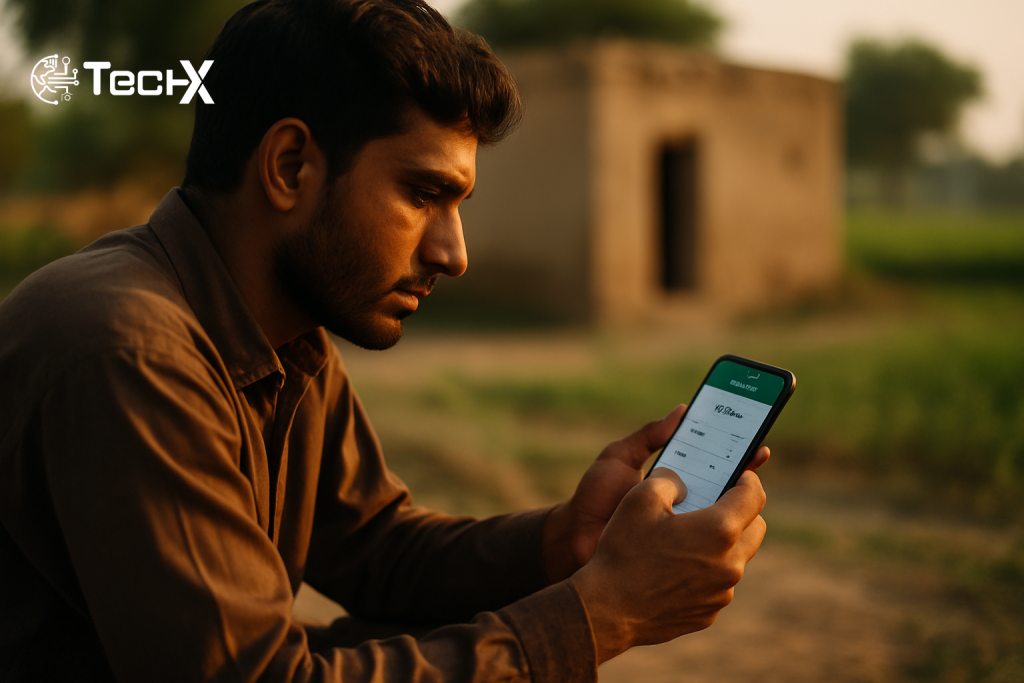
SBP digital banks are now one step closer to reality. The State Bank of Pakistan has granted in-principle approval (IPA) to five new digital retail banks, a landmark move designed to bring more than 100 million unbanked Pakistani adults into the formal financial system using nothing more than a smartphone. The five approved institutions are HugoBank Limited, KT Bank Pakistan Limited, Mashreq Bank Pakistan Limited, Raqami Islamic Digital Bank Limited, and Telenor Microfinance Bank Limited.
Why Pakistan Needs SBP Digital Banks So Badly
Pakistan has a massive banking gap. With over 220 million people, Pakistan holds the third largest unbanked adult population in the world, with roughly 100 million adults holding no bank account at all. That means more than half of Pakistani adults have never saved money in a bank, taken a formal loan, or made a digital payment through a regulated channel.
The reasons are familiar to anyone living outside a big city. Bank branches are few and far between. In 2022, Pakistan had only 10.8 commercial bank branches per 100,000 adults, one of the lowest figures in the region. Opening an account often means a trip to a city office, paperwork, and waiting in line. For a daily-wage worker in rural Punjab or a woman in Balochistan, that is simply not possible.
The good news is that mobile phones are everywhere. Pakistan is fast becoming a mobile-first economy, and mobile and online transactions rose from 17% of all transactions in early 2020 to 75% by September 2024, according to the State Bank of Pakistan. Digital banks are built to ride exactly this wave.
What Is In-Principle Approval and What Comes Next
An in-principle approval, or IPA, is not yet a full banking license. Think of it as a green light to get ready. Under the SBP’s Licensing and Regulatory Framework for Digital Banks, each approved bank must now prove it is fully ready to operate before it can serve real customers.
Here is the process in simple steps:
- IPA stage: The bank builds its technology, risk, compliance, and governance systems. It has 12 months to achieve operational readiness.
- Pilot phase: Once the SBP is satisfied after an on-site inspection, the bank gets a restricted license to run a pilot. This pilot lasts between 3 and 9 months.
- Full commercial launch: After a successful pilot, the bank can open its doors to all customers.
The minimum capital requirement for a Digital Retail Bank starts at PKR 1.5 billion during the pilot phase and rises to PKR 4 billion over a three-year transition period. This keeps the banks financially sound while they grow.
Progress is already happening. easypaisa became Pakistan’s first digital retail bank to receive full commercial approval on January 28, 2025, and Mashreq Pakistan became the first of the five IPA holders to launch pilot operations in January 2025 after reaching over 90% operational readiness.
Who Are the Five Approved Banks
Each of the five SBP digital banks brings something different to the table:
- HugoBank Limited is backed by Getz Bros, Atlas Consolidated, and M&P Pakistan. It is focused on building a full digital banking experience for retail customers.
- KT Bank Pakistan Limited is a joint venture between local giants Fatima Fertilizer and City School, along with Nigerian-origin fintech KudaBank. It has plans to serve farmers and students with tailored financial products.
- Mashreq Bank Pakistan Limited is the Pakistani arm of the UAE-based Mashreq Group. It plans to make SME financing a key part of its business, helping small businesses that struggle to get loans from traditional banks.
- Raqami Islamic Digital Bank Limited is Pakistan’s first Islamic digital bank in this group, offering Shariah-compliant banking to customers who want halal financial products without ever visiting a branch.
- Telenor Microfinance Bank Limited, the parent company of easypaisa, already has 50 million registered users and processed PKR 9.5 trillion in transactions in 2024. It is the most established player of the five.
What Services Will These Banks Offer
These are not simple mobile wallets. As full digital retail banks, they can offer a wide range of services entirely through an app or website:
- Digital savings and current accounts, opened in minutes using a CNIC and a selfie
- Personal loans and credit, assessed using digital data rather than branch visits
- SME and small business financing at lower cost than traditional microfinance
- International remittances for Pakistanis receiving money from abroad
- Debit and credit cards linked to digital accounts
- Digital term deposits and basic wealth management tools
The big promise is lower cost. Because digital banks have no physical branches, their operating costs are far smaller than traditional banks. Experts say managing a digital account can be 80 to 90 percent cheaper than running a traditional branch-based account. Those savings can be passed on to customers through lower fees and cheaper loans.
This matters a lot in Pakistan. The microfinance sector, which has tried to reach the poor for years, still charges very high rates because of its costly brick-and-mortar model. Digital banks could offer credit at much more affordable rates, helping people escape informal moneylenders who charge punishing interest.
The Challenges Ahead
The SBP has been honest about the difficulties. SBP Governor Jameel Ahmad has said that cybersecurity and data privacy are the top concerns. Digital banks will hold sensitive personal and financial data for millions of people, making them attractive targets for hackers. The SBP requires all five banks to invest heavily in security systems before they can launch.
Digital literacy is another hurdle. Many of the 100 million unbanked Pakistanis live in rural areas with limited internet access and little experience using apps for financial tasks. Simply having a good app is not enough. These banks will need to invest in education and simple user interfaces so that a first-time user in a small village can open an account without confusion.
There is also the challenge of trust. Many Pakistanis prefer cash because they do not trust digital systems. Building that trust takes time and a track record of reliable, safe service. The World Bank has noted that financial exclusion in Pakistan is driven not just by access, but by deep-rooted habits and low confidence in formal institutions.
Finally, these banks need deep pockets. Analysts estimate digital banks require upfront investment of more than $50 million, and it can take five to ten years to reach profitability. Investor patience will be key.
If you are already thinking about how to open a digital bank account when these launch, the process for any bank account opening in Pakistan today gives a useful comparison. See our guide to Meezan Bank account opening online to understand what current digital onboarding looks like in Pakistan.
Frequently Asked Questions
What are SBP digital banks?
SBP digital banks are a new category of bank licensed by the State Bank of Pakistan that offers all banking services through an app or website, with no physical branches. They were created under a framework launched in January 2022 to boost financial inclusion in Pakistan.
Which five banks received in-principle approval from the SBP?
The five banks are HugoBank Limited, KT Bank Pakistan Limited, Mashreq Bank Pakistan Limited, Raqami Islamic Digital Bank Limited, and Telenor Microfinance Bank Limited. easypaisa (also under Telenor Microfinance) was the first to receive full commercial approval in January 2025.
When will these digital banks be open to the public?
Each bank must complete a pilot phase of 3 to 9 months after passing the SBP’s operational readiness check. Mashreq Pakistan already launched its pilot in early 2025. Full commercial launches for all five are expected to roll out gradually over 2025 and 2026.
How will digital banks help Pakistan’s unbanked population?
Digital banks remove the need for physical branches, meaning anyone with a smartphone and a CNIC can open an account from home. They can offer savings accounts, loans, and payments at a lower cost than traditional banks, making formal finance accessible to rural residents, women, small farmers, and low-income workers who have been left out of the system.