
Scientists have developed a novel neuromorphic electrical gadget that gives micro robotics colored vision using nanotechnology.
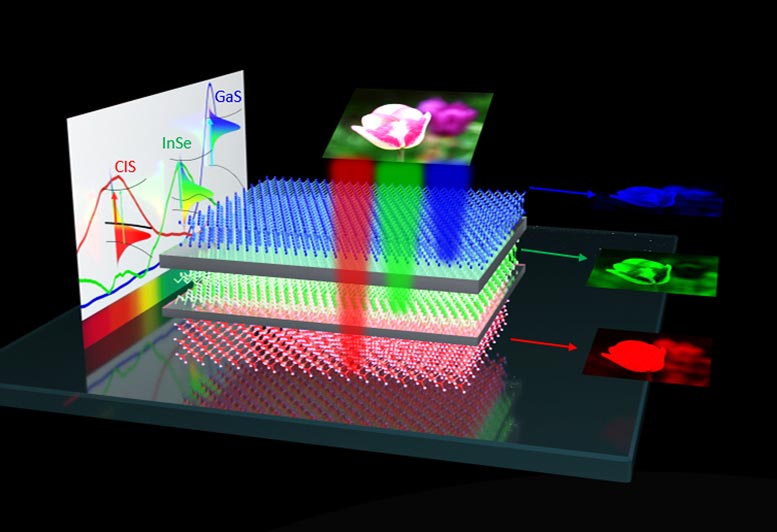
Georgia State University researchers have created a new form of artificial vision device with a novel vertical stacking architecture that enables for higher color recognition depth and micro-level scaling. The new research work was published in the premier journal ACS Nano on April 18, 2022.
“This discovery represents the first step toward our ultimate goal of developing a micro-scale camera for micro robots,” explains lead researcher Sidong Lei, an assistant professor of physics. “With a focus on miniaturization, we demonstrate the basic idea and feasibility of building this new type of image sensor.”
The biomimetic artificial vision system, which employs synthetic methods to replicate biochemical processes, was built using nanotechnology by Lei’s team.
“It is commonly established that vision captures more than 80% of the information in research, business, medicine, and our everyday lives,” he explains. “The ultimate goal of our research is to produce a micro-scale camera for micro robots that can access tight spaces that are now intangible by present means, opening up new possibilities in medical diagnostics, environmental studies, manufacturing, archaeology, and other fields.”
Due of the difficulty of downscaling current color sensor devices, this biomimetic “electronic eye” increases color recognition, the most important vision function. Traditional color sensors have a lateral color sensing channel structure, which takes up a lot of space and results in poor color recognition.
Researchers devised a revolutionary stacking technique that takes a fresh look at hardware design. According to him, the van der Waals semiconductor-empowered vertical color sensing structure has exact color identification capabilities, which simplifies the design of the optical lens system for artificial vision downscaling.
The new design was made possible, according to Ningxin Li, a graduate student at Dr. Lei’s Functional Materials Studio who was part of the study team.
“The rapid growth of van der Waals semiconductors in recent years has all depended on the novel functionality achieved in our image sensor architecture,” explains Li. “We can carefully regulate the van der Waals material band structure, thickness, and other important characteristics to feel the red, green, and blue colors in comparison to traditional semiconductors like silicon.”
To read our blog on “NATO’s eyes in the sky keep Europe out of Russia’s conflict,” click here