
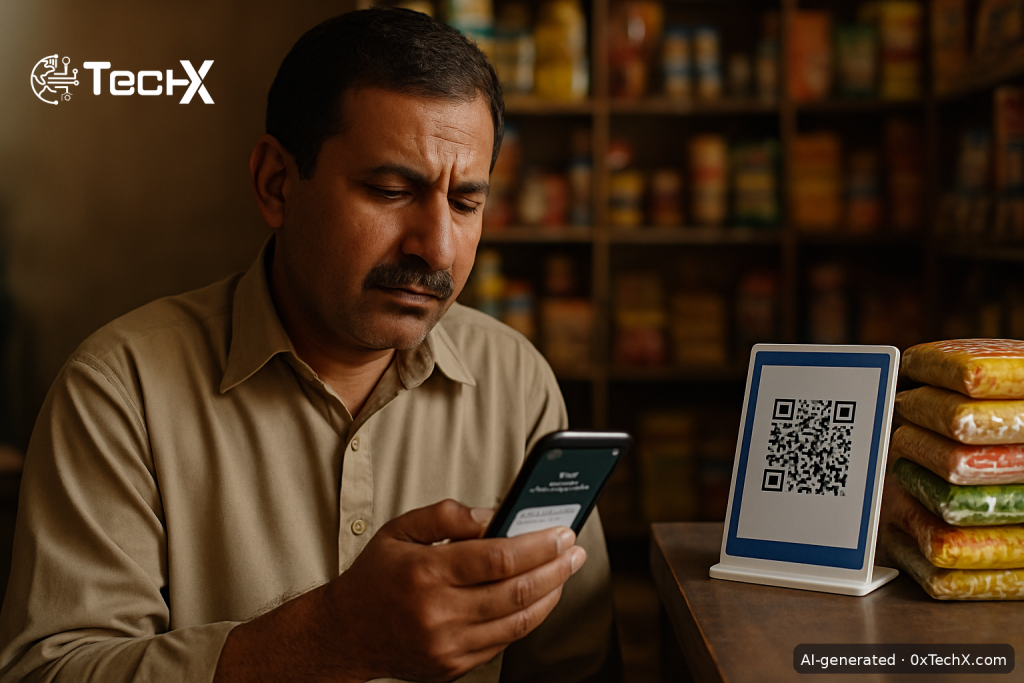
Pakistan’s Raast subsidy model is now at the centre of a serious policy debate. Industry analysts say the government’s Rs3.5 billion annual subsidy for Raast QR merchant payments is a short-term fix, and that banks should instead build revenue by using merchant payment data to offer credit, a move that could make the whole system pay for itself.
What Is the Raast Subsidy Model?
Raast, the State Bank of Pakistan’s instant payment system, was designed to move Pakistan away from cash. It settles payments between people, merchants, and government entities in real time at low cost. The person-to-merchant (P2M) side, where a customer scans a QR code at a shop, is still growing slowly compared to the person-to-person side.
To fix that, the government approved a Rs3.5 billion subsidy covering September 2025 to June 2026. Under the scheme, banks, microfinance banks, and electronic money institutions receive 0.5% of each Raast QR transaction, or Rs100, whichever is lower. They can also charge merchants up to 0.25% for onboarding and servicing. The goal is simple: make it cheaper and easier for merchants to say yes to digital payments.
The Raast subsidy model is part of a three-year government programme, not a one-time payment. The Economic Coordination Committee (ECC) directed the SBP to produce a full impact report for review in July 2026, a deadline that is now here, meaning Pakistan is at a real decision point on how to fund this infrastructure going forward.
Why Experts Are Questioning the Raast Subsidy Model
The core criticism is straightforward. Paying banks from the public treasury to process QR transactions is a temporary solution. Once the subsidy ends or shrinks, what keeps banks motivated to serve small merchants? One industry analyst put it bluntly, calling for the ecosystem to move away from the current Raast subsidy model toward value-based approaches where banks earn by using merchant data for credit scoring, rather than collecting transaction fees covered by the government.
Small retailers are part of the problem too. Even a 0.25% fee on a low-margin sale feels heavy to a kiryana owner. Many merchants encourage customers to use free person-to-person transfers instead of proper P2M QR payments, which means the data needed for credit scoring never gets generated in the first place.
The Credit-Scoring Alternative Explained
Here is the idea that experts are pushing. Every time a merchant accepts a Raast QR payment, that transaction becomes a data point. Every incoming transfer to a business account creates a financial behaviour record. Over time, these records paint a clear picture of a merchant’s revenue, busy seasons, cash flow, and reliability.
Banks can use that picture to offer small business loans. A kiryana store owner who has processed Rs200,000 per month for 12 months through Raast is a far safer lending bet than an applicant with no financial history. This approach turns the Raast subsidy model on its head: instead of the government paying banks to stay on the network, banks stay because the network gives them profitable lending opportunities.
Raast’s P2M network already has over 2.6 million merchants onboarded. QR code merchant payments grew 41% quarter-on-quarter in early 2026, with transaction value surging 63% to Rs0.5 trillion. The data pool is real and growing fast. The Better Than Cash Alliance, which worked with the SBP on a responsible pricing study, has separately recommended a minimum merchant discount rate floor to protect bank unit economics, a sign that even supporters of the subsidy know the current model needs a revenue anchor.
What the Numbers Say About Raast Right Now
The scale of Raast today makes the debate more urgent. The system processed 742 million transactions worth Rs23.27 trillion in just the January-to-March 2026 quarter. Mobile banking and digital wallet registrations have crossed 132 million users, up 37% from a year earlier. Digital channels now account for 92% of all retail payment transactions by volume.
Yet over 85% of Pakistan’s actual transactions still happen in cash. The gap between those two facts shows where the real opportunity lies: millions of small merchants are still outside the formal digital economy, and the subsidy alone has not been enough to pull them in fully. A credit-scoring revenue model would give banks a reason to actively go out and bring those merchants on board, not just wait for the subsidy cheque.
You can read more about how Pakistan’s fintech and payment infrastructure is evolving in our coverage of the Pakistan FinTech Summit in Islamabad, where many of these policy directions are being discussed openly.
The Bigger Risk: Fragile Infrastructure
Analysts also point out that the debate about funding is only part of the story. Even with the subsidy in place, the system’s edges, commercial bank apps and internet connectivity, remain fragile. Internet disruptions cost Pakistan an estimated $1.62 billion in 2024 alone. A self-sustaining revenue model would give banks and payment providers the commercial incentive to invest in making their own networks more reliable, rather than depending on public money to keep the system alive.
Frequently Asked Questions
What is Pakistan’s Raast subsidy model?
It is a government scheme where Rs3.5 billion is paid out to banks, microfinance banks, and electronic money institutions for each Raast QR person-to-merchant transaction they process. The goal is to reduce costs for merchants and encourage digital payment adoption across Pakistan’s retail sector.
Why do analysts want to replace the Raast subsidy model?
Because it relies on public money and may not be sustainable long-term. Critics say banks should instead earn revenue by using the merchant payment data generated on Raast to offer credit and small business loans, a model that would be commercially self-sustaining without government support.
How does merchant credit scoring work through Raast?
Every QR payment a merchant accepts through Raast creates a transaction record. Over months, these records show a merchant’s real revenue and cash flow. Banks can use this data to assess credit risk and offer loans to small businesses that have no traditional credit history, turning payment data into a lending tool.
When will Pakistan decide on the future of the Raast subsidy?
The Economic Coordination Committee directed the SBP to submit a full impact report for review in July 2026. That report is expected to include proposals for modifications, action points, and possible new revenue models for the platform going forward.