
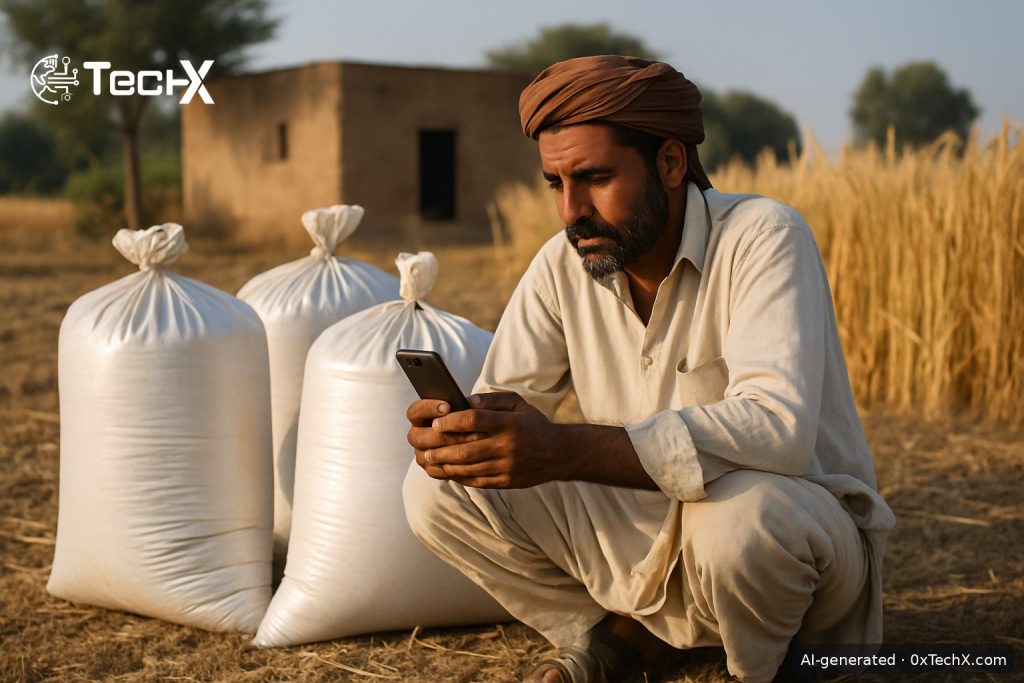
KissanPay agri-fintech launched at the Pakistan Agriculture Connections Expo 2026 as the country’s first platform designed to give farmers instant, interest-free financing against their stored harvests. Built jointly by Kissan Gudam and aik by BankIslami, it lets a smallholder farmer open a bank account and receive funds in minutes, not weeks. The launch was a direct answer to a problem millions of Pakistani farming families know all too well: sell cheap at harvest or wait with no cash in hand.
What Is the KissanPay Agri-Fintech Platform?
KissanPay is built on a model that integrates Kissan Gudam’s warehousing infrastructure and farmer ecosystem with aik by BankIslami’s Banking-as-a-Service (BaaS) framework and Shariah-compliant financing solutions. The two pieces fit together neatly. Together, they create an end-to-end agricultural value chain covering harvest, storage, financing, and liquidity, so farmers can access financing against their stored commodities, effectively converting a warehouse receipt into working capital without being forced into a distress sale at harvest time when prices are typically at their lowest.
The platform can disburse up to 70% of commodity value in 45 minutes via Electronic Warehouse Receipt (EWR). That speed matters enormously. A family that stores wheat or rice in a Kissan Gudam facility can get working capital the same day, pay for the next crop cycle, and sell their stored grain later when market prices recover.
Kissan Gudam is backed by Haji Sons Group, giving the platform a deep agricultural and commercial network to anchor its warehousing and commodity management operations. With aik by BankIslami providing the regulated banking backbone, KissanPay enters the market with both the Islamic finance credentials and the digital infrastructure needed to scale.
Why a Shariah-Compliant Agri-Fintech Gap Existed
Agriculture contributes approximately 24% to Pakistan’s GDP and employs around 37% of its labour force, yet access to formal agricultural financing has historically been limited, expensive, and largely unavailable to smallholder farmers. Many farmers in rural Punjab, Sindh, and KP have long avoided bank loans specifically because of the interest (riba) attached to them. The gap between religious belief and financial need left millions without a practical option.
Even as overall agri lending grew, the Islamic slice stayed small. Agricultural credit disbursement rose nearly 15% during the first nine months of FY2025-26, reaching Rs 2.16 trillion as banks increased financing for farmers and agribusinesses across Pakistan. Yet Islamic banks provided only Rs 181 billion of that total, while microfinance banks extended Rs 209.7 billion, a combined share that falls well short of the sector’s need. Pakistan’s annual agri-credit target sits at Rs 3.06 trillion, and banks achieved just 70.6% of it by March 2026, leaving hundreds of billions of rupees in unmet demand.
Broader Islamic banking is growing fast. Pakistan’s Islamic banking sector is witnessing rapid growth, with assets projected to reach Rs 19 trillion by 2026 as demand for Shariah-compliant financial services continues to surge. Agricultural financing demand has similarly increased as farmers and agribusinesses seek Shariah-compliant financial support. KissanPay agri-fintech steps into exactly that gap.
The rise in Pakistan’s SME financing shows the same trend playing out across small businesses: digital, Shariah-compliant products are pulling previously excluded borrowers into the formal system. KissanPay aims to do the same for the farming community.
How the Launch Went and Who Was There
KissanPay was inaugurated at the Pakistan Agriculture Connections Expo 2026. The event was attended by Saleem Ullah, Deputy Governor of the State Bank of Pakistan, and Ahmed Umair, Coordinator to the Prime Minister on Agriculture and Food Security.
Together, they also disbursed the platform’s first financing to a farmer on the spot, a symbolic but meaningful moment that showed the system works in practice, not just on paper.
Deputy Governor Saleem Ullah congratulated Haji Sons Group and aik by BankIslami and expressed the State Bank’s support for KissanPay, noting that platforms like KissanPay have the potential to be a game changer for agriculture.
Ashfaque Ahmed, Chief Officer at aik by BankIslami, said the future of financial services lies in embedding banking into the ecosystems where economic activity actually takes place, a vision that sums up what KissanPay is trying to do.
The Storage Technology Behind the Platform
What makes KissanPay different from a simple loan app is the physical infrastructure underneath it. Kissan Gudam’s approach combines hermetic storage with digital trading and agri-financing, using technology supplied by US-based GrainPro. Its portable hermetic cocoons can be installed closer to farming communities than conventional warehouses, potentially reducing transportation costs while protecting crop quality and making stored produce more suitable as collateral.
The initiative combines advanced hermetic storage technology, Electronic Warehouse Receipt (EWR)-based financing, digital financial services, and direct market access into a single platform. The partnership aims to reduce post-harvest losses, improve crop quality, enhance market transparency, and bring more farmers into the formal financial system.
The KissanPay app sits on top of all this as a mobile-first financing and wallet tool built for unbanked farmers. A farmer who has never had a bank account can store grain, open an account, and borrow against the stored crop, all from a smartphone.
What It Means for Pakistani Farmers Going Forward
Pakistan’s farming families have long been caught in a trap: harvest comes, prices crash because every farmer sells at once, and those who wait run out of cash. For farmers, KissanPay means turning stored harvests into timely, Shariah-compliant finance, without having to sell under pressure.
With KissanPay, a farmer can go from opening a bank account to receiving financing in minutes, not weeks. That is a real shift in how rural finance works. As the platform scales, it could pull more of Pakistan’s estimated 8 million smallholder farming households into the formal financial system. The State Bank of Pakistan has formally backed the initiative, and BankIslami brings the regulated Islamic banking framework that gives the product both legal standing and religious credibility.
For Pakistan’s tech sector, KissanPay is also a reminder that fintech’s next big frontier is not urban payments. It is rural credit, and doing it right means building both the digital layer and the physical storage backbone that makes lending safe.
Frequently Asked Questions
What is KissanPay?
KissanPay is Pakistan’s first KissanPay agri-fintech platform, launched by Kissan Gudam and aik by BankIslami. It lets farmers store crops in certified warehouses and borrow against them using an Electronic Warehouse Receipt, with all financing structured to be Shariah-compliant and free of interest.
How fast can a farmer get money through KissanPay?
According to Kissan Gudam, the platform can disburse up to 70% of a commodity’s value in around 45 minutes via Electronic Warehouse Receipt. A farmer who is new to banking can open an account and receive financing in minutes rather than the weeks traditional bank loans require.
Is KissanPay finance truly interest-free?
Yes. The financing is structured under aik by BankIslami’s Shariah-compliant Banking-as-a-Service framework, which means it follows Islamic finance principles and does not charge riba (interest). The State Bank of Pakistan was present at the launch and expressed its support for the model.
Which areas of Pakistan does KissanPay currently serve?
The platform launched at a national expo in Lahore and is backed by Kissan Gudam’s warehousing network, which uses portable hermetic storage units that can be placed close to farming communities. The company has not published a specific list of districts yet, but the model is designed to reach farmers in Punjab and other agricultural provinces as the network grows.