
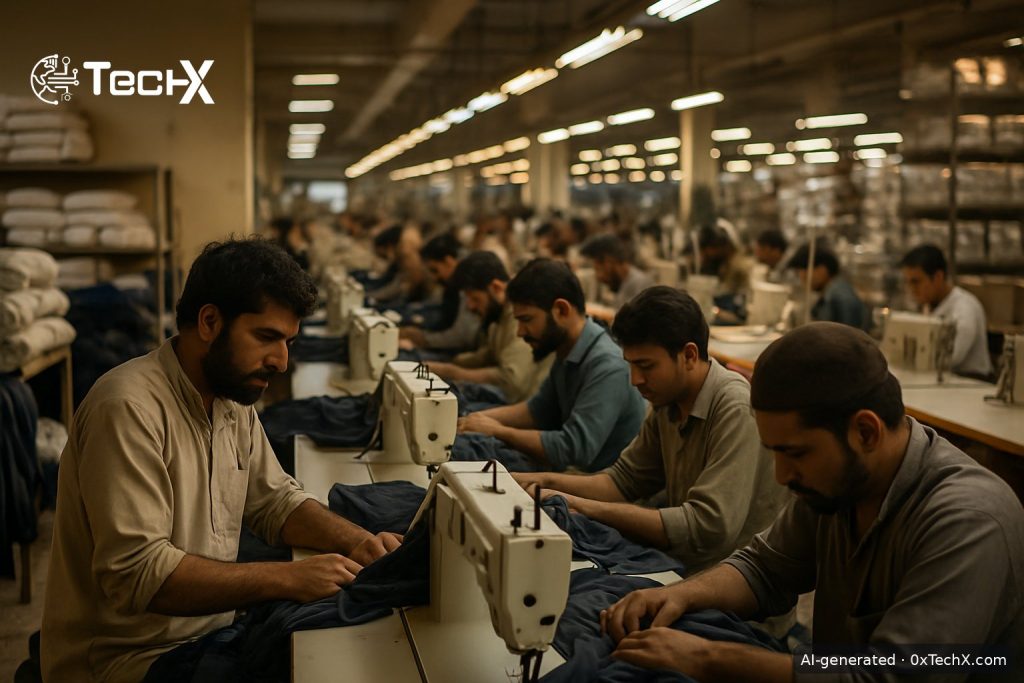
The Punjab industrial export programme got a major green light on 19 October 2026, when the provincial cabinet approved a sweeping plan worth Rs1.995 trillion aimed at creating over 162,000 jobs and pushing Pakistani goods onto global markets. The programme, officially titled PIYUT, is one of the biggest industrial policy moves Punjab has made in years and carries clear implications for the province’s digital economy.
What Is the PIYUT Punjab Industrial Export Programme?
The Punjab cabinet on Monday approved key features of a new industrial development and export promotion programme envisaging investments of Rs1.995 trillion and the creation of more than 162,000 jobs.
The programme was presented by Senior Minister Marriyum Aurangzeb at the 37th meeting of the provincial cabinet, chaired by Chief Minister Maryam Nawaz Sharif, and envisages Rs1.089 trillion from the provincial government and Rs906 billion from the private sector.
The funding split matters. It shows the government wants industry to carry nearly half the load, which signals a public-private partnership model rather than a simple government spending drive. For tech and digital companies in Punjab, that means real doors may open for private players who want to plug into government-backed infrastructure.
Punjab Industrial Export Programme Digital Layer Explained
The part that matters most to tech readers is what sits inside the PIYUT framework beyond factories and farmland. The programme focuses on industrial infrastructure, cluster development, export competitiveness, value-chain transformation, mechanisation in agriculture and livestock, and public-private partnerships. It also includes support for existing industries, e-business, e-commerce, garments, plug-and-play facilities, and testing and certification services for leather, footwear and sports goods.
The explicit mention of e-business and e-commerce is the headline for Pakistan’s digital sector. This is not a vague promise. It sits alongside concrete industrial clusters, which means digital tools, online payment rails, and e-invoicing systems will need to grow alongside physical production capacity. That is a clear opportunity for fintech companies, logistics platforms, and web infrastructure providers.
Material-testing laboratories will also be established for the cutlery, handmade tools, ceramics and fan industries, while export financing will be provided for horticulture and floriculture. These labs and financing lines need digital back-ends, from online certification portals to digital trade financing platforms.
Punjab’s E-Biz Portal Connects Businesses to Government Services
The PIYUT programme does not stand alone. Punjab has been quietly building digital service infrastructure to support it. The Punjab Information Technology Board (PITB) runs an E-Biz programme designed to facilitate businesses, where all services are available through a single portal, enabling businesses to access relevant services on one platform.
PITB has also been expanding digital public services rapidly. Recent PITB moves include signing an MoU with Bookme.pk to expand digital booking services at e-Khidmat Maraakaz and running transparent e-balloting for the CM Punjab Livestock Support Scheme. This pattern shows a government that is layering digital tools onto every major policy initiative it launches, not treating them as an afterthought.
For Pakistani startups and digital businesses, this is a window. A government that is actively expanding its e-services footprint while also pumping nearly Rs2 trillion into industrial growth will need digital payment systems, cloud hosting, cybersecurity, and logistics software at scale. Those needs create real contracts.
Why the Made-in-Pakistan Push Matters for E-Commerce
The provincial government stressed the need to establish a distinct Pakistani identity for locally manufactured goods, saying products made in the province should carry the “Made in Pakistan” label and be introduced to international markets under that identity.
This branding angle is directly linked to e-commerce. Selling “Made in Pakistan” products internationally requires cross-border payment systems, digital storefronts, and export logistics that work. Punjab is betting that if factories get bigger and better, the digital layer will follow. But the reverse is also true: strong digital infrastructure can pull small manufacturers into export markets they could never reach through physical channels alone. This is exactly where fintech tools and hosted e-commerce platforms become strategic, not just convenient. For context on how digital payments are already evolving in Pakistan, see how the Mastercard and BankIslami deal is deepening digital payments across Pakistan.
Other Cabinet Decisions Worth Noting
The cabinet also approved amendments to an air-quality management project to provide electric trucks and anti-smog guns, along with funding for the expansion of public services and development schemes.
Other decisions included the establishment of the Maryam Nawaz Medical College and Teaching Hospital in Mianwali, recruitment of school teaching interns in government schools, and operational arrangements for 1,500 electric buses at tehsil level. These may seem unrelated to tech, but the electric bus fleet alone implies digital ticketing, route management software, and fleet tracking systems, all of which are growth areas for local software companies.
For those following Punjab’s wider digital policy direction, it is also worth noting that the province has been investing in AI skills. ISB recently launched a 32-week fintech and AI programme for finance leaders, which fits neatly into the kind of talent pipeline that a Rs1.995 trillion industrial programme will eventually demand.
What This Means for Pakistani Tech Businesses
The PIYUT Punjab industrial export programme is not purely a manufacturing story. It is a policy signal that Punjab intends to compete globally, and global competition in 2026 runs on digital rails. Businesses that can offer e-commerce platforms, export-facing digital tools, trade finance software, or hosting solutions aligned with industrial clusters should be watching this programme very closely. Government-backed industrial expansion at this scale always pulls private digital investment behind it.
The initiative is expected to support the government’s efforts to improve the visibility of Pakistani products and encourage businesses to explore international markets. Its eventual impact will depend on the scheme’s implementation, the support provided to industries, and the ability of local manufacturers to compete internationally. That caveat is fair. Pakistan has seen ambitious programmes before. Execution and follow-through will determine whether PIYUT becomes a genuine engine for digital and industrial growth or remains a plan on paper.
Frequently Asked Questions
What is the PIYUT programme in Punjab?
PIYUT is the official name for Punjab’s new industrial development and export promotion programme approved by the provincial cabinet on 19 October 2026. It is a Rs1.995 trillion plan covering industrial clusters, e-commerce support, value-chain development, and public-private partnerships, with a target of creating more than 162,000 jobs.
How much of the Punjab industrial export programme comes from government funds?
The provincial government is contributing Rs1.089 trillion, while the private sector is expected to put in Rs906 billion, making the total investment Rs1.995 trillion.
Does the PIYUT programme include digital or e-commerce elements?
Yes. The programme explicitly lists e-business and e-commerce support alongside industrial infrastructure, cluster development, and export competitiveness. Punjab’s E-Biz portal, run by PITB, provides a single digital window for businesses to access government services related to these efforts.
Which industries get the most attention under this programme?
The programme covers a wide range, including leather, footwear, sports goods, garments, horticulture, floriculture, cutlery, handmade tools, ceramics, and fans. Material-testing laboratories and export financing lines are being set up for several of these sectors, with digital certification and e-commerce tools forming part of the support structure.