
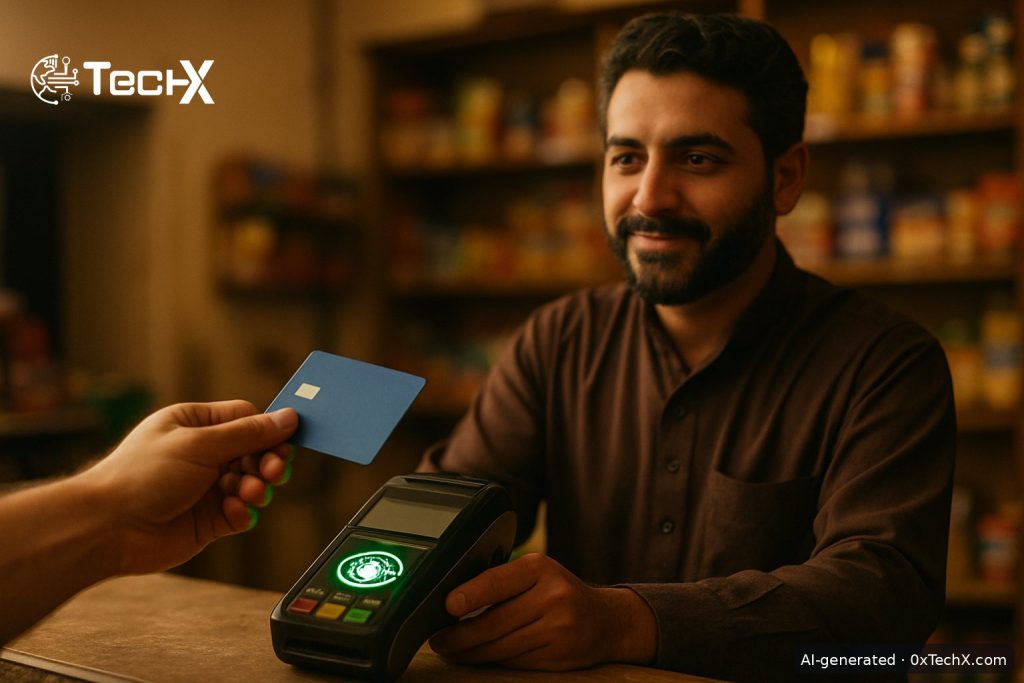
The Mastercard BankIslami digital payments deal, announced on 16 October 2026, brings a new wave of card-based and Shariah-compliant financial tools to Pakistani consumers and businesses. Mastercard and BankIslami have collaborated to expand the bank’s consumer and commercial card offerings and support the continued growth of digital payments in Pakistan. The agreement is one of the most comprehensive Islamic banking card deals seen in the country this year, and it arrives at a time when Pakistan is racing to bring millions of unbanked citizens into the formal economy.
What the Mastercard BankIslami Deal Actually Covers
Under the agreement, BankIslami will develop a broader portfolio of debit, credit, and business card solutions to meet the needs of its diverse customer base, including individual account holders, micro, small and medium-sized enterprises (MSMEs), and commercial clients.
The collaboration includes a priority banking program featuring Mastercard World cards, along with Mastercard World Elite cards for affluent customers. It also covers BankIslami’s Shariah-compliant credit card program for customers across mass-market and affluent segments. In simple terms: whether you are a salaried worker opening your first credit card or a high-income client wanting premium travel benefits, BankIslami now has something built specifically for you through this deal.
For businesses, the picture is equally promising. The bank will expand its Shariah-compliant offerings for corporates and small and medium-sized enterprises through debit cards and Business Payment Controls, helping businesses manage payments and optimise their supply chain processes. This is a detail most coverage has glossed over: Business Payment Controls give company owners tighter spending limits and better visibility over employee card use, something that matters enormously for Pakistan’s 3.2 million-plus registered SMEs.
In addition, Mastercard will support the launch of BankIslami’s unified loyalty platform across its card portfolio, providing customers with a consistent rewards and benefits experience. A single, joined-up rewards programme across all card types is a first for BankIslami and removes the confusion of managing separate points balances.
Why the Islamic Banking Angle Matters for Pakistan
Pakistan is home to one of the world’s largest Muslim populations, and demand for halal financial products is rising fast. Perhaps the most forward-looking element of BankIslami’s strategy is its digital ambition. The bank is positioning itself as Pakistan’s first Islamic digital bank, having already launched the ‘aik’ Digital App, biometric ATMs, and One Touch banking. The Mastercard deal plugs directly into that roadmap, giving the bank a global network partner to back its card products.
Imran H Shaikh, President and CEO of BankIslami, put it plainly. “This collaboration with Mastercard strengthens our ability to provide customers with a broader range of Shariah-compliant card and payment solutions across individual and business banking,” he said. “Our goal is to make Islamic banking the preferred choice for customers by combining Shariah-compliant solutions with the convenience and capabilities they expect from modern digital banking.”
Mastercard’s country head was equally direct. “Mastercard powers commerce by connecting people and businesses through digital payment technology. Working with BankIslami, we are expanding payment options for consumers and small businesses in Pakistan, supporting the bank’s Shariah-compliant card offerings and helping more customers participate in the digital economy,” said Arslan Khan, country manager for Pakistan and Afghanistan at Mastercard.
Part of a Much Bigger Mastercard Push Across Pakistan
What the BankIslami announcement does not spell out is that this deal is the third major bank signing Mastercard has completed in Pakistan in just a few months. Mastercard and Bank of Punjab expanded their partnership to advance digital payments, financial inclusion, and remittances in Pakistan in July 2026. Then, Mastercard and the Bank of Khyber entered into a strategic partnership to expand the bank’s digital payments portfolio in September 2026. Now BankIslami joins that list in October. Together these three deals show Mastercard is systematically signing up Pakistan’s regional and specialist banks, not just the big commercial names, to widen card acceptance across the country.
The urgency behind this strategy is clear when you look at the numbers. Approximately 100 million Pakistanis remain unbanked, representing over 50% of the adult population, according to the World Bank’s Global Findex Database 2021. That is a huge untapped market. In 2022, Pakistan had only 10.8 commercial bank branches per 100,000 adults, one of the lowest ratios in the region. Card-based and mobile digital payments are one of the fastest ways to close that gap without waiting for new branches to open.
What This Means for Ordinary Pakistani Users
For the average Pakistani, three changes are likely to follow from this deal in the months ahead:
- More card choices from an Islamic bank: Customers who want Shariah-compliant products now get a much wider range, from a basic debit card up to a premium World Elite credit card.
- A single loyalty programme: Rewards points earned on a debit card will sit in the same pot as those from a credit card, making it easier to redeem benefits.
- Better tools for small business owners: MSMEs can use Business Payment Controls to set spending rules for employee cards and get cleaner data on where company money is going, a step toward better financial management.
Raast, Pakistan’s first instant payment system launched in 2021, simplified person-to-person and person-to-merchant transactions, offering instant, reliable, and free digital payments for individuals and businesses. Card networks like Mastercard complement Raast by covering international acceptance, merchant point-of-sale machines, and premium credit features that a domestic instant-payment rail alone cannot provide. Together they form the two rails Pakistan needs for a complete digital payments ecosystem.
For a deeper look at how Pakistan is building its broader connectivity infrastructure to support digital finance, see our coverage of how the Pakistan-China Digital Corridor is shifting CPEC 2.0 into tech.
Frequently Asked Questions
What is the Mastercard BankIslami digital payments deal about?
The partnership lets BankIslami offer a wider range of Mastercard-backed debit, credit, and business cards under Shariah-compliant terms. It also adds a unified loyalty platform and Business Payment Controls for corporate clients and MSMEs.
Is BankIslami already a Mastercard partner?
BankIslami already issues Mastercard-branded debit cards, including a Titanium Debit Mastercard with NFC contactless and EMV chip technology. This new agreement significantly broadens that existing relationship into credit, premium, and business card categories.
Who benefits most from this deal?
Three groups benefit directly: individual account holders who want Shariah-compliant credit or premium cards, small and medium business owners who need better payment controls, and affluent customers who gain access to Mastercard World Elite benefits on a halal banking platform.
How does this help Pakistan’s unbanked population?
Broader card portfolios from Islamic banks can reach communities that avoid conventional banking on religious grounds. Mobile money and digital payments offer huge potential to improve lives by enabling low-cost, fast, safe, and easy transactions, addressing access barriers by eliminating the need to go to physical bank branches. BankIslami’s ‘aik’ digital app paired with new Mastercard products gives this segment a credible, values-aligned entry point into formal finance.