
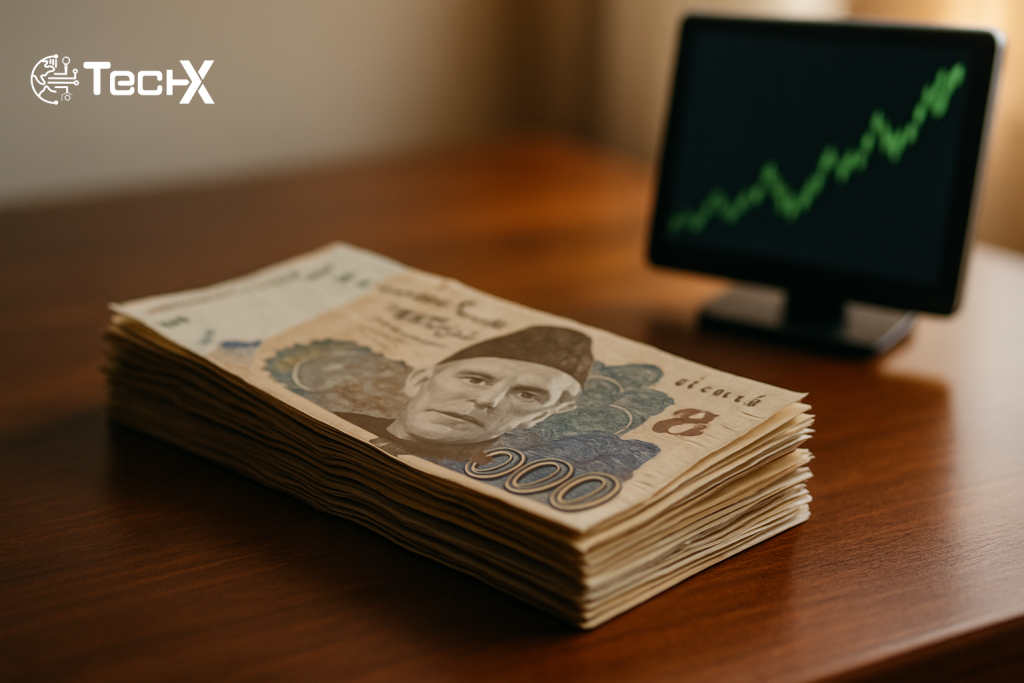
The Pakistani rupee gains against the US dollar have now stretched across six full months, making it one of the longest unbroken currency improvement streaks in Pakistan’s recent history. The rupee has posted a green close every single trading day since December 25, 2025, a run of more than 187 consecutive sessions heading into the last day of June 2026. For ordinary Pakistanis, importers, overseas workers sending money home, and businesses holding dollar debt, this steady march matters in real, everyday terms.
How long have Pakistani rupee gains lasted?
The PKR closed at 278.17 on June 29, 2026, picking up three paisas against the dollar in that session alone. That might sound tiny, but the streak behind it is anything but small. The rupee has been moving upward, day by day, since Christmas 2025, that is well over six months of unbroken green closes on the interbank market. On June 30, 2026, trading was quiet due to a public holiday, with the dollar quoted at a buying rate of 278.95 and a selling rate of 279.40.
To put this in context, the rupee was changing hands at around 280 per dollar at the very start of 2026. Since then, it has slowly but steadily firmed up, reaching below 278 at its strongest point in recent weeks. Over the past 12 months, the PKR has strengthened by roughly 1.97 percent against the dollar, modest in percentage terms, but the consistency of the move is what stands out.
What is driving the Pakistani rupee gains?
Several factors have come together to support the rupee over this period. No single reason explains everything, but the combination has been strong enough to keep the currency in positive territory day after day.
A steadier current account
Pakistan’s current account, the broad measure of money flowing in and out of the country for trade and services, was broadly balanced over the first nine months of financial year 2026. That means Pakistan is not burning through dollars to pay for more imports than it earns from exports and other inflows. A balanced current account removes a lot of the everyday pressure on the rupee.
Remittance inflows have also stayed strong. Overseas Pakistanis sending money home from the Gulf, the UK, and elsewhere keep pumping dollars into the banking system. This steady supply of foreign currency helps the Pakistani rupee gains hold firm. You can track official remittance and reserve data at the State Bank of Pakistan website.
Falling oil prices
Pakistan imports a large amount of oil. When global oil prices fall, Pakistan’s import bill shrinks. This means fewer dollars are needed to pay for fuel, which reduces the demand for dollars in the market and takes pressure off the rupee. Lower commodity prices globally have helped contain Pakistan’s overall import costs, giving the external balance room to stay in good shape.
IMF programme discipline
Pakistan is on a loan programme with the International Monetary Fund. Staying on track with IMF targets has helped build confidence among investors and lenders. Pakistan met all seven key quantitative targets set by the IMF for the end of December 2025, a sign that the government and the central bank are sticking to agreed fiscal and monetary rules. That kind of discipline reassures markets and supports the currency.
The State Bank of Pakistan (SBP) held its policy interest rate at 10.5 percent in January 2026, with the central bank’s monetary policy committee noting a notable improvement in Pakistan’s growth outlook. A stable interest rate, combined with falling inflation, has helped keep the currency environment calm.
SBP reserve building
Pakistan’s foreign exchange reserves have been rebuilt from very low levels over the past two years. With reserves projected to rise toward around $18 billion by June 2026, the SBP has more capacity to manage the market and prevent sudden swings. Stronger reserves act as a buffer, and markets know that the central bank can step in if the rupee comes under sharp pressure.
What does this mean for Pakistani people?
A firmer rupee has clear benefits for everyday life. Imports become cheaper, which helps keep prices of goods, from medicine to electronics, from rising too fast. For people paying back loans taken in dollars or sending children abroad to study, a stronger rupee means lower costs in local currency terms.
For Pakistan’s large community of overseas workers, a stronger rupee means the dollars they send home buy slightly fewer rupees for their families. This is the one area where a firmer currency is a mixed blessing, but the difference over this slow, gradual move has been small enough that remittances have continued flowing in at healthy levels.
Businesses that import raw materials also benefit from lower costs when the rupee is stronger. This can help keep inflation down, which is especially important given how high prices rose in Pakistan over the past few years.
The SBP’s push to bring more Pakistanis into the formal financial system also plays a role here. If you are curious about how digital banking is expanding access to financial services in Pakistan, the story of SBP digital banks getting the go-ahead to serve Pakistan’s 100 million unbanked explains how more people are being connected to the formal rupee economy.
Will the Pakistani rupee gains continue?
Currency markets are never easy to predict. Experts note that while short-term stability is visible, Pakistan’s currency market stays sensitive to global trends, domestic inflation, and the external account position. The gradual forward rate premiums seen in the market suggest that traders expect some mild depreciation pressure over the coming year, which is normal for a country with a higher inflation rate than its trading partners.
One key risk to watch is the cost of imports. If the rupee were to weaken, even a moderate drop of around 5 percent could add 1 to 2 percentage points to consumer prices over the following year. The SBP has made clear it will not let inflation return to the double-digit levels seen in 2023 and 2024, so any sharp move in the rupee would likely draw a policy response.
For now, the conditions that have kept the Pakistani rupee gains alive, a balanced current account, solid remittances, falling oil prices, and IMF programme credibility, remain in place. Whether this streak continues into the second half of 2026 will depend on how these forces develop, and on any surprises from global markets.
Frequently Asked Questions
How many days has the rupee been gaining against the dollar?
As of June 29, 2026, the PKR had posted gains against the US dollar for 187 consecutive trading days. The streak started on December 25, 2025, making it more than six months of unbroken daily gains.
What is the current USD to PKR rate?
The rupee was trading at around 278 to 279 per dollar in late June 2026. On June 30, with markets quiet due to a public holiday, the dollar was quoted at a buying rate of 278.95 and a selling rate of 279.40 in the open market.
Why are Pakistani rupee gains happening now?
The main reasons are a broadly balanced current account, strong remittance inflows, falling global oil prices that reduce the import bill, and the discipline of Pakistan’s ongoing IMF loan programme. These factors together have kept dollar supply steady and reduced pressure on the rupee.
Is a stronger rupee always good for Pakistan?
Mostly yes, but not entirely. A stronger rupee lowers the cost of imports, helps control inflation, and reduces the local-currency cost of dollar-denominated debts. However, it can make Pakistani exports slightly less competitive in price terms, and overseas workers sending money home get fewer rupees for their dollars. On balance, most economists see the current gradual strengthening as a positive sign for economic stability.