
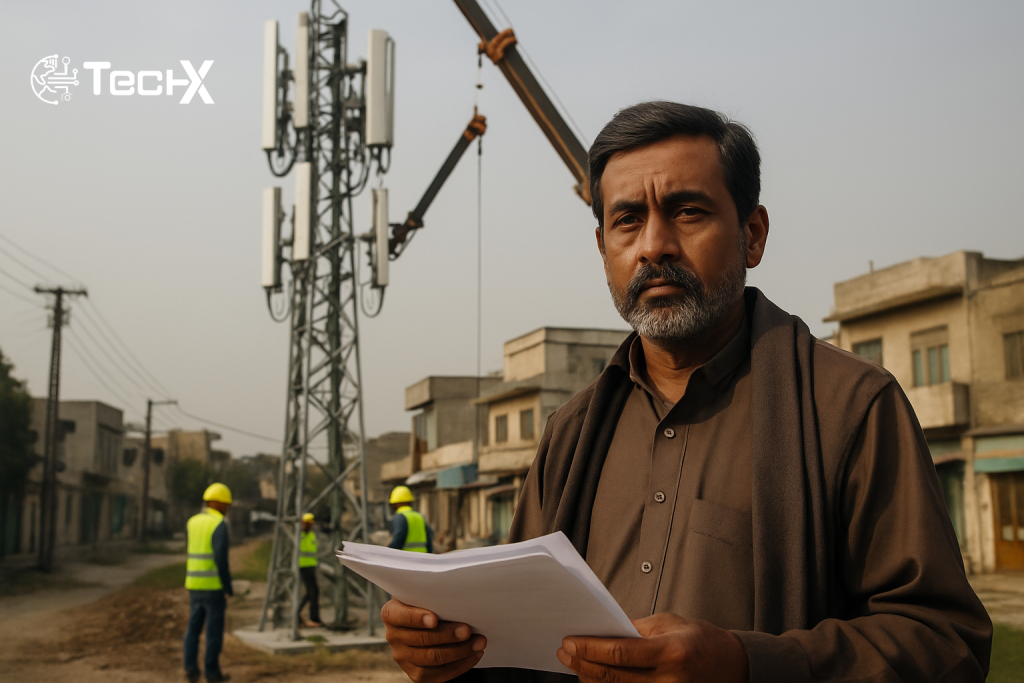
Pakistan’s telecom right of way rules just changed in a big way. A committee set up by Prime Minister Shehbaz Sharif has unanimously agreed to revise the Pakistan Telecommunication (Re-organisation) (Amendment) Bill, 2026, making it a legal requirement to get a property owner’s clear consent before any telecom tower, fibre cable, or other infrastructure can be placed on private land. The revised draft is now heading to the Senate Standing Committee for final review.
What the original telecom right of way bill said
The bill was tabled by IT Minister Shaza Fatima Khawaja and seeks to update the Pakistan Telecommunication (Re-organisation) Act, 1996. It was passed by the National Assembly on June 11 by majority vote, but was later deferred by the Senate Standing Committee on IT and Telecommunication after being referred to the committee on June 15, where it drew severe criticism.
The most controversial clause was simple but alarming for property owners. A property owner’s failure to respond to two official notices would be treated as ‘implied consent’ for telecom installations. In other words, silence could mean permission.
The bill in its earlier form also allowed authorities to override local zoning rules and regulations governing housing societies, granting telecom operators access through public and residential areas with limited scope for appeal. Lawmakers from both the government’s own allies and the opposition raised loud objections, saying the clauses could breach citizens’ constitutional right to property.
How the PM committee revised the telecom right of way provisions
Law Minister Azam Nazeer Tarar said a committee constituted by the prime minister to resolve concerns over proposed amendments to telecommunication laws had unanimously agreed to revise the draft legislation, making the consent of property owners mandatory before any telecommunications infrastructure could be installed on private land.
The law minister explained that the earlier draft had referred to ‘mutual consent’, but the revised version now made such consent mandatory. That may sound like a small difference in wording, but it is a significant legal shift. ‘Mutual’ left room for ambiguity. ‘Mandatory’ does not.
Under the revised draft, telecom operators must secure permission before laying underground or overhead cables or installing telecom equipment on private property, including homes, shops, vacant plots and agricultural land.
‘The amended draft will now be sent to the Senate Standing Committee, making it clear that no one can be compelled to grant right-of-way over private property without the owner’s consent,’ the law minister said. He also noted that separate legal provisions would continue to apply to state-owned land, other public property and housing schemes.
What rights do property owners now have
The revised bill gives private landowners clear legal standing at every step. Property owners retain the full right to raise objections, negotiate terms, and demand appropriate compensation before any work is carried out on their land.
Individuals affected by government decisions will have the right to appeal before the Telecommunications Appellate Tribunal established under the Pakistan Telecommunication Reorganization Act, 1996, and the tribunal’s decision will be final.
The government has also clarified the definitions of telecom equipment, underground and overhead installations, and right-of-way provisions to remove ambiguities that triggered the dispute. The committee further recommended maintaining a distinction between above-ground and underground telecommunications infrastructure, right-of-way arrangements and related equipment, with separate procedures for each category.
Why this matters for fibre rollout and 5G in Pakistan
The need for a workable telecom right of way law is real. Pakistan’s connectivity numbers tell a difficult story. Pakistan has more than 207 million mobile and fixed-line subscriptions and 58,423 cell sites, yet industry officials have long cited weak network infrastructure as a major obstacle, with only 14 to 19 percent of telecom towers connected to fibre networks, leaving most users dependent on mobile broadband.
Pakistan currently has fewer than three million fibre-to-the-home connections despite a population of around 240 million. The government aims to increase that figure to 10 million homes over the next three years. For that to happen, operators need to lay a lot of fibre across private land, roads, and housing societies.
The rollout of 5G services will also require further investment in fibre-optic networks, telecom towers and related infrastructure. The challenge is finding a balance: operators need legal clarity to invest, and citizens need protection from having their land taken without agreement.
The right of way problem is not abstract. It is the specific reason a village 40 kilometres from a city can remain on 2G while the city has 4G. A clear, consent-based law could help speed up rural connectivity if operators know exactly what process to follow.
Pakistan’s IT sector is also directly at stake. The country’s tech export growth depends on good internet. You can read more about how Pakistan’s digital economy is performing in our coverage of Pakistan IT exports nearing $4.2bn in FY2026.
What still needs to happen
The government says it remains committed to promoting the growth of the telecommunications and IT sectors while ensuring full protection of citizens’ constitutional and legal rights, stressing there will be no compromise on the principles of private property rights, owner consent, the right to object, legal safeguards, and compensation.
The revised draft now goes back to the Pakistan Telecommunication Authority‘s regulatory environment via the Senate Standing Committee. Lawmakers will need to check that the new language actually matches the promises made at press conferences. Independent legal experts have pointed out that dispute resolution should go to an independent tribunal rather than a government-nominated officer, a concern the committee has now addressed in its recommendations.
The committee proposed a dispute resolution mechanism for cases involving licensed operators and public institutions, housing schemes, cooperative housing societies or similar entities. That is a positive step, but the final bill text will be the real test.
Frequently Asked Questions
Can a telecom company install a tower on my land without asking me?
No. Under the revised telecom right of way bill, no telecom operator can install any infrastructure on private land without the explicit consent of the property owner. The earlier ‘implied consent’ rule, where silence after two notices counted as permission, has been removed.
What if I disagree with a telecom company’s request to use my land?
The ministry confirmed there will be no compromise on private property rights, owner consent, the right to object, legal safeguards and compensation. You have the right to object and negotiate terms. If a formal dispute arises, it can be referred to the Telecommunications Appellate Tribunal, whose ruling is final.
Does this apply to housing societies too?
The committee proposed that the framework explicitly cover regulated private housing schemes, cooperative housing societies and similar entities. However, separate provisions apply to state-owned or government land, which is treated differently under the bill.
How does this affect Pakistan’s fibre and 5G plans?
The revised law aims to give telecom operators a clear legal path to expand infrastructure while protecting property owners. The objective of the right of way reforms is to provide better, faster and more reliable internet services, not to undermine property rights. A working consent-based system could actually speed up fibre and 5G rollout by removing legal uncertainty for both sides.