
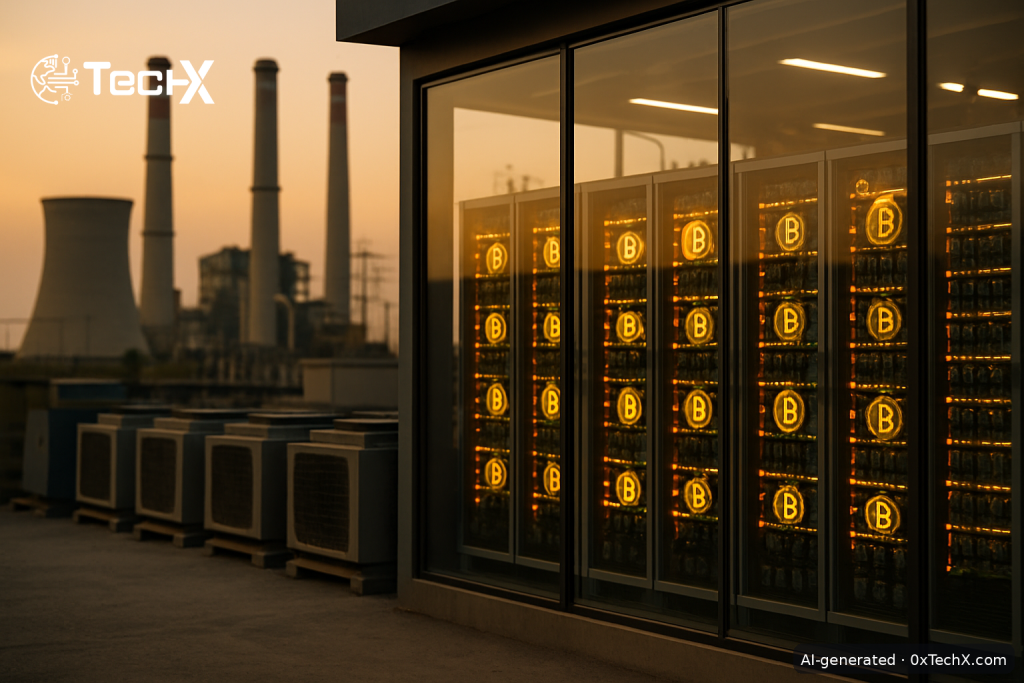
Pakistan surplus energy, long a drain on public finances, is now being pointed at one of the world’s fastest-growing tech sectors. The government has announced it will redirect 2,000 megawatts (MW) of excess electricity toward Bitcoin mining and artificial intelligence (AI) data centres, in what Finance Minister Muhammad Aurangzeb is calling a turning point in the country’s digital story.
Why Pakistan Has So Much Spare Power
Pakistan’s power sector has carried a painful problem for years: it pays power plants to exist even when nobody is using their electricity. This is called capacity payment, and it costs consumers and the government billions of rupees every year. Coal plants like Sahiwal, China Hub, and Port Qasim have been among the worst offenders.
NEPRA, the national power regulator, has long flagged the gap between installed capacity and actual demand. On top of that, the rapid spread of rooftop solar panels means more households are buying less grid electricity, making the surplus even bigger. The Pakistan surplus energy problem was becoming a liability. The new plan turns that liability into a potential asset.
The Pakistan Surplus Energy Plan Explained
The announcement was made in May 2025 by the Finance Division and is being run by the Pakistan Crypto Council (PCC), a government body set up in March 2025 under the Ministry of Finance. Pakistan’s Finance Ministry confirmed the allocation, describing it as the first phase of a wider, multi-stage digital infrastructure programme.
Here is how it works in simple terms. Coal plants that were running at about 15% of their capacity will now supply steady, low-cost power to two types of operations:
- Bitcoin mining farms, large halls of computers that verify blockchain transactions and earn Bitcoin as a reward.
- AI data centres, facilities that run the computing workloads behind artificial intelligence services, cloud storage, and big data processing.
Both are power-hungry by design. An AI data centre or a Bitcoin mining farm runs 24 hours a day, seven days a week, which is exactly what idle power plants need: a steady, constant customer that never switches off.
Revenue, Jobs and the Dollar Angle
The financial logic here goes beyond simply filling idle capacity. PCC CEO Bilal Bin Saqib has pointed out that Bitcoin mining pays out in US dollars, not Pakistani rupees. That is a meaningful difference for a country that is always looking for ways to earn more foreign exchange. Officials say that over time, Pakistan could even build a national Bitcoin wallet, accumulating digital assets directly rather than selling power cheaply in rupees.
On the jobs side, the initiative is expected to create thousands of direct and indirect positions across IT, engineering, data science, and cybersecurity. Pakistan has a large and young tech-capable population, and the government sees this as a way to keep skilled graduates working locally rather than seeking jobs abroad.
A Bitcoin mining researcher, Daniel Batten, estimated that if half of the 2,000 MW goes toward Bitcoin mining under near-optimal conditions, Pakistan could produce around 17,000 BTC per year. At current Bitcoin prices, that is a very large sum of foreign currency flowing into the economy.
Who Is Running This and What Is the PDAA?
The Pakistan Crypto Council is chaired by Bilal Bin Saqib, who holds the title of Special Assistant to the Prime Minister on Blockchain and Web3. In a high-profile move, Changpeng Zhao (CZ), the founder of Binance and one of the most well-known names in global crypto, joined as a strategic adviser. International attention followed quickly, with several foreign delegations visiting Pakistan to assess investment opportunities.
Alongside the PCC, the government has also set up the Pakistan Digital Assets Authority (PDAA). This new body will regulate crypto exchanges, oversee blockchain projects, and handle the legal framework for digital assets. It is the regulatory spine that makes the whole plan credible to foreign investors who need clear rules before committing capital.
To sweeten the deal further, the government has offered tax holidays, customs duty exemptions on equipment, and reduced taxes for AI infrastructure developers.
Pakistan’s Geographic Edge in the Global AI Race
There is a global context here that most local coverage misses. Global demand for AI data centre capacity has shot up to over 100 gigawatts, while the actual supply worldwide sits at only around 15 gigawatts. That is a massive gap. Countries with cheap land, affordable power, and a solid internet backbone are suddenly very attractive to global tech firms.
Pakistan fits that description in several ways. It sits between Asia, Europe, and the Middle East, making it a natural digital crossroads. Its internet infrastructure also got a major upgrade when the Africa-2 Cable Project, a 45,000-kilometre submarine cable connecting 33 countries, recently landed in Pakistan. This improves bandwidth, reduces latency, and adds the connectivity reliability that data centres need to operate at a global level.
Future phases of the plan will move away from coal and tap Pakistan’s enormous renewable energy potential. The Gharo-Keti Bandar wind corridor alone holds an estimated 50,000 MW of wind power potential, and the government wants to use solar and hydropower for later data centre phases as well.
What This Means for Ordinary Pakistanis
If the plan works, ordinary Pakistanis could benefit in a few ways. First, if idle capacity charges fall because power plants have a paying customer, it could take some pressure off electricity bills over time. Second, thousands of new tech sector jobs would open up, especially in cities like Karachi, Lahore, and Islamabad where the data centre activity is most likely to be concentrated. Third, extra foreign exchange earnings help stabilise the rupee and strengthen Pakistan’s ability to service its external debts.
There are fair questions to ask too. Coal-based mining has an environmental cost. Rural areas may not see the jobs quickly. And building a skilled blockchain and AI workforce takes time and investment in education. The government will need to follow through on training programmes and keep the regulatory environment stable enough for foreign investors to stay.
For Pakistanis already interested in the digital economy, it is worth noting that Pakistan ranks among the top 10 countries globally in crypto adoption. With over 40 million crypto users in the country, the demand side of this equation is already there. What was missing was a formal, legal framework and a clear government strategy. That framework is now being built.
Pakistan’s digital economy ambitions are growing fast. For a broader view of how the country’s ICT sector is performing, see our earlier coverage on Pakistan’s ICT Development Index score and where the gaps still lie.
Frequently Asked Questions
How much power is Pakistan putting into Bitcoin mining and AI data centres?
The government has allocated 2,000 megawatts in the first phase. This power comes from coal-fired plants that were previously running at only about 15% of their capacity, meaning the electricity was essentially going to waste.
Who is in charge of the Pakistan surplus energy crypto initiative?
The Pakistan Crypto Council (PCC), a government body under the Ministry of Finance, is leading the programme. Bilal Bin Saqib serves as CEO and Special Assistant to the Prime Minister on Blockchain and Web3. Binance founder Changpeng Zhao is advising the council.
How will this help Pakistan earn foreign currency?
Bitcoin mining pays rewards in Bitcoin, which is priced in US dollars globally. By mining Bitcoin with surplus electricity, Pakistan can earn hard foreign currency directly, instead of selling power to local users in Pakistani rupees. Officials have also discussed building a national Bitcoin wallet over time.
Is this plan only about coal power, or will renewables be used too?
Phase one uses existing coal plants because they are already built and sitting idle. Phase two is planned to bring in renewable energy, including wind power from the Gharo-Keti Bandar corridor, solar, and hydropower. This is intended to make the programme more sustainable and aligned with climate goals in later stages.