
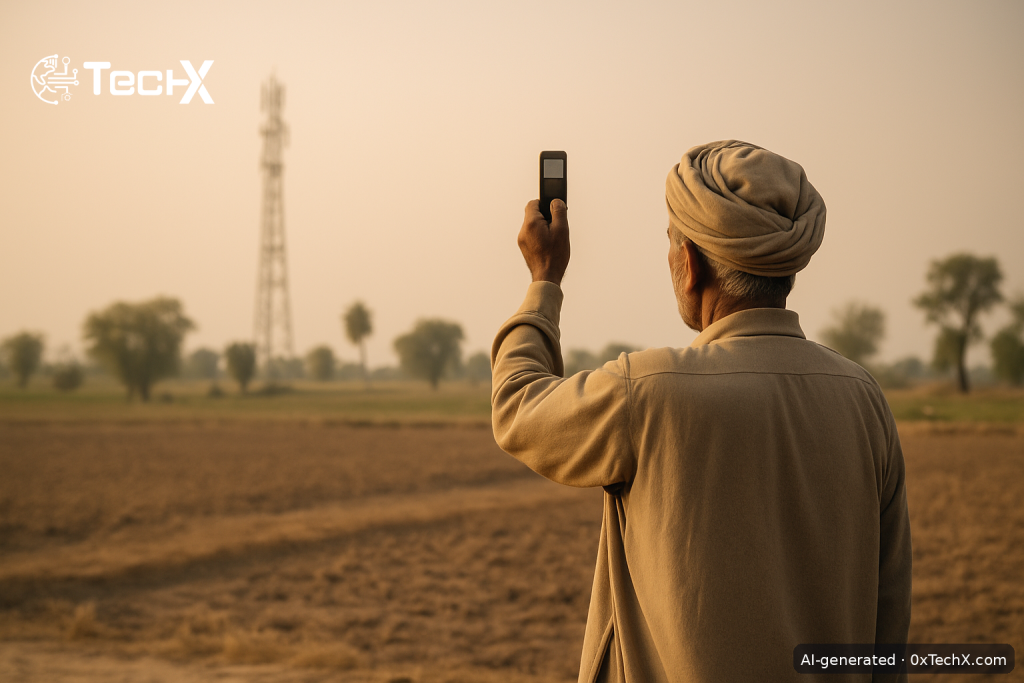
Pakistan’s score on the ITU ICT Development Index jumped 20% in 2026, rising from 56.4 to 67.7 and moving the country 27 places higher in global derived rankings. It sounds like a big win. And in many ways it is. But look one layer deeper and a different picture appears: one-fifth of the country still has no 4G signal, and four in ten mobile users are on basic feature phones that cannot access digital banking or online shopping. The number went up. The divide did not go away.
What the ITU ICT Development Index Actually Measures
The ITU ICT Development Index (IDI) is published every year by the International Telecommunication Union. It covers 159 economies and measures two things: universal connectivity (whether networks reach people) and meaningful connectivity (whether those connections are reliable, affordable, and usable). The 2026 edition was released on 30 June 2026 and is the fourth edition under the revised methodology approved in 2023.
Pakistan’s overall 67.7 score is built from a split that tells the real story. The country scores 78.5 on meaningful connectivity, but only 56.8 on universal connectivity. In plain terms: those who are already online are using digital services more actively, but millions of people are simply not connected at all. That low universal connectivity score is where the problem lives.
A 20% Jump That Still Leaves Pakistan Behind Its Peers
The 20% improvement is real. Since 2023, Pakistan’s IDI score has climbed from 48.7 to 67.7, which is genuine, steady progress. The connectivity pillar alone gained 22.8 points, and the Meaningful Connectivity score reached 79.
Here is the part most coverage skips: Pakistan’s 67.7 score is still below the lower-middle-income country average of 68.9. The country belongs to that income group. That means Pakistan has not yet reached the typical level of its own peer group, let alone the Asia-Pacific average or the global average. The jump is from a low base, and while the direction is right, the gap to close is larger than the headline suggests.
Saudi Arabia topped the 2026 IDI globally, with the index covering 159 economies. Pakistan’s climb of 27 places reflects real infrastructure investment, but the country still has a long road ahead to reach the connectivity levels of regional leaders.
The Device Gap Is the Biggest Barrier Right Now
Telecom subscriptions in Pakistan reached 207.22 million by March 2026, and national teledensity stands at 82.6%. Those are solid numbers. But subscriptions are not the same as smartphones in hand.
Over 40% of mobile users in Pakistan still rely on feature phones, while around 10% have no mobile device at all. That means roughly half the population cannot run a banking app, place an order on an e-commerce platform, or receive a digital payment link. For a country aiming to grow its IT exports and expand fintech access, this device gap is not a minor detail. It is a structural wall.
Handset affordability is a major reason for this gap. Budget 4G smartphones dominate the lower end of the market, but high taxes on devices push prices higher than many families can afford. The Pakistan Telecommunication Authority (PTA) has itself warned that smartphone taxes risk slowing digital adoption. Without an affordable device, a fast network signal means nothing.
One-Fifth of Pakistan Has No 4G Signal at All
Pakistan’s 3G and 4G population coverage both sit at 81%. That number sounds high until you do the arithmetic: roughly one-fifth of the country’s population, which numbers over 240 million people, still falls outside mobile broadband coverage. This gap is concentrated in rural and remote areas.
Rural Pakistan is home to nearly 70% of the total population. Many of these areas depend on mobile connectivity entirely, since fixed broadband simply does not exist there. Yet mobile broadband coverage in those same areas is inconsistent or absent. The people who need connectivity the most to access health information, financial services, or agricultural tools are the least likely to have it.
Adding to the problem, only about 17.9% of Pakistan’s roughly 58,000 mobile towers are connected to fiber backhaul. Poor backhaul means slower, weaker signals even in areas that show up as ‘covered’ on a map. You can read more about this infrastructure bottleneck in our coverage of Pakistan’s 5G tower fiberization challenge.
Why This Matters for E-Commerce, Fintech, and IT Exports
Pakistan’s government has set ambitious targets for IT exports and digital financial inclusion. Both depend on a broad base of connected, smartphone-owning citizens. Right now, that base is too narrow.
E-commerce platforms cannot grow beyond urban buyers when half the country cannot browse a product page on a phone. Fintech apps that offer mobile wallets and digital lending need users who own smartphones and have a stable internet connection. Rural women, who face both a gender gap in device ownership and a coverage gap in their areas, are doubly excluded from these services.
Pakistan does have one clear competitive strength: mobile data is affordable. The mobile data and voice basket costs about 1.4% of GNI per capita, which is cheaper than the lower-middle-income average and the Asia-Pacific average. The market is price-competitive. But cheap data means nothing without a device to use it on, or a signal to connect to.
For IT exports, the challenge is different but related. Pakistan’s export ambitions require a large, digitally skilled workforce. Weak connectivity in smaller cities and towns limits the talent pool that remote tech companies can draw from. Until a software developer in a tier-two city can get a stable, fast connection, Pakistan’s export base will stay concentrated in Karachi, Lahore, and Islamabad.
What Needs to Happen Next
The IDI score rising from 48.7 in 2023 to 67.7 in 2026 shows that policy attention and investment do move the needle. But the next phase of progress requires a different kind of effort: getting the unconnected online, not just improving the experience of those already connected.
That means three things working together. First, device affordability needs to improve through smarter tax policy on smartphones. Second, tower coverage needs to reach the remaining one-fifth of the population, particularly in rural Balochistan, Sindh’s interior, and KPK’s remote districts. Third, digital literacy programs need to run alongside connectivity projects, because a connection without the skills to use it does not close the digital divide.
The ITU IDI score is a useful map. Pakistan’s position on that map improved significantly in 2026. But the destination is universal, meaningful connectivity for all citizens, and on that measure, the journey has a long way to go.
Frequently Asked Questions
What is Pakistan’s ITU ICT Development Index score in 2026?
Pakistan scored 67.7 on the ITU ICT Development Index 2026, up from 56.4 in 2025. That is a 20% improvement and a 27-place rise in the global derived ranking. However, the score is still slightly below the lower-middle-income country average of 68.9.
Why does Pakistan score low on universal connectivity despite high telecom subscriptions?
Subscriptions and actual connectivity are different things. Pakistan’s 3G and 4G coverage reaches only 81% of the population, leaving roughly one in five people without mobile broadband. Feature phones make up a large share of devices in use, limiting meaningful internet access even among those with a SIM card.
How does the digital gap affect Pakistan’s fintech and e-commerce sectors?
With over 40% of mobile users on feature phones and one-fifth of the population outside 4G coverage, fintech apps and e-commerce platforms cannot reach a huge portion of potential users. Rural women face the sharpest exclusion, both from device ownership and from network coverage, limiting financial inclusion efforts.
What is holding back full digital connectivity in Pakistan?
The main barriers are high smartphone taxes that make devices unaffordable, limited fiber backhaul on mobile towers (only about 17.9% are fiberized), rural coverage gaps, weak digital literacy, and a gender gap in device ownership. Affordable data is a strength, but without devices and coverage it cannot drive inclusion on its own.