
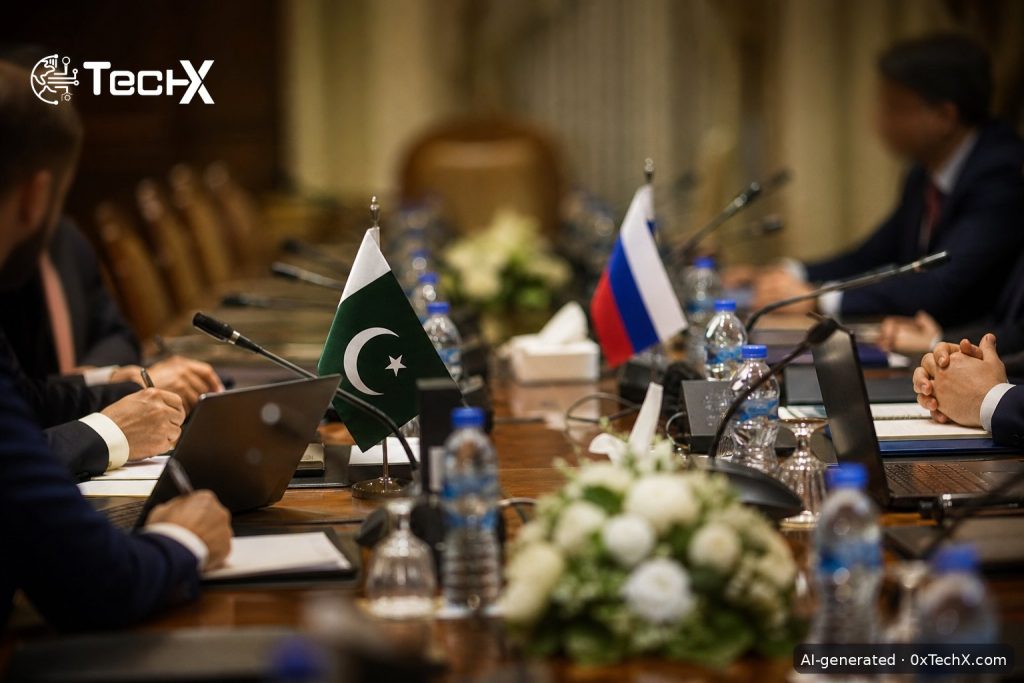
Pakistan Russia tech cooperation took a concrete step forward on 5 November 2026, as government officials and technology companies from both countries gathered to turn years of political goodwill into real business agreements. The meeting was not just another round of speeches. It produced a shortlist of sectors, named companies and a government promise to clear the red tape.
What Happened at the Webinar
The Pakistan, Russia IT Collaboration Webinar, the third in a running series, was organised by the Pakistan Software Export Board (PSEB) under the Ministry of IT and Telecommunication, together with the University of World Civilizations Moscow. It was held at the Ministry of Planning in Islamabad, with Russian speakers joining live from Moscow, and was built around one clear theme: building technology partnerships, market access and joint solutions.
Planning Minister Ahsan Iqbal said technology had become a key driver of Pakistan’s economic transformation and that both countries should move beyond conventional cooperation toward technology-driven partnerships, joint ventures and the development of globally competitive digital products.
Russian Deputy Minister for Digital Development, Communications and Mass Media Bella Cherkesova also addressed the meeting, highlighting opportunities for digital cooperation, investment and the development of advanced technologies between Pakistan and Russia. Her presence showed that Moscow is treating this agenda seriously at the ministry level, not just the company level.
Which Companies Are at the Table
Representatives of Pakistani firms Ebryx and TMC joined Russia’s Positive Technologies and Russian Quantum Center in exploring opportunities for joint development and delivery of technology solutions in Pakistan, Russia and third-country markets.
Dr. Alexey Akimov, Director of the Russian Quantum Center, explored co-development in cybersecurity, enterprise software and fintech, AI, cloud and emerging technologies, with joint delivery in Pakistan, Russia and third-country markets.
The format was deliberate. Rather than holding a large conference, PSEB and the University of World Civilizations Moscow brought together a select group of top businesses and trade associations from both nations, each asked to present specific skills and business requirements. That focused approach means the discussions were about real capability gaps, not vague intent.
Six Areas Chosen for Pakistan Russia Tech Cooperation
Cooperation with Russia could focus on automation and enterprise software for industry, digital supply chains for agriculture, secure digital systems for trade, artificial intelligence, cloud computing and cybersecurity.
Industry representatives also discussed cooperation in software, cybersecurity, financial technology and quantum computing. Quantum computing is a newer addition to the conversation and reflects Russia’s strength through bodies like the Russian Quantum Center.
Why Pakistan Has Real Credentials to Offer
Pakistan is not walking into this partnership empty-handed. NADRA’s digital identity system is internationally recognised, and Raast, the country’s instant payment system, processed 646 million transactions in a single quarter, which shows the scale of Pakistan’s digital infrastructure. These are the kinds of proven systems that Russian partners can build on.
The minister also highlighted Pakistan’s young population and expanding pool of educated professionals, including approximately 75,000 graduates annually. On top of that, Pakistan aims to develop one million AI professionals by 2030 as part of its broader digital economy strategy. That pipeline of talent is exactly what joint ventures need to stay sustainable.
Pakistan’s IT and telecom exports hit a record $4.6 billion in FY2025-26, up about 20%, and the sector is now hunting for new markets. Russia, with its large domestic tech spending and limited access to Western software after 2022 sanctions, is an obvious candidate.
What Russia Brings to the Table
Russia’s longstanding scientific and engineering expertise, particularly in enterprise software, cloud computing and cybersecurity, complements Pakistan’s engineering talent and international technology delivery experience. In short, Russia has deep R&D and Pakistan has delivery capacity and a cost-competitive workforce. The two fit together well on paper.
Russia’s scientific expertise could complement Pakistan’s skilled technology workforce, and both countries have already built large-scale digital systems for their own populations that could be packaged and sold to third-country markets together.
The Political Momentum Behind This
The minister referred to the second meeting of the Pakistan, Russia Joint Working Group on IT and the two countries’ role as founding members of the World AI Cooperation Organization. These are institutional foundations that give the bilateral tech agenda structure beyond any single webinar.
The Ambassador noted that Prime Minister Muhammad Shehbaz Sharif had placed particular emphasis on developing joint ventures in IT and technology, and expressed hope that the Prime Minister’s forthcoming visit to Russia would open further opportunities for direct engagement between technology companies, research institutions and investors from both countries. A head-of-state visit would almost certainly accelerate what is now a business-level discussion into signed agreements.
What Comes Next
IT Secretary Zarrar Hasham Khan said the talks produced a shortlist of concrete opportunities, and the ministry will help clear regulatory hurdles so the first pilot projects start without delay.
The proposed next steps include identifying opportunities, selecting suitable companies and developing joint pilot projects. Progress will be reviewed regularly with PSEB and Russian partners, so this is not a one-and-done event.
Pakistan’s Ambassador said the mission in Moscow will work closely with PSEB to open doors for Pakistani companies in the Russian market, which means Pakistani IT firms that want to explore exports to Russia now have a clear government channel to use.
For Pakistani tech companies, especially those in cybersecurity and enterprise software, this is a moment worth watching. The window to get into a new market at the beginning of a structured bilateral push is always narrower than it looks. If you are curious about how Pakistan is building the talent pipeline needed for deals like these, the skills agenda with China shows the broader workforce strategy in action.
Frequently Asked Questions
What is the Pakistan Russia tech cooperation webinar?
It is a series of bilateral events organised by PSEB and the University of World Civilizations Moscow to connect Pakistani and Russian technology companies. The third session was held on 5 November 2026 in Islamabad and focused on joint ventures, market access and pilot projects in AI, cybersecurity, cloud computing and fintech.
Which Pakistani companies are involved?
Pakistani firms Ebryx and TMC were among the participants, along with Russia’s Positive Technologies and the Russian Quantum Center. The event was designed to match specific company capabilities with actual business needs on both sides.
What sectors are being targeted?
The main areas are artificial intelligence, cloud computing, cybersecurity, enterprise software, financial technology and quantum computing. Officials also flagged digital governance and digital supply chains for agriculture as promising areas.
How does this help ordinary Pakistanis?
More IT exports mean more jobs in Pakistan’s tech sector and more foreign exchange for the country. If Pakistani companies can sell software and services to the Russian market, it supports the government’s target of growing IT exports and creating skilled employment for the growing number of tech graduates each year.