
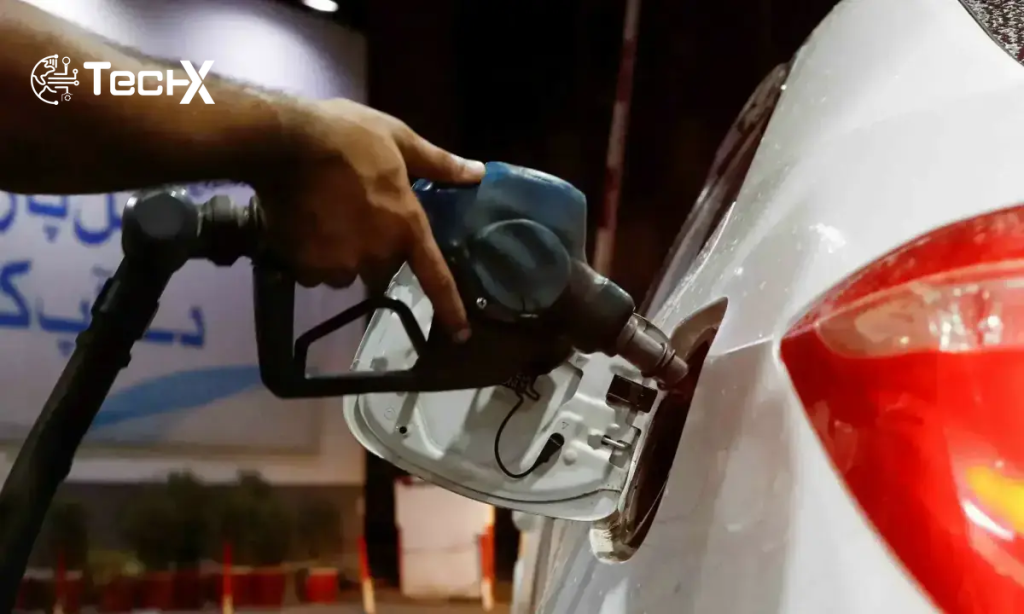
Petrol diesel prices Pakistan jumped on the night of July 10, 2026, as the government announced the biggest weekly increase in months. Petrol went up by Rs13.18 to Rs310.71 per litre, while high-speed diesel (HSD) rose by Rs13.80 to Rs323.30 per litre. The new rates are effective from July 11, 2026, as notified by the Petroleum Division.
This sharp reversal comes just one week after Pakistanis received some relief when the government cut petrol and diesel prices by Rs1.97 per litre following a dip in global markets. That brief respite is now over.
Why Did Petrol Diesel Prices Pakistan Rise So Fast?
The main reason is a fast jump in global crude oil. International benchmark Brent crude climbed from around $72 per barrel last Friday to nearly $76 per barrel, while West Texas Intermediate (WTI) rose from approximately $69 to $72 per barrel. That is a gain of roughly 5 to 6 percent in just one week.
The latest spike in global oil prices was driven by renewed geopolitical tensions, including heightened friction between the United States and Iran, military developments, and growing concerns over potential disruptions to Middle Eastern oil supplies.
Pakistan does not simply copy the oil price of a single day. Pakistan’s fuel pricing mechanism is based on the average international oil price during the review period, while also factoring in import premiums, freight charges, the rupee-dollar exchange rate, petroleum levy, and applicable taxes. Because the global average stayed high across the entire review period, the full impact showed up in this week’s revision.
How Big Is the Tax Load on Each Litre?
The actual cost of crude oil is only part of what Pakistanis pay at the pump. A large share of the price is made up of government levies and duties, which helps explain why prices stay high even when global oil dips.
On petrol, the total government charge now stands at about Rs95 per litre. This includes a petroleum levy of roughly Rs70 per litre and a customs duty of Rs20 per litre, along with the new climate support levy. On high-speed diesel, the total charge is about Rs101 per litre, made up of roughly Rs80 petroleum levy, Rs16 customs duty, a climate support levy, and an inland freight equalisation margin.
From July 1, 2026, the levy structure changed slightly under IMF conditions. The federal government doubled the Climate Support Levy on petrol and high-speed diesel from Rs2.50 per litre to Rs5 per litre, effective July 1, 2026, under the Finance Act 2026 as part of Pakistan’s fiscal reforms and commitments under the IMF programme. To stop this from raising pump prices at the time, the government simultaneously reduced the Petroleum Levy on both petroleum products. The net effect at the pump was zero on July 1, but the tax mix shifted: more goes to climate finance, less to the general petroleum levy.
During the first nine months of the previous fiscal year, from July 2025 to March 2026, collection from the Climate Support Levy stood at Rs37.27 billion. This is now set to grow further with the doubled rate.
Petrol and Diesel Prices Pakistan in Context: Where Are We Now?
Today’s prices look far more manageable compared to the crisis levels seen earlier this year. The highest official petrol rate in Pakistan’s history was Rs458.41 per litre, announced on April 3, 2026, during the Iran-US-Israel war-driven global oil shock. Diesel hit an even higher peak of Rs520.35 per litre around the same time. Prices then fell gradually as the situation improved, with global markets reacting positively after tanker traffic resumed through the Strait of Hormuz, easing concerns over supply disruptions.
A big cut on June 19-20, 2026 brought petrol down by Rs74 per litre to roughly Rs299 per litre. The price of petrol had been reduced by Rs74 per litre in that revision, falling from Rs373.78 to Rs299.78 per litre. Since then, prices have drifted back up again as tensions between the US and Iran have reignited.
For a closer look at how petrol and diesel prices moved just before this latest revision, see our earlier coverage of petrol and diesel prices in Pakistan at the close of June 2026.
Who Feels the Pain the Most?
Petrol is used mainly in private cars, motorcycles, auto-rickshaws, and small vehicles, so the increase hits middle-class and lower-middle-class households the hardest. Diesel powers heavy trucks, public buses, agricultural machinery, and large generators, so its price rise flows through to food, transport, and basic goods for almost everyone.
Petrol is widely used by motorcycle riders, private vehicle owners, and small businesses across Pakistan, while high-speed diesel is the primary fuel for heavy transport, public buses, agricultural machinery, and goods carriers. Changes in fuel prices often have a direct impact on transportation costs and the prices of essential commodities.
Monthly demand for petrol and high-speed diesel combined runs at roughly 700,000 to 800,000 tonnes, making them the government’s biggest revenue earners among all petroleum products. For comparison, kerosene sells only about 10,000 tonnes per month.
What Happens Next?
Fuel prices in Pakistan are now revised every week. The next review will happen around July 18, 2026. Whether prices go up or down depends almost entirely on where Brent crude trades over the next seven days, and on whether the US-Iran standoff calms down or gets worse.
If global crude stays near $75-76 per barrel or rises further, another increase is likely. If the geopolitical situation eases and oil retreats toward $70 per barrel, there is room for a cut. Since Pakistan imports a major portion of petroleum products, international oil prices and the rupee-dollar exchange rate directly affect local fuel rates.
The government is also under an IMF programme that sets targets for petroleum levy collection. The IMF has set Pakistan’s petroleum levy collection target for FY27 at Rs1.727 trillion. This means even if crude prices fall, the government may raise the levy to protect revenue, limiting how much of any global price drop actually reaches consumers at the pump.
Frequently Asked Questions
What are the new petrol and diesel prices in Pakistan from July 11, 2026?
Petrol is now Rs310.71 per litre and high-speed diesel is Rs323.30 per litre, as notified by the Petroleum Division. These rates are effective from July 11, 2026.
Why did petrol diesel prices Pakistan increase this week?
A sharp rise in global crude oil prices, fuelled by renewed US-Iran military tensions, pushed Brent crude up about 5-6% in one week. Pakistan’s pricing formula uses the weekly average, so the full increase fed through into this revision.
What is the Climate Support Levy and why does it appear on fuel?
The Climate Support Levy is a charge added to each litre of petrol and diesel under the Finance Act 2026. It was doubled to Rs5 per litre from July 1, 2026, under Pakistan’s IMF programme commitments. The money is meant to fund climate-related projects. At the same time, the petroleum levy was reduced by the same amount, so consumers did not feel a direct price shock on July 1 itself.
When is the next petrol price review in Pakistan?
Prices are now reviewed every week. The next revision is expected around July 18, 2026. The outcome depends on global crude prices and the rupee-dollar exchange rate during the review period.