
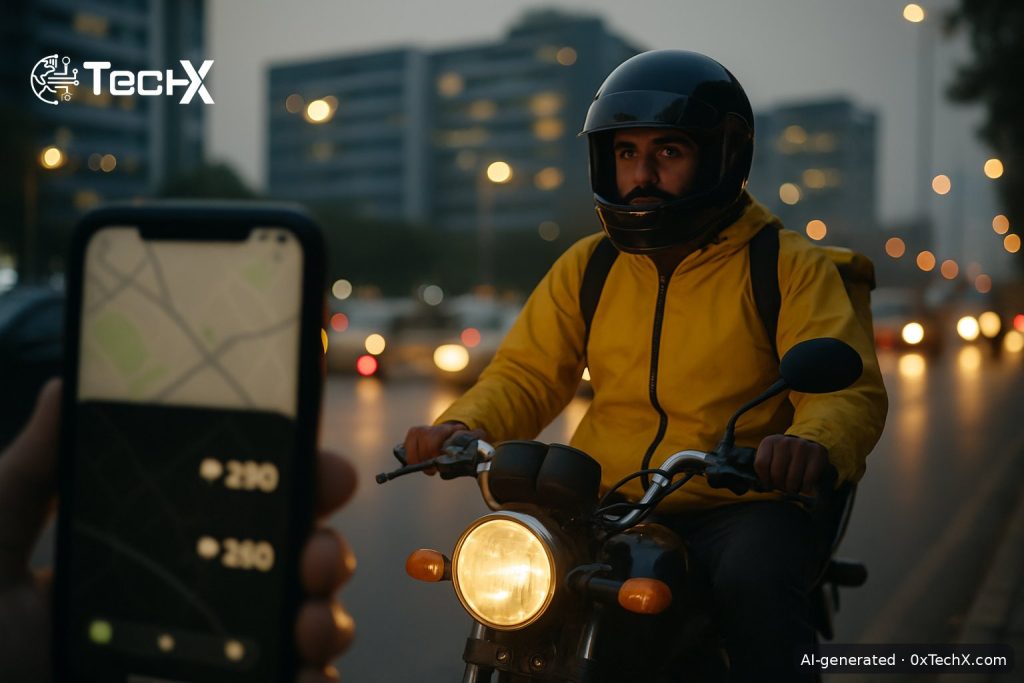
The Pakistan gig economy is sitting on enormous potential, but its own tax and regulatory system is actively holding it back. That was the blunt message from the International Labour Organisation (ILO) country director for Pakistan and a panel of industry leaders at an inDrive-organised forum in Islamabad on Thursday, September 4, 2026.
Pakistan is a big and growing economy with enormous potential for digital and platform-based businesses, but structural barriers, contradictory tax policies, and regulatory uncertainty are hampering the growth of its domestic gig economy. The forum, titled “The Road Ahead: Building Pakistan’s Economic Mobility,” brought together regulators, platform operators, and labour experts to discuss exactly why that potential is going to waste.
What the ILO Said About Pakistan Gig Economy Policy
The ILO country director for Pakistan said the country’s large and growing market offered significant opportunities for digital platforms and gig workers, but these could only be fully realised through policies that provided both adequate worker protection and certainty for businesses and investors. That is a polite way of saying the government is currently failing on both counts.
The problem is a contradiction at the heart of Pakistan’s digital policy. The state wants to grow its digital economy and collect more taxes from it, but the rules it keeps adding are making the sector harder to run. Freelancers and small digital exporters face an unclear and shifting tax treatment for foreign earned income, inconsistent documentation requirements from banks, and withholding rules that change with little notice. The result is predictable: the rational response for many earners has been to keep income in foreign platforms or informal channels rather than route it through a Pakistani bank account, which is the opposite of what policymakers want if they hope to capture this activity in GDP and tax statistics.
Meanwhile, Finance Act 2026 extended Pakistan’s sales tax net to digital platforms, online marketplaces, and cross-border digital service providers, bringing e-commerce firmly within the formal tax framework for the first time. In principle, formalising is good. In practice, piling new compliance costs onto platforms operating in a low-margin, price-sensitive market can push activity underground or offshore.
Only 5% of Pakistanis Use Ride-Hailing, and That Tells the Whole Story
The scale of the missed opportunity became clear when inDrive’s country manager took the floor. “Only 5 percent of Pakistani users go for ride-hailing, compared to approximately 20 percent globally,” said Awais Saeed, highlighting that Pakistan remains one of the most promising growth frontiers for digital mobility platforms.
Digital platforms account for less than 1 percent of the country’s food sales, highlighting the untapped potential of the digital mobility and delivery market. Wael Ibrahim, inDrive’s regional director for the Middle East, said the country offered great potential for business growth and announced plans to invest further in Pakistan. But investment announcements mean little if the policy environment does not catch up.
InDrive has emerged as the market leader in Pakistan’s ride-hailing space, holding an estimated 60 percent market share as of early 2026. The platform operates in more than 20 cities nationwide while also connecting around 200 cities through intercity travel. Even a dominant player with that kind of footprint is running against a regulatory ceiling.
The Deeper Problem: Gig Workers Are Invisible to the State
The structural gap is not just about taxes. It is about how the Pakistani state sees (or fails to see) its gig workforce. The State Bank of Pakistan tracks freelance earnings, but this only captures the ‘elite’ gig workers who use formal banking channels. The ‘blue-collar’ gig workers, riders and drivers, remain largely invisible.
Of those engaged in platform-based work, the overwhelming majority, 97.1 percent, are in physical services: ride-hailing, courier runs, freight and delivery. Only a sliver, 2.9 percent, work in fully digital, remote roles. So the millions of drivers, riders, and delivery workers who make up the real backbone of Pakistan’s gig economy have almost no formal standing, no social protection, and no consistent tax status.
Pakistan provides 8 to 10 percent of global online labour, but lacks a statutory framework for social protection. That is a massive share of the world’s digital work, with almost no legal safety net attached to it. The ILO’s concern is not just about money, it is about what happens to millions of workers when gigs dry up or platforms exit the market. Pakistan’s rapid growth in digital payments shows the infrastructure for formalisation exists, but the regulatory will to match it for gig workers is still missing.
Three Bodies, No Coordination
A key frustration raised at the forum is that responsibility for the Pakistan gig economy is split across at least three government bodies with no clear lead. The Federal Board of Revenue (FBR) sets tax rules for platforms. The State Bank of Pakistan (SBP) governs how earnings can be received and held. The Ministry of IT and Telecom (MoITT) promotes the digital economy as a growth story. Each body moves at its own pace, in its own direction, often without consulting the others.
The result is what the ILO called structural contradiction: a system where a platform can be encouraged to operate by one regulator and then penalised by another for doing exactly that. Until these three bodies align on a single, consistent framework for digital platforms, the Pakistan gig economy will keep running below its potential. You can read more about how Pakistan’s financial regulators are beginning to coordinate in the Pakistan Fintech Forum 2026 coverage, where a similar multi-regulator coordination challenge was discussed.
What Needs to Change
The forum’s consensus pointed to a few clear actions. First, tax rules for platforms need to be simple, stable, and published well in advance, not changed mid-year. Second, gig workers, especially drivers and delivery riders, need a legal classification that sits between ’employee’ and ‘self-employed,’ so platforms and workers both know where they stand. Third, the SBP, FBR, and MoITT need to produce a joint framework rather than each issuing separate, often conflicting, guidance.
The analytical question for 2026 is whether the government can formalise the gig economy without stifling the entrepreneurial flexibility that allowed it to thrive in the first place. The ILO’s presence at today’s forum signals that international pressure is building for Pakistan to answer that question properly, and soon.
Frequently Asked Questions
What is the Pakistan gig economy and how big is it?
The Pakistan gig economy covers platform-based work such as ride-hailing, delivery, freight, and online freelancing. Pakistan is currently the fourth-largest provider of digital gig labour globally, accounting for approximately 8 to 10 percent of total online labour supply. Most gig workers, however, are in physical services rather than remote digital roles.
Why did the ILO warn about Pakistan’s gig economy at this forum?
The ILO raised concerns because contradictory tax policies and unclear regulations are discouraging investment and leaving millions of gig workers without social protection. The ILO country director stressed that growth can only be realised through policies offering both worker protection and business certainty.
What is wrong with Pakistan’s current tax rules for digital platforms?
Prior to Finance Act 2026, Pakistan’s tax framework created significant ambiguity around digital transactions. Even after Finance Act 2026 extended the sales tax net to digital platforms, inconsistencies remain between FBR rules, SBP banking requirements, and MoITT’s promotional policies, creating confusion for platforms and workers alike.
What is inDrive and why did it organise this forum?
inDrive is an international company operating in ride-hailing, delivery, cargo transportation, and urban services. It started its operations in Pakistan in 2021 and became the most downloaded ride-hailing app in the country within a year. As the market leader in Pakistan, inDrive has a direct interest in pushing for clearer and fairer platform economy regulations.