
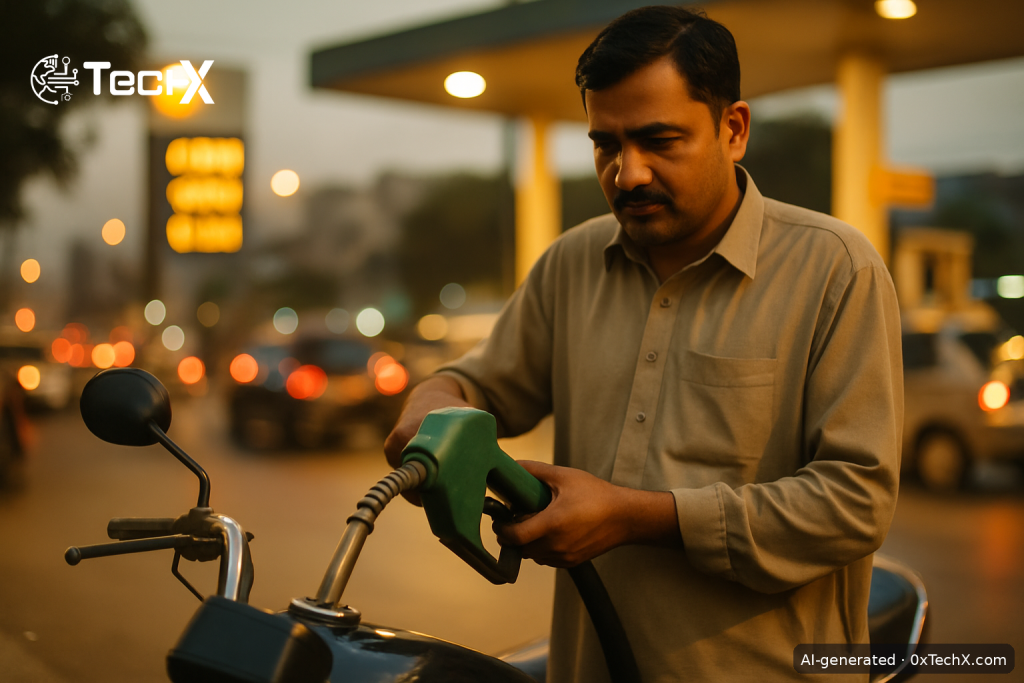
Pakistan fuel price is entering a new era. The federal cabinet has approved a plan to let the Oil and Gas Regulatory Authority (OGRA) set petrol and diesel rates every single day, replacing the weekly review system that was itself only introduced a few months ago. At the same time, the most recent revision pushed petrol up by Rs5.44 per litre and high-speed diesel (HSD) up by a sharp Rs31.50 per litre, squeezing households, truckers, and farmers across the country.
Pakistan Fuel Price Now Set to Change Every Day
Pakistan will shift to daily revisions of petroleum prices after the federal cabinet approved a new pricing mechanism aimed at responding more quickly to volatility in international oil markets. The decision ends the weekly price review system introduced earlier this year and hands the responsibility for fixing fuel prices to OGRA.
OGRA will now determine petrol and diesel prices on a daily basis and publish the updated prices on its website. The seven-day average international price will serve as the benchmark for calculating those daily rates.
The petroleum minister said the government had intentionally reduced its direct role in fuel price setting, with OGRA assuming greater responsibility for determining prices based on prevailing international market conditions. This is a big change. In the past, the Finance Division and even the Prime Minister’s Office had to approve every price change before it could take effect.
Why the System Keeps Changing
Before the weekly mechanism was introduced, prices were adjusted on a fortnightly basis, while an even earlier system relied on monthly revisions. Each change was a response to global oil shocks. The weekly system, however, came under criticism for delays in passing on the benefit of lower fuel prices to consumers. The new daily model aims to fix that.
The information minister also said the government had reduced the petroleum levy and stressed the need to promote electric vehicles and motorcycles to reduce dependence on imported fossil fuels.
Latest Pakistan Fuel Price Numbers
In the latest fuel price revision, Pakistan raised petrol by Rs5.44 per litre and high-speed diesel by Rs31.50 per litre. These are not small moves. For a motorcycle rider topping up a five-litre tank, the petrol increase adds about Rs27. For a long-haul truck driver filling up hundreds of litres of diesel, the Rs31.50 jump per litre means thousands of rupees in extra costs per trip.
The increase comes amid a surge in international oil prices, with the revised fuel prices taking effect immediately, reflecting sustained pressure from global energy markets where crude oil prices have climbed sharply due to renewed regional tensions.
Highlighting the scale of the pressure, the petroleum minister said the international price of diesel had climbed from $110 per barrel to $140 per barrel.
How Did Prices Get So High in 2026?
The story behind today’s prices starts early this year. The diesel price had come down from a peak of Rs520.35 recorded on April 3. Its price had started rising from Rs281 per litre after the US-Iran war broke out on February 28. Petrol peaked at Rs458.41 on April 3 after beginning its upward trajectory from Rs266 in the first week of March.
Since that peak, the government has been cutting prices in steps as global oil settled. Prime Minister Shehbaz Sharif announced a Rs74 reduction in petrol prices and a Rs67 cut in high-speed diesel prices as the government sought to pass on the benefit of declining international oil prices. However, fresh regional tensions have once again pushed global crude higher, leading to the latest increases.
The Tax Burden on Every Litre
One thing that rarely gets enough attention is how much tax Pakistanis already pay on fuel. The petroleum levy on diesel currently stands at about Rs80 per litre. The petroleum levy on petrol stands at about Rs70 per litre, in addition to a Rs5 climate support levy.
The government is currently charging about Rs101 per litre on high-speed diesel in the form of customs duty, petroleum levy, climate support levy, and inland freight equalisation margin. For ordinary Pakistanis, this means roughly one-third of what they pay at the pump goes straight to the government, not to the cost of the fuel itself.
Under IMF conditions, the government doubled the climate support levy to Rs5 per litre with effect from July 1, while correspondingly reducing the petroleum levy. The net effect on pump prices was smaller than many hoped.
A Price Stabilisation Fund Is Also on the Table
Alongside the daily pricing move, the government is also considering a fuel price buffer system. A petroleum price stabilisation fund is being proposed. When international crude and refined petroleum prices decline sharply, the resulting savings could be deposited into the fund. These reserves would then be used to cushion consumers against future price spikes.
Officials are considering maintaining a price band of Rs275 to Rs325 per litre. If domestic fuel prices fall below Rs275 per litre, the savings could be transferred to the stabilisation fund. Conversely, if prices exceed Rs325 per litre due to external market shocks, the accumulated funds could be used to stabilise retail prices.
This kind of buffer is used in countries like Malaysia and Thailand to protect consumers from wild global oil swings. For Pakistan, where petrol price affects commuting, transport fares, food prices, and daily household budgets, and high-speed diesel powers Pakistan’s logistics, agriculture, public transport, and generator economy, such a fund could make a real difference.
What This Means for You
The shift to daily pricing has both good and bad sides. On the positive side, when global oil prices fall, Pakistanis should see relief at the pump faster than before, rather than waiting a full week or two weeks for a revision. On the negative side, prices can also rise faster. A bad week in the Middle East could mean higher fuel costs by the next morning.
Oil marketing companies are being closely monitored, and the government has warned that no one will be allowed to hoard petroleum products. Authorities are also aware that daily price changes could create confusion at petrol stations across the country, especially in smaller cities and rural areas where digital price boards are not common.
For the latest official fuel prices notified by OGRA on its official website, consumers can check rates daily once the new system goes live. Pakistan State Oil, the country’s largest fuel retailer, also publishes current rates at PSO’s official fuel price page.
Frequently Asked Questions
What is the current Pakistan fuel price for petrol?
The petrol price in Pakistan is PKR 316.15 per litre according to the latest updates. This follows a series of revisions since global oil peaked during the US-Iran conflict earlier in 2026.
Who decides Pakistan fuel price now?
The federal cabinet has approved a new pricing framework under which the Oil and Gas Regulatory Authority (OGRA) will determine petroleum prices on a daily basis, replacing the previous periodic review system. OGRA will publish the updated rates on its official website every day.
Why did diesel prices go up so much in the latest revision?
International energy markets experienced significant upward pressure because of escalating tensions in the region. The international price of diesel climbed from $110 per barrel to $140 per barrel. Pakistan imports most of its refined fuel, so global price spikes pass directly to local consumers.
Will daily fuel pricing help consumers?
It can work both ways. Daily price announcements will continue to be determined according to a seven-day weekly average in the international market. The move forms part of the government’s efforts to make the system more transparent so that people can understand why fuel price changes happen. When global prices drop, consumers should benefit faster. But they will also feel price rises sooner than before.