
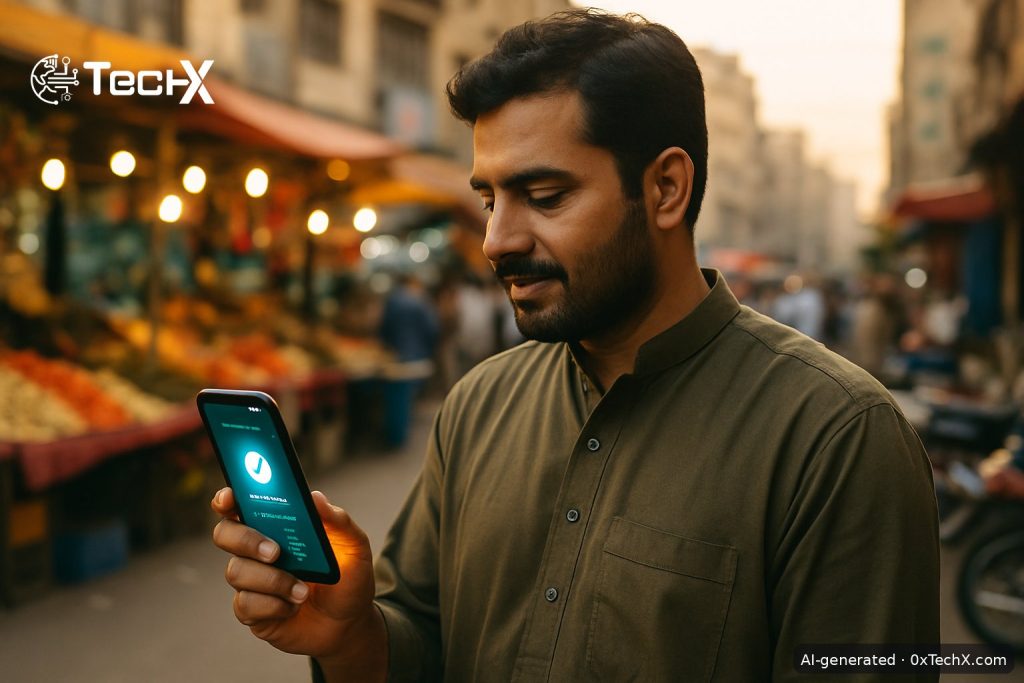
Pakistan digital payments are expected to cross 12 billion transactions in 2026, with a total value approaching Rs90 trillion, according to 1LINK (Pvt) Limited, the company that runs the backbone of the country’s payment system. That is more than 300 payments processed every single second, a figure that shows just how fast Pakistanis are moving away from cash.
What 1LINK Does and Why It Matters
Most people have never heard of 1LINK, but they use it every day. The company has spent more than two decades connecting banks, businesses, government bodies, and consumers through secure, interoperable payment infrastructure. It sits silently behind ATM withdrawals, interbank transfers, bill payments, and even government tax collections.
1LINK is the first licensed Payment System Operator and Payment Service Provider by the State Bank of Pakistan, and since 2004 it has worked as the main switch for Pakistan’s banks, handling a broad range of banking transactions including the shared ATM network.
Pakistan Digital Payments Growth in Numbers
The scale of growth is striking. In 2025, 1LINK processed over 10 billion transactions with a total value of PKR 75.4 trillion, representing nearly 20 percent growth in transaction volume and 19.3 percent growth in transaction value. The 2026 forecast of 12 billion would add another 20 percent on top of that.
1LINK’s Chief Corporate Affairs Officer said the company is on track to process payment transactions equivalent to approximately 75 percent of Pakistan’s GDP, underlining the scale of its contribution to the country’s digital economy. That is a remarkable number for a company most consumers have never seen by name.
Breaking it down further: from January to September 2026, 1LINK’s interbank fund transfer channel processed approximately 998.9 million transactions valued at PKR 43.7 trillion, while 1BILL, Pakistan’s largest bill aggregation platform, facilitated around 170.6 million transactions worth PKR 12.3 trillion, and the ATM switching network processed approximately 285.4 million transactions valued at PKR 3.2 trillion.
The Bigger Picture for Pakistan Digital Payments
1LINK’s numbers do not exist in isolation. The wider Pakistan digital payments story is equally dramatic. Pakistan’s shift towards cashless payments accelerated in the January to March 2026 quarter, with digital channels handling 92 percent of all retail transactions. The State Bank of Pakistan reported 3.7 billion retail transactions worth Rs168.8 trillion were processed through formal banking and payment channels during the quarter.
Mobile phones are doing most of the work. Mobile banking apps remained the most popular payment channel, with customers carrying out 2.9 billion transactions through apps offered by banks, branchless banking providers, and electronic money institutions. Mobile app transactions made up 78 percent of all digital payments and were valued at PKR 42 trillion.
The user base is growing fast too. The number of registered mobile banking and digital wallet users rose to more than 132 million by the end of March 2026, up from 96 million a year earlier, representing an annual increase of 37 percent. That is tens of millions of new users in just twelve months.
Pakistan’s instant payment rail, Raast, is also adding fuel. Raast processed approximately 742 million transactions worth Rs23.27 trillion in the January to March 2026 quarter alone. For context on its journey, total Raast transactions rose from 295.7 million in Q2 of fiscal year 2024-25 to 742 million by Q3 of fiscal year 2025-26, nearly tripling in just four quarters. You can read more about how Punjab’s tax digitisation push is backed by the World Bank, which feeds directly into this broader digital finance momentum.
What Is Driving the Surge
The growth is driven by the increasing use of mobile banking applications, digital wallets, internet banking, and the Raast instant payment system. The expansion of smartphone usage, improved internet connectivity, and growing public confidence in digital financial services continue to accelerate the country’s shift towards cashless transactions.
Merchant payments are emerging as the next big area. Merchant payments are the next major frontier for digital payments in Pakistan. Right now, most digital volume is person-to-person or bill payments. As more shops and small businesses accept digital payments, the numbers will climb further.
Fraud Risk Is Growing Alongside the Volume
A key detail that most coverage misses: the rise in digital payments is also bringing a rise in fraud attempts. 1LINK is continuously upgrading its systems to prevent scams, fraud, and social engineering attacks, and 3D Secure technologies are being used to secure e-commerce transactions. The 12 billion transaction target includes 1LINK’s Fraud Risk Management Services as a growing part of its work, not just payment routing.
As more Pakistanis move online for payments, staying aware of phishing, SIM swap fraud, and fake payment links becomes essential. The State Bank of Pakistan regularly publishes consumer alerts and guidelines on safe digital banking practices.
What This Means for Ordinary Users
If you transfer money through your bank app, pay a utility bill online, or tap your PayPak card at an ATM, you are already part of this story. The growth in Pakistan digital payments means faster services, more merchants accepting digital payments, and a government that is increasingly collecting taxes and fees digitally. It also means the risk of digital fraud grows, so using strong PINs, avoiding unknown links, and keeping your banking app updated is more important than ever.
Frequently Asked Questions
What is 1LINK and what does it do?
1LINK is a private company owned by eleven Pakistani banks. It acts as the main payment switch that connects banks, ATMs, bill payment systems, and government payment portals. When you transfer money between two different banks or pay a bill through an app, 1LINK is usually processing it in the background.
How many payment transactions does 1LINK expect in 2026?
1LINK expects transaction volumes on its payment rails to exceed 12 billion in 2026, covering financial and non-financial transactions, value-added services, and Fraud Risk Management Services, with total transaction throughput projected to approach Rs90 trillion.
What share of Pakistan’s retail payments are now digital?
Pakistan’s shift towards cashless payments accelerated in the January to March 2026 quarter, with digital channels handling 92 percent of all retail transactions processed through formal banking and payment systems. That is up from 88 percent just a year earlier.
Is it safe to use digital payments in Pakistan?
Digital payment infrastructure in Pakistan is regulated by the State Bank of Pakistan and 1LINK maintains high uptime and fraud detection systems. However, users should always use official banking apps, avoid sharing OTPs or PINs, and only scan QR codes from verified sources. The biggest risks come from social engineering, not the payment rails themselves.