
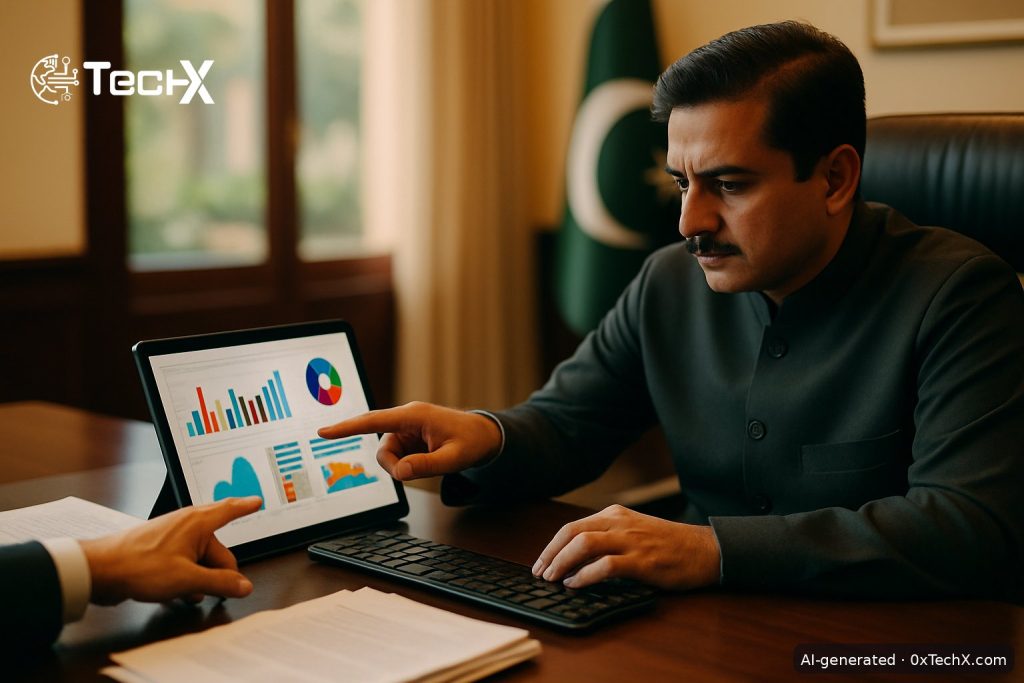
Punjab tax digitisation is moving from policy talk to a concrete action plan. In late September 2026, the Punjab Revenue Authority (PRA) and the World Bank formally agreed to design a digital tax reform roadmap for Pakistan’s largest province, with the Punjab Information Technology Board (PITB) joining as the technology partner. The move is part of a much bigger story: Pakistan’s economic reform journey is now seen internationally as a model worth copying.
Why Punjab Tax Digitisation Matters Right Now
Pakistan’s broader reform story has caught serious global attention. The World Bank has pledged to lend $20 billion over the next decade, commencing in 2026, under its Country Partnership Framework (CPF), to help address the country’s acute development challenges. One senior World Bank official described Pakistan’s stabilisation efforts as a model for other countries, and that macro-level confidence is now flowing down to provincial level.
The Punjab government is set to overhaul its tax system through advanced digital tools as the PRA and the World Bank agreed to expand the tax base and improve revenue collection. This is not a vague pledge. A real meeting with real names took place: a World Bank delegation led by Regional Director Michael Roggi and Manager Sylvia Solf met PRA Chairman Moazzam Iqbal Sipra to discuss measures to modernise the province’s tax administration.
What the Digital Reform Plan Actually Covers
The scope of the Punjab tax digitisation plan is wider than simple online payments. The two sides agreed to make effective use of digital databases, implement the Digital Economy Enhancement Project, and study international best practices in taxation. Sipra said digital tools would help bring new businesses into the tax net and stressed the need to integrate data from different government departments to make tax collection more transparent and efficient.
The anti-evasion angle is especially sharp. “Digital data will help identify tax evasion, misappropriation and discrepancies in business records,” said the PRA chairman, while the World Bank delegation emphasised that PRA’s digital monitoring and tax administration systems would be further strengthened.
With technical and financial support from the World Bank, the PRA and PITB will jointly prepare a comprehensive plan for digital tax reforms. “A practical roadmap for tax reforms will be developed with the technical assistance of the World Bank,” Sipra said.
Punjab Finance Bill 2026 Already Setting the Stage
The roadmap agreement did not come out of nowhere. Punjab has been laying the groundwork through the Punjab Finance Bill 2026-27, which is already pushing digital compliance hard.
To improve transparency, efficiency and taxpayer convenience, payment of property tax through the e-Pay system has been proposed to be made mandatory.
The most visible change for everyday consumers is in restaurants and service businesses. In the hotel and restaurant sector, the new structure offers a clear incentive for digital payments. Customers paying in cash will be charged 16 percent sales tax, while those paying through digital means, including credit and debit cards, will pay just 8 percent, effectively halving the tax rate for cashless transactions.
To encourage digital transactions, the government has also proposed reducing the General Sales Tax on Services from 16% to 8% on services paid through credit cards, debit cards, QR codes or mobile wallets. That gap between cash and digital rates is a deliberate push to change habits at the point of sale.
Punjab’s revenue ambition behind all of this is significant. Punjab Finance Minister Mian Mujtaba Shujaur Rehman said the province achieved 99 per cent of its tax collection target during the outgoing fiscal year, while the revenue target for FY2026-27 has been increased by 46 percent. Digitisation is the main engine to hit that target.
A Blueprint for Digital Government Across Pakistan
The Punjab model carries implications well beyond the province. When Pakistan’s biggest province digitises tax collection and links government databases, it creates a working template that other provinces and federal agencies can adapt. This fits a wider national pattern: just weeks ago, the Islamabad High Court opened Pakistan’s first paperless digital court, signalling that digital government is moving simultaneously across multiple branches of the state.
The PRA-World Bank discussions focused on the effective use of digital databases, inter-departmental data integration, and the Digital Economy Enhancement Project. Sipra said digital tools would be used to expand the tax base and bring new businesses into the tax net. The key word here is integration. Tax data alone is limited; linking it to business registration, utility records, and property data across departments is what turns a digital system into a real compliance tool.
With World Bank technical and funding support, PRA and PITB will jointly prepare a working plan and practical roadmap for digital tax reforms. The plan aims to link datasets across government departments to compare returns, payments, and business activity more systematically.
It is worth being clear about what stage this is at. The agreement is a reform commitment and planning exercise, not the launch of a finished platform. The practical roadmap still needs to be written. But having the World Bank, PRA, and PITB all at the same table, with funding committed, is much further along than Pakistan has been before on provincial tax tech.
What This Means for Pakistani Businesses and Taxpayers
For small business owners and traders in Punjab, this shift will be real and visible. Businesses that are currently outside the tax net should expect to be identified through cross-database matching. Those who accept digital payments can benefit from lower sales tax rates right now. Property owners will increasingly need to pay through e-Pay rather than visiting a counter.
For the broader digital economy, more merchants moving to card and QR payments means more transaction data, which means banks and fintechs gain a bigger base of verified business customers. The State Bank of Pakistan’s financial inclusion reporting shows more than 2.1 million merchants had been onboarded on Raast, while its 2026 “Go Cashless” campaign processed over 480,000 transactions worth over Rs 34 billion. These initiatives aim to reduce acceptance costs and bring merchants into formal payment channels. Punjab’s tax incentives reinforce exactly that direction.
Frequently Asked Questions
What did PRA and the World Bank agree to in September 2026?
The Punjab Revenue Authority and a World Bank delegation agreed to build a joint digital tax reform roadmap for Punjab, with PITB as the technology partner. The plan will cover digital databases, inter-departmental data sharing, and expanding the tax base to bring more businesses into the system.
How does Punjab tax digitisation affect ordinary shoppers?
Restaurants and service businesses now charge 8 percent sales tax on card or QR payments versus 16 percent for cash payments. This means paying digitally is directly cheaper. Property tax will also move to mandatory e-Pay in the new budget cycle.
What is the World Bank’s Country Partnership Framework and how is it connected?
The CPF is a 10-year agreement under which the World Bank has committed over $20 billion to Pakistan from FY2026 to FY2035. Pakistan’s economic stabilisation earned it status as a reform model globally, and this confidence is one reason the World Bank is now investing technical and financial support in Punjab’s provincial tax systems.
Is this Punjab reform plan finished and ready to use?
Not yet. The September 2026 meeting was a planning agreement, not a system launch. PRA and PITB still need to write the practical roadmap with World Bank guidance. Actual platform development and rollout will follow. However, many of the Finance Bill 2026 measures, such as digital payment tax incentives, are already active.