
Pakistan’s digital payment tracking is entering a sharper, more disciplined phase. The federal government is planning to refine how digital payment adoption is measured and explore tax policy reforms to accelerate the Prime Minister’s Cashless Pakistan initiative, following a high-level meeting chaired by Minister of State for Railways and Finance Bilal Azhar Kayani at the Finance Division on October 13, 2026. The changes go well beyond counting merchants, they touch how banks report big transactions, how the FBR spots undeclared income, and whether tax rules are finally rewritten to reward businesses that go cashless.
What the Meeting Actually Decided
The meeting focused on three key indicators: the number of active and unique digital payment users, annual digital transaction volumes, and the number of merchants actively accepting electronic payments. The problem, officials acknowledged, is that current numbers do not always separate real active users from dormant accounts or duplicate registrations.
The committee agreed to review definitions for active app users, active merchants, and unique digital payment users to ensure that the government’s Cashless Pakistan dashboard reflects more accurate and reliable data. The review will help authorities distinguish between registered users, active participants, and unique individuals using digital payment channels.
Think of it this way: a merchant who signed up for a QR code two years ago but never used it should not count the same as one processing daily sales. Getting these definitions right matters because policy decisions, including tax incentives, are built on these figures.
A Centralised Merchant Database Is on the Table
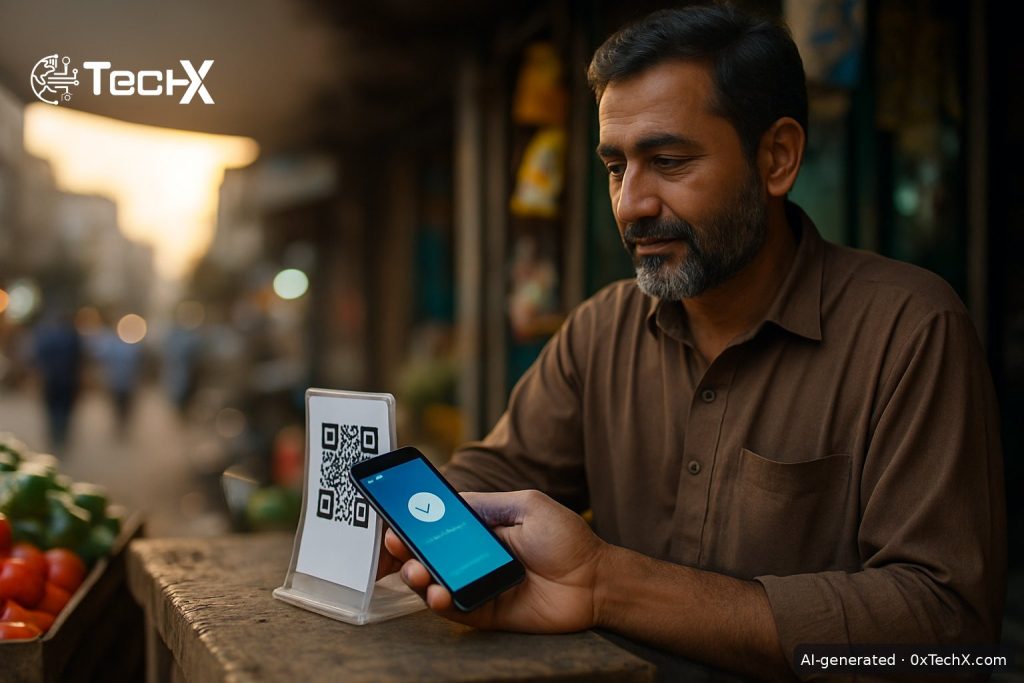
Pakistan’s government has proposed building a centralised database of digital merchants, a move aimed at giving regulators real-time visibility into transactions as the country’s active merchant base has quadrupled to more than two million in a year.
A fourfold jump in twelve months is a steep curve for any national payments rollout, and it is the scale of that growth that appears to have prompted the database proposal: monitoring two million merchants manually is a fundamentally different problem than monitoring 500,000.
For small shop owners and freelancers, this means their digital sales activity could soon sit inside a single government-visible system. That is not necessarily bad news, it could also make it easier to prove revenue for loans or contracts, but it does mean that cash-only workarounds will become harder to sustain. You can read more about how merchant QR adoption has grown in practice in our earlier piece on JazzCash’s push to reach 2 million interoperable QR merchants.
The Numbers Behind the Push
Annual digital payment transactions have risen from 6.9 billion to 11.3 billion. Active digital payment merchants have quadrupled from 500,000 to more than two million. Registered digital banking users now exceed 137 million.
Around 75 percent of payments across the federal government’s centralised and self-accounting entities are now accepted digitally. Even NADRA has moved fast. The National Database and Registration Authority has digitised 99% of payments at its service centres nationwide, while passport centres have been equipped to accept digital payments.
These are genuinely big numbers. But government officials are now asking a harder question: how much of this growth is real, active economic activity versus numbers inflated by inactive registrations?
How FBR’s Bank-Reporting Rules Fit In
The digital payment tracking story does not stop at dashboards. It connects directly to how Pakistan’s tax authority catches people who earn money but do not declare it.
The Federal Board of Revenue has made it mandatory for banks and electronic money institutions to report financial transactions exceeding Rs. 10 million to its central data hub under the Finance Act 2026. The measure will allow the FBR to automatically compare information on large financial transactions with taxpayers’ tax and banking records, with discrepancies potentially triggering further action.
Section 165AB of the Income Tax Ordinance creates a mandatory reporting obligation for all banking companies and Electronic Money Institutions operating in Pakistan. The trigger is straightforward: if the combined deposits or withdrawals across all of an account holder’s bank accounts exceed Rs 100 million during any six-month reporting period, that account holder’s financial information must be uploaded to FBR’s central data hub.
For most salaried workers and small traders, these thresholds are far above their daily reality. But for medium-sized businesses, property dealers, and anyone moving large sums through digital wallets, the era of informal digital income is closing fast.
Tax Reforms Are Now Being Drafted
Kayani directed private-sector representatives to prepare recommendations on tax policy reforms that could encourage wider adoption of digital payments. The proposals are expected to support the next phase of the initiative by addressing barriers to electronic transactions and improving incentives for businesses and consumers.
The Finance Bill 2026 has already moved in this direction. Proposed measures address the taxation of digital income, introduce withholding tax on platform-based earnings, and revise minimum tax provisions applicable to specified business segments, including exporters and distributors. Separately, the Bill introduces additional reporting and compliance requirements, including electronic submission of information, centralised data reporting mechanisms, and expanded use of system-based processes such as ‘faceless’ proceedings and automated review mechanisms.
Under the Finance Bill 2026, the National Assembly Standing Committee on Finance has approved four tax measures, including a 5% withholding tax on social media earnings, a capital gains tax on inherited properties, mandatory electronic filing of income tax returns, and a 10% tax credit for digital integration. The tax credit for going digital is particularly useful: it means businesses that adopt digital payments could see a direct cut in their tax bill.
What This Means for Businesses and Consumers
If you run a shop, a delivery service, or a freelance practice in Pakistan, this shift affects you in two ways. First, your digital transactions will be counted, categorised, and eventually linked to your tax record. Second, there may soon be real financial rewards, not just moral persuasion, for moving away from cash.
The federal government’s decision to fast-track digital reforms within the Federal Board of Revenue, expand electronic invoicing, strengthen digital payments, and improve tax compliance signals a shift from reactive revenue collection to structural economic reform.
Starting July 2026, Pakistan has transitioned to a fully digital invoicing system, making electronic invoices mandatory for all registered businesses while phasing out manual sales tax invoices entirely. Pair that with the new merchant database, tighter user definitions, and FBR bank-reporting rules, and the direction is clear: Pakistan is building an economy where every significant digital transaction leaves a trace that the tax system can read.

Frequently Asked Questions
What is the government trying to fix with better digital payment tracking?
Officials found that existing dashboards counted inactive and duplicate accounts alongside real active users, making growth figures unreliable. The new definitions for active users and active merchants will give policymakers cleaner data to set targets and design tax incentives accurately.
Will the FBR now see all my digital transactions?
Not all. Under the Finance Act 2026, financial institutions are required to report qualifying financial transactions exceeding Rs. 10 million to the Federal Board of Revenue. If your personal or business account activity stays below that level, there is no direct automatic reporting obligation triggered. The threshold is aimed at catching large undeclared income flows, not everyday spending.
What tax benefits could come from going digital?
The Finance Bill 2026 includes a 10% tax credit for digital integration, which means businesses that formally adopt digital payment systems may pay less tax. Private-sector groups have also been asked to send additional reform proposals to the Finance Division, so further incentives may follow.
How does the Raast QR system connect to all this?
Active digital payment merchants grew from 500,000 to over 2 million, a fourfold expansion supported primarily by the government’s Raast QR Code initiative. Raast, run by the State Bank of Pakistan, is the backbone of merchant onboarding. As digital payment tracking tightens, Raast’s data will also feed into the proposed centralised merchant database, giving the Federal Board of Revenue a clearer picture of where economic activity is happening.