
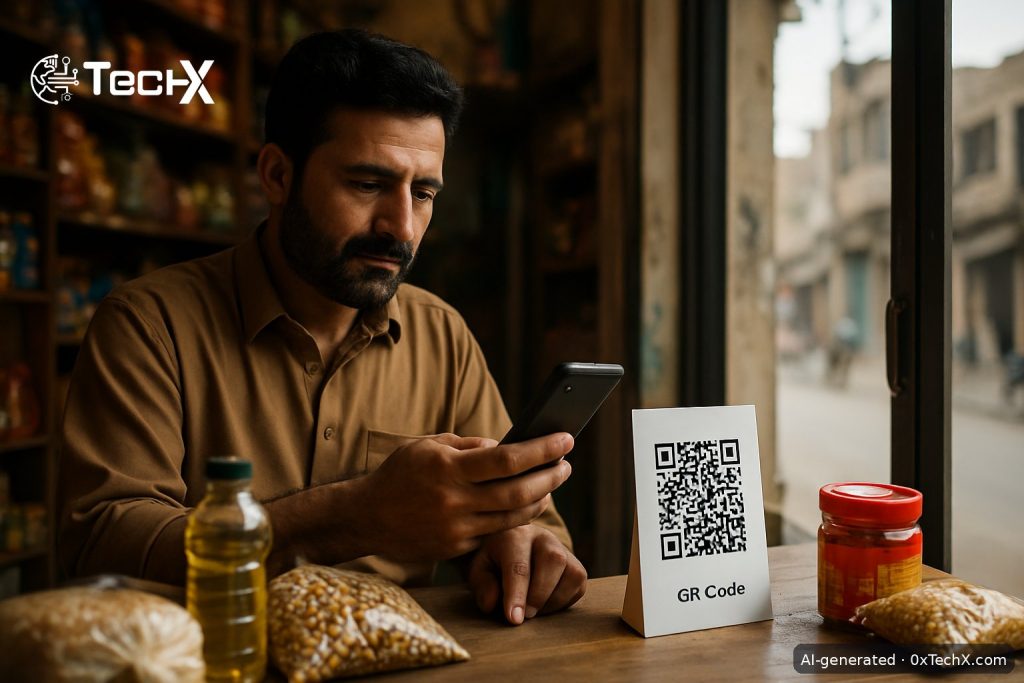
JazzCash’s push toward 2 million interoperable QR payments merchants by December 2026 is reshaping how ordinary Pakistani shops handle money. Speaking at the IAMTN Annual Summit on 13 October 2026, JazzCash CEO Murtaza Ali confirmed the network had already crossed 1.9 million Raast QR-enabled merchants, up from fewer than one million at the start of the year. The milestone signals one of the fastest expansions of digital payment infrastructure in the country’s history.
How JazzCash Interoperable QR Payments Grew So Fast
JazzCash’s interoperable Raast QR merchant network reached 1.9 million, almost doubling since January 2026, with the company targeting 2 million merchants before the year ends.
The network now processes close to PKR 150 billion in QR payments each month. That is a massive jump from the PKR 20 billion monthly figure reported just a year earlier. To understand what is driving this growth, you have to look at the two things that most coverage misses: the zero-hardware model and the government subsidy.
No POS Terminal Needed
JazzCash’s QR network is now significantly larger than Pakistan’s card-terminal network, enabling kiryana stores, beauty salons, home-based businesses and other micro-enterprises to accept digital payments without purchasing traditional point-of-sale terminals. A printed QR sticker on a counter is all a shopkeeper needs. This removes the biggest cost barrier that kept small shops out of digital payments for years.
QR payments helped address the cost barrier associated with hardware-based acceptance, allowing smaller businesses such as corner shops, salons and home-based businesses to participate in digital payments.
Government Subsidy Pushed Adoption Higher
The private sector did not do this alone. The sharp increase in merchant adoption was supported by the government’s subsidy program under the Prime Minister’s Cashless Pakistan Initiative. The government allocated Rs 3.5 billion for the initiative and provided a subsidy of 0.5% of the value of each eligible transaction, capped at Rs 100 per transaction, shared equally between the merchant’s and customer’s financial institutions.
This meant both the shop and its customer got a small financial benefit every time a QR payment was made, which helped build the habit on both sides of the counter.
What Is Raast and Why Does Interoperability Matter
Raast is Pakistan’s national instant payment system, a digital payments infrastructure launched by the State Bank of Pakistan in 2021. Raast enables interoperability across Pakistan’s financial sector, empowering merchants by accelerating the use of digital payment tools such as QR codes to advance digital financial inclusion.
Before Raast, a JazzCash QR code could only be scanned by JazzCash users. Interoperability changed that. The growth of interoperable acceptance has been supported by Raast, which allows customers of different banks and payment providers to transact through a common infrastructure. JazzCash CEO Murtaza Ali said merchants should not need separate integrations for individual wallets or banks if digital payments are to scale across the economy.
In simple terms, one QR code on a shop window now works for any Pakistani bank app or wallet. That is the same idea that made UPI in India and PromptPay in Thailand so successful.
The Bigger Picture for Pakistan’s Digital Economy
JazzCash is a big part of a much larger national shift. The number of QR-enabled merchants in Pakistan more than tripled to 3.8 million during fiscal year 2025-26, up from 1.1 million a year earlier. According to State Bank of Pakistan data, QR-enabled merchants processed 297 million transactions worth Rs 1.6 trillion during FY26.
Raast transaction volumes are also growing fast. Total Raast transactions increased from 295.7 million in the second quarter of fiscal year 2024-25 to 412.1 million in the fourth quarter. The volume rose further to 543.9 million in the first quarter of FY2025-26 and reached 742 million in the third quarter.
JazzCash serves more than 60 million customers and processed PKR 16.8 trillion (approximately USD 59.7 billion) in Gross Transaction Value during the 12 months ending March 2026. It was also named among the World’s Top Fintech Companies 2026 by CNBC and Statista in the Payments category.
Why This Matters Beyond Just Payments
Here is the angle that most news stories miss. Accepting digital payments does more than save a shopkeeper from counting notes. It creates a financial record.
The company aims to create financial records for millions of small businesses, potentially helping them access credit, insurance and investment opportunities. A kiryana store owner who has never had a bank loan can now build a transaction history that a lender can evaluate. This is how a QR code becomes a doorway to formal finance.
JazzCash also issues an average of more than 200,000 digital loans daily, giving individuals and small businesses convenient access to formal credit. As more merchants join the QR network, more of them become eligible for these products.
You can read more about how Pakistan’s broader digital financial infrastructure is expanding in our coverage of the USF Pakistan subsidy crossing $1 billion after 158 projects, which shows the wider government investment in digital connectivity.
Challenges Still Ahead
The growth numbers are impressive, but the road to full adoption is not smooth. The adoption of Raast in Pakistan is progressing at a relatively fast pace; however, a significant part of this momentum appears to be driven by regulatory encouragement and the strong push from the regulator, rather than entirely by organic market demand.
Chairman All Karachi Tajir Ittehad Atiq Mir, representing over 500 markets and bazaars, said that government-led digital payment initiatives require greater policy clarity, structured awareness campaigns, and tangible incentives to build merchant confidence.
Getting to 2 million Raast QR merchants is a real achievement. Keeping them active and transacting daily is the harder job.
Frequently Asked Questions
What are interoperable QR payments in Pakistan?
Interoperable QR payments let customers from any bank or wallet app scan one standard QR code at a merchant. Pakistan’s Raast system, run by the State Bank of Pakistan, provides this shared infrastructure so that one QR sticker works for all payment apps.
How many merchants does JazzCash have on its QR network?
JazzCash’s interoperable Raast QR merchant network has reached 1.9 million, up from fewer than one million at the start of 2026. The company is targeting 2 million merchants by the end of 2026.
Does a small shop need any special device to accept QR payments?
No. A merchant only needs a printed or displayed QR code. JazzCash’s QR network enables kiryana stores, beauty salons, home-based businesses and other micro-enterprises to accept digital payments without purchasing traditional point-of-sale terminals.
How much money moves through Pakistan’s QR payment system?
According to State Bank of Pakistan data, QR-enabled merchants processed 297 million transactions worth Rs 1.6 trillion during FY26. JazzCash alone processes around PKR 150 billion in QR payments every month.