
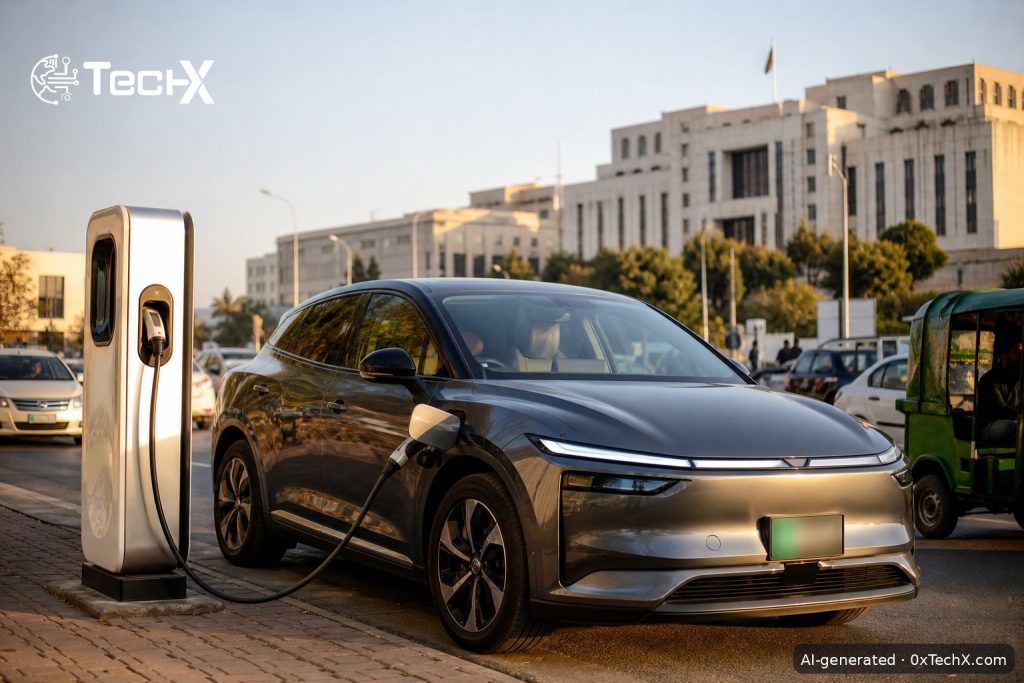
The Pakistan auto policy 2026-31 landed on 7 November 2026 with a promise to make cars cheaper, push electric vehicles into the mainstream, and turn Pakistan into a serious automobile exporter. For ordinary buyers, the two biggest changes are steep tax cuts on electric vehicles and a much higher loan limit that could finally put an EV within reach of a middle-class family.
What Is the Pakistan Auto Policy 2026-31?
The federal government announced a new auto policy with a special focus on affordable cars and electric vehicles. Information Minister Attaullah Tarar and PM Adviser on Industries and Production Haroon Akhtar Khan presented the policy at a press conference in Islamabad.
The policy rests on six pillars: cheaper vehicles, especially for the middle class and lower middle class; encouraging exports; localisation; vehicle safety; promotion of EVs; and transparency.
According to PM Adviser Haroon Akhtar, the policy has come into effect immediately. However, some of its most important measures, particularly the EV tax rates, still need a nod from the International Monetary Fund before they become final.
EV Tax Cuts Under the Pakistan Auto Policy
This is the part that matters most for anyone thinking about buying an electric car. General Sales Tax on Battery Electric Vehicles (BEVs) has been set at 1%, while Range-Extended Electric Vehicles (REEVs) and Plug-in Hybrid Electric Vehicles (PHEVs) are assigned rates of 6% and 9% respectively. Compare that to the standard 18% GST that conventional petrol and diesel vehicles still carry.
Fully electric vehicles are also expected to benefit from additional concessions, including 0% Federal Excise Duty (FED), 0% Advance Tax and 0% Capital Value Tax (CVT).
EVs priced below $50,000 would also be exempt from capital value tax, withholding tax and federal excise duty. More expensive EVs are treated as luxury vehicles and taxed at normal rates.
One key detail that many buyers may not know: the government has rejected the proposal to increase sales tax on electric vehicles to 18 percent, as suggested by the International Monetary Fund (IMF). That is a significant win for the EV cause, though negotiations with the IMF are ongoing regarding the proposed one per cent tax on electric vehicles.
Sales tax on the equipment for charging stations has been reduced to 1%, while customs duty has been removed. This should lower the cost of building new charging networks across the country.
EV Financing Jumps to Rs10 Million
Cheap taxes mean little if you cannot afford the car upfront. The policy addresses this directly. The government plans to raise the financing limit for EV purchases from Rs3 million to Rs10 million and extend repayment periods from three years to five.
That is more than three times the old limit. A five-year repayment window also means smaller monthly instalments, which could bring many popular EV models into range for salaried buyers in cities like Karachi, Lahore and Islamabad. If you are already watching the EV market, it is also worth reading about how affordable Chinese EVs are entering Pakistan, a trend the new policy is designed to support.
Will Petrol Car Prices Actually Fall?
The government says yes, but with an important condition. “The prices of all vehicles, except luxury vehicles, will come down,” Akhtar said. The policy puts no extra tax on cars below 1,000cc, protecting small, affordable hatchbacks from new burdens.
Under the new policy, car manufacturers will not be allowed to collect advance payments exceeding 20 percent of a vehicle’s price at the time of booking. This is a consumer protection rule that stops companies from holding large sums of a buyer’s money for months before delivering a vehicle, a common complaint in Pakistan’s car market.
However, officials did not announce specific price reductions or dates when consumers could expect to see cheaper vehicles in showrooms. The government’s detailed tax notifications, tariff schedules and implementation procedures will determine which vehicles qualify for concessions and when any savings take effect.
The 30% EV Target and the $6 Billion Export Dream
The government’s aim of transitioning 30% of all new vehicles in Pakistan to electric power by 2030 was described as “about to happen sooner than that” by Akhtar. That is an ambitious claim for a market where EVs are still a small fraction of total sales, but the policy does set up real financial incentives to back it up.
On the export side, the numbers are striking. Pakistan aims to increase vehicle exports 30-fold, from $200 million to $6 billion. Pakistan’s auto exports have remained limited, with most overseas shipments comprising parts rather than vehicles manufactured by local assemblers. Reaching $6 billion would require a near-total transformation of how the industry works.
The IMF Hurdle
The biggest asterisk over this whole policy is IMF approval. Pakistan’s Auto Policy 2026-31 has not yet completed the full approval process, with proposed EV tax incentives still awaiting IMF agreement. Pakistan is currently in an active IMF programme, and making tax collection from the automotive sector a necessary part of that programme.
This means the 1% EV sales tax rate, the most exciting number in the whole policy, is not yet guaranteed. Buyers should watch for the official tax notification from the Federal Board of Revenue (FBR) before making decisions based on the new rates. For more on how government policy shapes digital and economic infrastructure in Pakistan, see the SBP core banking upgrade as another example of state-driven modernisation.
Frequently Asked Questions
When did Pakistan announce the new auto policy?
Information Minister Attaullah Tarar and PM Adviser Haroon Akhtar Khan presented the new auto policy at a press conference in Islamabad on November 7, 2026.
What is the new EV sales tax under the Pakistan auto policy?
Under the proposed framework for 2026-31, battery electric vehicles would face a 1% sales tax, range-extended electric vehicles 6% and plug-in hybrid vehicles 9%. These rates still need IMF sign-off to become final.
How much can I borrow to buy an electric car in Pakistan?
The policy proposes raising the EV financing limit from Rs3 million to Rs10 million and extending the maximum loan tenure from three years to five years. This change is intended to make EVs affordable for middle-class buyers.
Will small petrol cars get more expensive under the new policy?
The policy puts no extra tax on cars below 1,000cc. The government has said prices of non-luxury vehicles should come down over the life of the policy, though no specific timelines or rupee figures have been confirmed yet.