
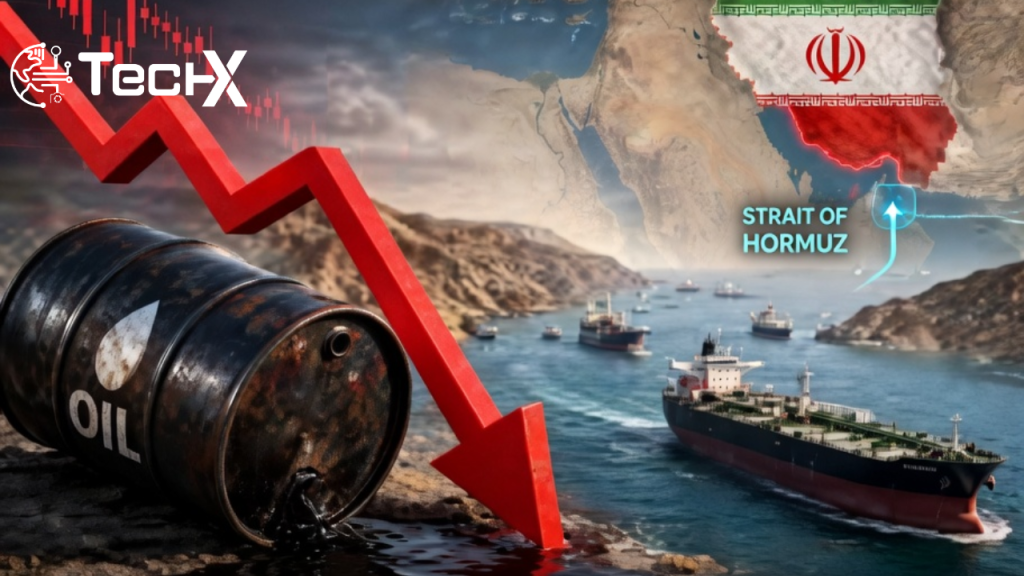
Oil prices experienced a massive sell-off immediately following Iran’s announcement. The U.S. benchmark, West Texas Intermediate (WTI), plunged by over 9% to settle at approximately $82.93 per barrel, after having traded as high as $105 earlier in the week. Brent crude, the international standard, also tumbled nearly 10%, dropping to $90.38 per barrel. This represents one of the largest single-day drops in recent history, as the “war risk premium” that had kept prices high began to evaporate.
The Role of the 10 Day Ceasefire
The reopening is tied to a strategic 10-day ceasefire mediated by Pakistan, which also includes a truce between Israel and Lebanon. Iran’s Foreign Minister, Abbas Araghchi, confirmed that the Strait would remain open for the duration of this ceasefire period. This diplomatic breakthrough has provided the first real sign of de-escalation in the Middle East, giving traders confidence that the supply of 20 million barrels of oil per day will no longer be blocked.
Clearing the Maritime Backlog
For the first time in nearly seven weeks, the flow of energy from the Persian Gulf has resumed. There were reportedly over 150 tankers anchored and waiting for safe passage during the blockade. While it will take weeks for these slow-moving vessels to reach refineries in Europe and Asia, the physical movement of ships has already started to balance the global market. Technical teams are also reportedly working to clear sea mines to ensure the “coordinated routes” are safe for all commercial traffic.
U.S. Blockade and Political Pressure
Despite the reopening for commercial ships, the political situation remains complicated. President Trump has stated that the U.S. naval blockade of Iranian ports remains in “full force.” This means that while international oil can move through the Strait, Iran’s own exports and direct trade are still restricted. The U.S. is using this leverage to push for a final “100% complete transaction” regarding Iran’s enriched uranium stockpiles and nuclear program.
Impact on Global Inflation
Economists believe that if oil prices remain in the $80 to $90 range, it will provide a massive “headwind” against global inflation. Lower fuel prices are expected to reduce the cost of groceries, transport, and manufacturing worldwide. However, experts warn that the current situation is “fragile” because the ceasefire is temporary. If a permanent peace deal is not signed by the time the 10-day truce expires, the market could face another period of high volatility.