
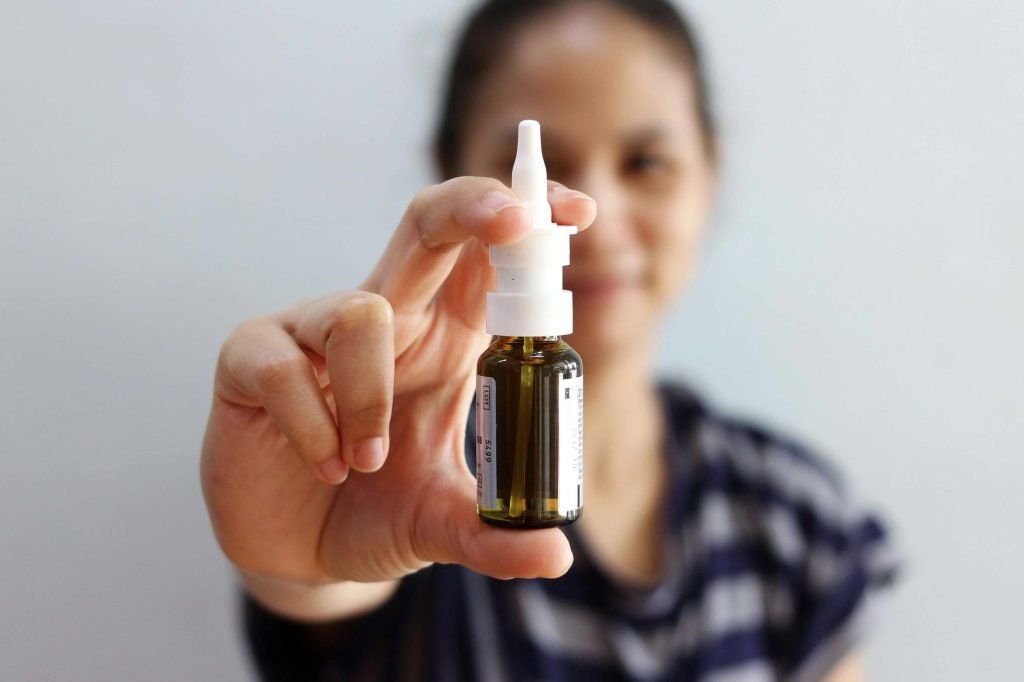
Researchers from Northwestern University, the University of Washington, and Washington University in St. Louis have created a novel protein-based antiviral nasal spray to treat COVID-19, which is now in Phase I human clinical trials.
The new protein therapies resisted infection by interfering with the virus’ capacity to enter cells, and were designed computationally and perfected in the lab.
Antibody therapies with Emergency Use Authorization status from the US Food and Drug Administration killed the virus with similar or greater potency than the top protein (FDA). Notably, the top protein killed all SARS-CoV-2 types tested, a feat that few therapeutic antibodies have accomplished.
When researchers used a nasal spray to give the medication to mice, they discovered that the most effective antiviral proteins lowered infection symptoms or even avoided infection entirely.
The findings were published in Science Translational Medicine on April 12th.
Michael Jewett of Northwestern University, David Baker and David Veesler of the University of Washington School of Medicine, and Michael S. Diamond of WashU led this research.
To begin, the researchers employed supercomputers to create proteins that could bind to susceptible spots on the novel coronavirus’s surface, specifically the spike protein.
This research was first published in the journal Science in 2020.
The team reengineered the proteins, known as minibinders, to make them even more effective in the latest study.
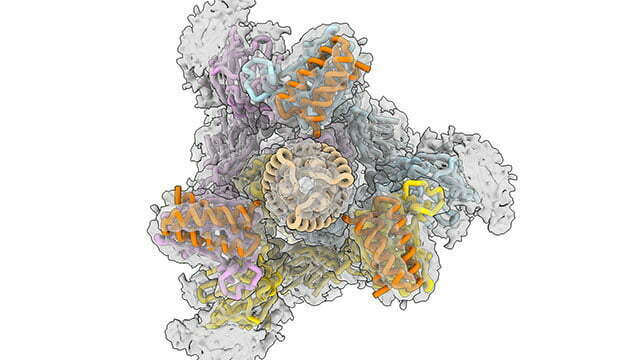
Instead of targeting just one spot of the virus’s infectious machinery, the minibinders attach to three at once, making the medicine less likely to detach.
“The spike protein of SARS-CoV-2 has three binding domains, but most antibody therapies only inhibit one,” Jewett explained. “Like a tripod, our minibinders sit on top of the spike protein and block all three.” The relationship between the spike protein and our antiviral is one of the most complex in biology. The spike protein and our antiviral treatment stayed attached in a test tube for a week and never fell apart.”

Jewett is the director of Northwestern’s Center for Synthetic Biology and a professor of chemical and biological engineering at Northwestern’s McCormick School of Engineering. The paper’s co-first author is Andrew C. Hunt, a graduate research fellow in Jewett’s group.
Unlike the antibody therapies, which failed to neutralise omicron, the novel minibinders were effective against the omicron strain under investigation. The new antiviral blocks the virus from binding to the human angiotensin-converting enzyme 2 (ACE2) receptor, which is the virus’s entry point into the body, by disrupting its spike protein.
The antiviral should also act against future variants because the novel coronavirus and its mutant forms cannot enter the body without attaching to the ACE2 receptor.
“The spike protein and the ACE2 receptor form a handshake to enter the body,” Jewett explained. “Our antiviral prevents this handshake and, as an added bonus, prevents viral escape.”
To read our blog on “WHO declares a green recovery from COVID-19 urgently required,” click here.