
Pakistan’s illegal call centre crackdown has moved into high gear, with the National Cyber Crime Investigation Agency (NCCIA) raiding locations in Lahore, Islamabad, Rawalpindi and Karachi in a single sustained wave. The latest raids, reported on 4-5 October 2026, show just how widespread these operations had become, and why regulators are under pressure to close the gaps that let them grow in the first place.
What Happened in the Latest Lahore Raids
The NCCIA raided two illegal call centres in Lahore, detaining more than three dozen people who were allegedly involved in defrauding foreigners, an agency spokesperson confirmed on Sunday, 5 October 2026.
The raids were carried out in Faisal Town and Johar Town. The suspects allegedly used dial-up software to target people abroad with fraudulent calls made in the name of mobile upgrades and telecommunication services.
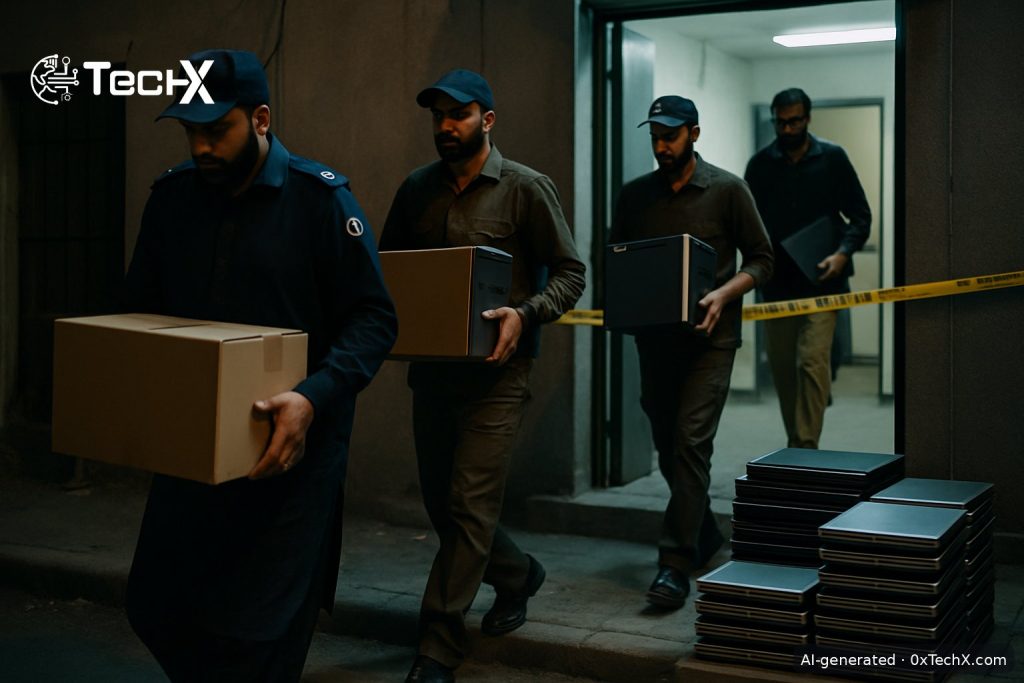
A large number of computers, laptops and mobile phones were seized during the raids. The seized devices contained dial-up software and data allegedly linked to fraudulent activities, and all digital evidence was seized and sealed in accordance with legal requirements.
Notably, the agency traced the second illegal call centre during an investigation that followed the first raid, and the NCCIA team completed the operation at the second location despite resistance from security guards.
Several vehicles allegedly purchased with proceeds from crime were also taken into custody during the operation.
The Illegal Call Centre Crackdown Is a Nationwide Wave
The Lahore raids are not a one-off. They sit at the tail end of a months-long national sweep that has produced some striking numbers.
- On 22 September 2026, the NCCIA raided three alleged illegal call centres in sectors E-11 and G-10 in Islamabad, taking 212 Pakistani and Chinese men and women into custody in connection with an alleged international online fraud network.
- On 28 September 2026, NCCIA Rawalpindi raided an alleged illegal call centre in Commercial Market, Satellite Town, arresting 61 suspects and seizing 155 laptops and 71 phones.
- In Karachi, the NCCIA claimed to have busted an alleged international scam call centre and arrested 27 suspects, including four Afghan nationals.
- Also on 5 October 2026, NCCIA Additional Director Lahore Zone Atif Amir led a separate raid on a call centre operating under the guise of a fake medical billing service, arresting 38 people and impounding 24 computers, seven laptops and 42 mobile phones.
Earlier in August, the FIA detained over 100 Chinese nationals for their alleged role in operating illegal call centres. The operation, which led to 258 foreign suspects being arrested in total, including nationals from Vietnam and Indonesia, revealed that the facilities were being used to conduct cyber-romance, sextortion and fake investment scams targeting individuals across multiple countries.
How These Call Centres Actually Worked
Understanding the methods used helps explain why these operations were so hard to detect early.
The call centres were allegedly being used to target foreign citizens through fraudulent schemes presented as mobile upgrades, network packages and other telecommunications services. Suspects allegedly used dial-up software to contact people abroad and deceive them in the name of telecom-related services.
In at least one case, the accused trapped foreign nationals in Canada through their call centre and obtained their details of debt and credit cards.
Officials said preliminary findings at the Rawalpindi site pointed to illegal foreign-loan recovery with threats and intimidation of customers abroad.
The use of Voice over IP (VoIP) technology and dial-up software allowed these centres to make cheap international calls while hiding their true location, a major challenge for telecom regulators trying to block them at the network level.
What Regulators and the Government Are Doing
The federal government launched a countrywide crackdown against illegal call centres following reports that foreign nationals were allegedly running an international network linked to cyber fraud and obscene content. A special task force was set up at the FIA headquarters to coordinate action against illegal call centres operating in different parts of the country.
The move came after the NCCIA’s Operation Grey failed to curb the problem. A new task force was then formed, comprising officers from sensitive agencies, the FIA Cyber Crime Wing and the National Forensic Agency.
The task force operates under the supervision of the FIA headquarters, and details of operations are submitted to the Ministry of Interior on a daily basis. It will investigate cases involving extortion, blackmailing, gambling and online skimming.
The Pakistan Telecommunication Authority (PTA) has also played a role in identifying and blocking suspicious numbers used for fraudulent communications. For more on how the PTA handles telecom-related enforcement, its official website lists current regulatory frameworks and consumer complaint channels.
Cases are being registered under sections 3, 4, 13, 14 and 16 of the Prevention of Electronic Crimes Act (PECA) 2016, read with relevant sections of the Pakistan Penal Code (PPC).
The Enforcement Gaps That Still Worry Experts
Even with the raids, serious gaps remain. First, there is the money trail. Investigators found that proceeds amounting to Rs 172 billion were allegedly moved through different bank and microfinance accounts and transferred abroad as part of a suspected money-laundering operation. That scale suggests the problem went far beyond a few rogue offices.
Second, there is an internal accountability problem. In November 2025, it was reported that a corruption scandal involved 13 NCCIA officers who allegedly took about Rs 15 million every month from 15 illegal call centres, mostly run by foreigners in Rawalpindi and Islamabad. That scandal directly undercut Operation Grey and is part of the reason a whole new task force had to be built.
Third, deportation and blacklisting have been slow to catch up with the arrests. The FIA decided to place 671 foreign nationals arrested during raids on Pakistan’s foreign blacklist, with the individuals to be permanently barred from entering the country again. The first group to be deported, 50 Vietnamese citizens, has already been sent back to Vietnam.
For Pakistani readers who are concerned about telecom fraud, the PTA consumer complaint portal is the official channel to report suspicious calls or numbers.
The ongoing illegal call centre crackdown is a positive step, but the scale of what has been uncovered, hundreds of suspects, dozens of locations, billions in suspected laundered money, makes clear that enforcement will need to be both sustained and internally clean to make a lasting difference.
Frequently Asked Questions
What is the NCCIA and why is it leading these raids?
The NCCIA is tasked with protecting digital infrastructure, enforcing cyber laws and promoting cyber awareness and resilience. It is the main federal body responsible for acting against cybercrime in Pakistan, including illegal call centres running fraud operations.
What kind of scams were these call centres running?
These scam call centres were operating on a large scale, luring people with fake investment plans, impersonating officials and executing tech support scams. In the latest Lahore raids, suspects used dial-up software to pose as telecom service providers and target victims abroad.
Can the PTA block these illegal operations at the network level?
The FIA and PTA are leading a coordinated initiative in collaboration with law enforcement and intelligence services. The operation is focused on eliminating networks responsible for fraudulent schemes that have victimised individuals both within Pakistan and internationally. However, the use of VoIP and dial-up software makes network-level blocking complex and requires continuous monitoring.
What happens to the foreign nationals who are arrested?
The FIA has decided to place 671 foreign nationals arrested during raids on Pakistan’s foreign blacklist, permanently barring them from re-entering the country. The detainees reportedly entered Pakistan on tourist or visit visas, prompting Pakistani authorities to initiate deportation proceedings and implement blacklisting measures.