
More and more countries are considering our future in space, rather than just trips to the Moon and back to Earth.
Long-term settlements on the moon and Mars are very much within reach, but before they can be sustained, explorers will need to deal with gravity—or the lack of it.
Research has revealed that it can have a negative impact on things like bone strength, even though many people would appreciate the chance to experience the reduced gravitational effects of a place like the Moon or Mars.
We also don’t know how gravity may affect a space birth or how a child raised in a low gravity environment might react upon returning to Earth.
On Earth, the gravitational pull of the Moon is roughly 16.6% of that of the planet; on Mars, it is more like 38%.

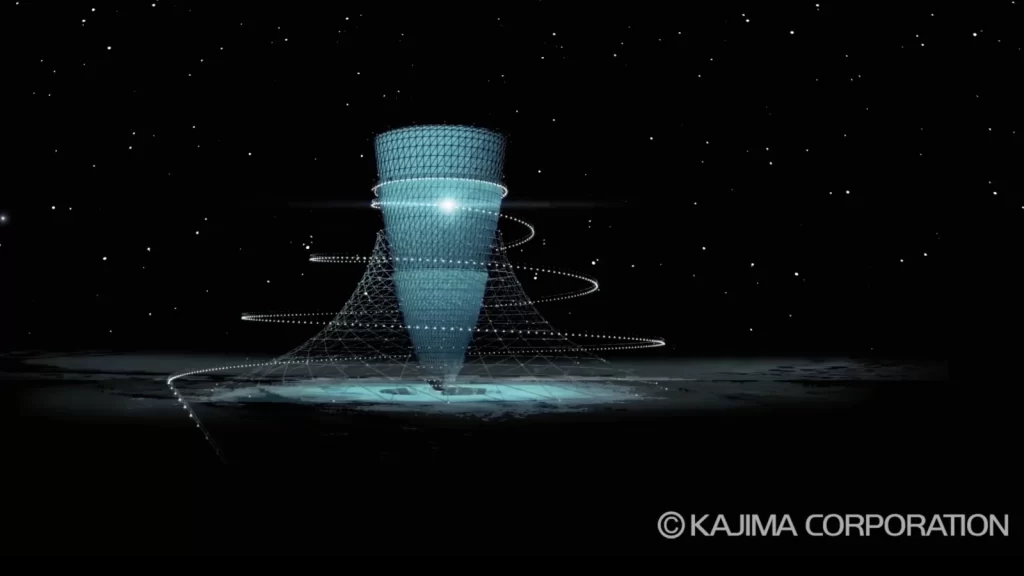
Researchers and engineers from Kyoto University and Kajima Construction Co. have suggested an artificial gravity system to assist human spaceflight in order to accommodate for the variances. Centrifugal forces would create gravity in the housing complex.
The cylindrical building will be up to 400 meters tall and 100 meters wide (328 feet wide and 1,312 feet wide).
Every 20 seconds, it will complete one full rotation and produce 1G of gravity, or the same force as Earth’s, where the radius is at its maximum.

In addition, the team is considering the creation of core biomes and a high-speed interplanetary transportation system that would enable travelers to travel between Earth, the Moon, and Mars.
Given that they don’t anticipate colonization efforts to become a reality until the later part of the 21st century, researchers still have plenty of time to iron out the specifics and work on funding.
To read our blog “On Mars, enigmatic rocks reveal indications of a violent genesis,” click here.