
Part 4 of 5 in our Defence Day series.
A Date That Lives in Every Pakistani Heart
Every year on 6 September, something quietly extraordinary happens across Pakistan. Flags rise at dawn, gun salutes echo through cities, schoolchildren stand at attention, and families of martyrs wipe away proud tears. This is Defence Day, known in Urdu as Youm-e-Difa, a national day that goes far beyond ceremony. It is a collective act of remembrance, gratitude, and resolve.
The Night That Changed History
To understand why Defence Day matters so deeply, you have to go back to the dark hours of 6 September 1965. Tensions between Pakistan and India had been building for months, centred largely around the disputed region of Kashmir. Then, without a formal declaration of war, Indian forces crossed the international border and advanced toward Lahore, one of Pakistan’s largest and most beloved cities.
What happened next is the stuff of national legend. Pakistan’s Army, Air Force, and Navy, despite being tested by the sheer scale and speed of the assault, mounted a resolute defence. The Battle of Burki and the defence of the Ichogil Canal saw Pakistani soldiers hold the line against a determined push toward Lahore. Citizen volunteers stood alongside soldiers. The entire nation, it seemed, became one fighting unit.
The war lasted until 23 September 1965, when both sides agreed to a UN-mandated ceasefire, followed by the Tashkent Agreement in January 1966. In those seventeen days, every piece of Pakistani soil remained Pakistani soil, a fact the nation has never forgotten.
Heroes Who Still Inspire Us
No account of Defence Day is complete without the names that light up Pakistan’s history books. Squadron Leader Muhammad Mahmood Alam, affectionately called “Little Dragon” by his fellow pilots, performed one of the most remarkable feats in aviation history during this war. Flying his F-86 Sabre, MM Alam shot down five Indian Hawker Hunter aircraft in less than a minute on 7 September 1965. He was awarded the Sitara-e-Jurat for his extraordinary courage. Today, one of Lahore’s busiest and most famous roads bears his name, a daily reminder to millions of commuters of what one man’s bravery looked like in the skies above Pakistan.
These are not just names in textbooks. Families across Pakistan carry the memory of fathers, brothers, and sons who served. Defence Day is the day the whole country stands with those families and says: we have not forgotten.
How the Day is Observed: From Dawn to Dusk
The observance of Defence Day follows a deeply moving sequence of events that unfold from early morning across the country.
Gun Salutes and Special Prayers
The day begins before sunrise. A 31-gun salute rings out in Islamabad, and a 21-gun salute is fired in each provincial capital. Shortly after Fajr prayers, mosques across the country hold special prayers for the martyrs and for the continued peace and unity of Pakistan. It is a solemn, spiritual start to the day that sets the tone for everything that follows.
Flag Hoisting and the Change of Guard
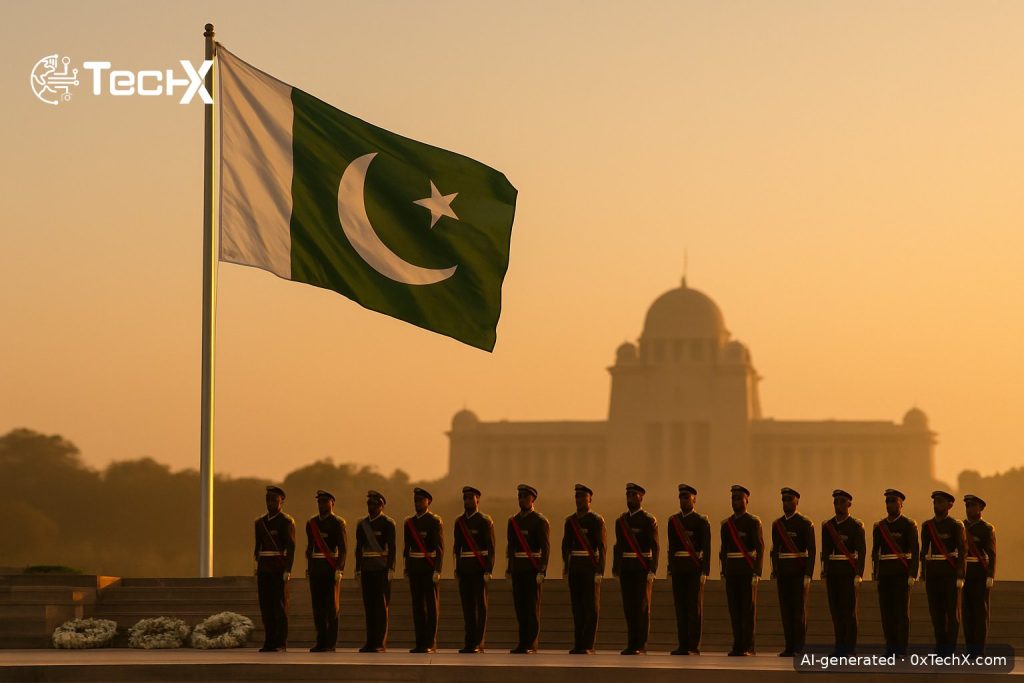
The national flag is hoisted at government buildings, military installations, and public spaces nationwide. One of the most dignified and symbolic moments of the day is the change-of-guard ceremony at Mazar-e-Quaid in Karachi, where Pakistan Air Force Academy cadets take charge, presenting the Guard of Honour at the resting place of Quaid-e-Azam Muhammad Ali Jinnah.
Wreath-Laying at Martyrs’ Memorials
The main national ceremony is held at the General Headquarters (GHQ) in Rawalpindi, where the Prime Minister and the Chief of Army Staff lay wreaths at the Martyrs’ Memorial in a deeply respectful tribute. Senior civil and military leadership gather together, united in honouring those who gave everything for Pakistan.
Military Parades and Defence Exhibitions
Military parades showcase the discipline and capability of Pakistan’s armed forces. Defence exhibitions display Pakistan’s hardware, tanks, missiles, and air assets, reminding the nation that the spirit of September lives on in a force that remains vigilant and capable. These events draw large crowds and are broadcast live on television so that every Pakistani, wherever they are, can feel part of the occasion.
Schools, Colleges, and the Next Generation
Across Pakistan, educational institutions play a vital role in keeping the memory of Defence Day alive. Schools hold speech competitions, debates, and tableaux on the theme of the day. Colleges organise special programmes covering the history and significance of 6 September. Teachers use this day as an opportunity to pass the torch, to make sure young Pakistanis understand not just the events of 1965, but the values those events represent: courage, unity, and an unbreakable love for the motherland.
Media, Documentaries, and Digital Tributes
Television channels air documentaries and interviews with war veterans, giving viewers a window into the personal stories behind the history books. In recent years, social media has added a vibrant modern dimension: Pakistanis across the globe share tributes, historical photographs, short films, and messages of solidarity online. The Pakistan Armed Forces’ media wing, ISPR, consistently produces moving video campaigns that reach millions of people on digital platforms. Defence Day has moved from the parade ground to the smartphone screen, and the emotion is just as real.
More Than Military Might
What makes Defence Day truly special is that it is not just about weapons and warfare. It honours doctors who treated the wounded, civilians who carried ammunition, women who turned their homes into support centres, and communities of all backgrounds who stood together. The white stripe of Pakistan’s flag, representing the minorities of the nation, is part of this story too. People from every walk of Pakistani life played a role in September 1965, and Defence Day belongs to all of them.
Pakistan’s embassies around the world also mark the day, with Defence Attachés speaking about the significance of the occasion and reaffirming Pakistan’s commitment to peace, sovereignty, and its contributions to international peacekeeping efforts.
The Spirit of September, Still Alive
Over six decades later, the “Spirit of September” remains one of the most powerful phrases in Pakistan’s national consciousness. It describes something that goes beyond military readiness, a collective resolve that the people of Pakistan are strongest when they stand together. That spirit is what Defence Day celebrates every year: not just a battle won, but a nation that discovered, in the hardest possible way, what it was made of.
As Pakistan continues to grow, in its economy, its technology sector, its young workforce, and its global presence, the lessons of Defence Day remain deeply relevant. A nation that remembers its sacrifices is a nation that knows its worth. And a nation that honours its heroes gives the next generation a reason to be great.
Frequently Asked Questions About Defence Day
When is Pakistan’s Defence Day observed?
Defence Day is observed every year on 6 September. The date marks the anniversary of the night in 1965 when Indian forces crossed the international border without a formal declaration of war, and Pakistan’s armed forces launched their resolute defence of the country.
What is the Urdu name for Defence Day?
Defence Day is officially called Youm-e-Difa (یومِ دفاع) in Urdu, which translates directly as “Day of Defence.” It is also sometimes referred to as Defence and Martyrs’ Day, honouring not just the soldiers but also the civilians who sacrificed so much.
What are the main ceremonies held on Defence Day?
The main observances include a 31-gun salute in Islamabad and 21-gun salutes in provincial capitals, special prayers in mosques, flag-hoisting at government buildings, a change-of-guard ceremony at Mazar-e-Quaid in Karachi, wreath-laying at the Martyrs’ Memorial at GHQ, military parades, defence exhibitions, and special programmes in schools and colleges across the country.
Who is remembered most prominently on Defence Day?
All martyrs and veterans of Pakistan’s armed forces are honoured, but some heroes hold a particularly cherished place in national memory. Squadron Leader Muhammad Mahmood Alam (MM Alam), who shot down five enemy aircraft in less than a minute during the 1965 war, is one of the most celebrated. Major Raja Aziz Bhatti Shaheed, who was awarded the Nishan-e-Haider for his heroic defence of the Bedian-Jassar area near Lahore, is another name synonymous with the spirit of 6 September.
Pakistan Zindabad
Defence Day is not a day of anger or hostility, it is a day of deep love. Love for the brave men and women who defended our borders. Love for the motherland they protected. And love for the idea of Pakistan itself, a nation worth fighting for, worth building, and worth passing on to our children in a condition better than we found it. On this 6 September, as every year, we bow our heads in gratitude to our martyrs and stand tall with pride in our hearts. Pakistan Zindabad.
Disclaimer: This article has been compiled from information publicly available on the internet and from published sources. The featured image is AI generated and is for illustration only. If you notice anything that needs correction, please contact us.