
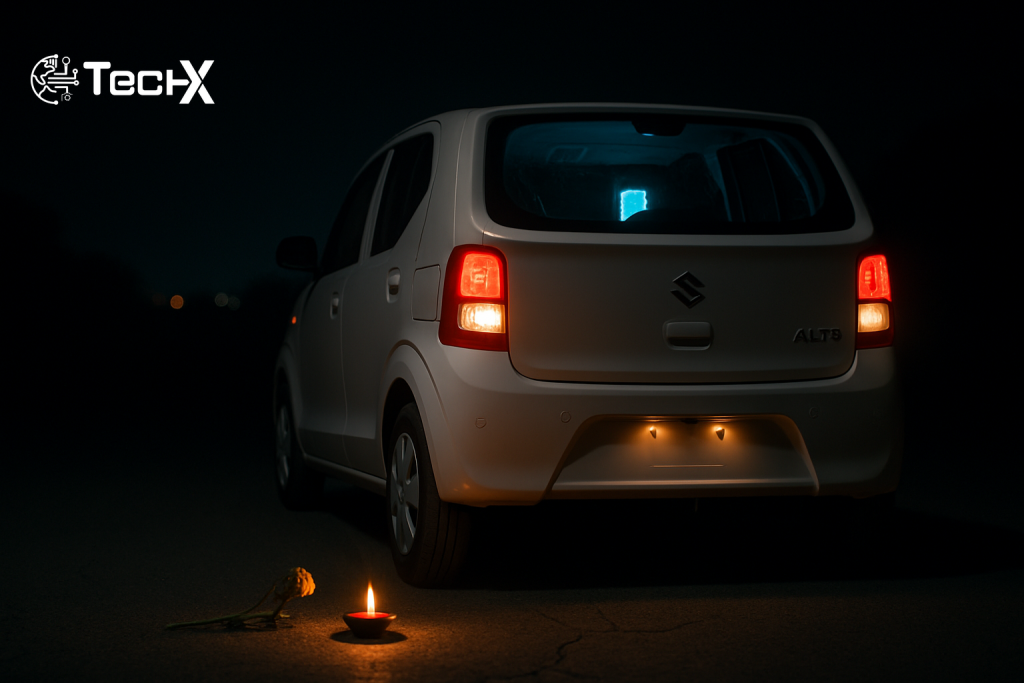
A Google Maps wrong turn cost a Karachi family man his life on Friday night, after incorrect navigation directions sent their vehicle deep into one of Balochistan’s most remote and dangerous areas. Ali Murtaza Jameel, a mobile phone trader from Karachi, was shot and killed in the Kand area of Dasht while his wife survived with serious injuries. The incident has shocked Pakistan and raised hard questions about the risks of relying on navigation apps in conflict-prone regions.
What Happened in Dasht
Ali Jameel had traveled to Quetta with his wife and two young daughters for a family trip. It was reportedly the first time the family had made this journey. On Friday night, they started driving back to Karachi on the National Highway.
Somewhere along the route, the family followed a Google Maps wrong turn that took them off the main highway. Google Maps directed them into the Kand area of Dasht, a remote part of Balochistan’s Mastung district far from the main road and regular security checkpoints.
Once in that area, armed men signaled the vehicle to stop. When Jameel kept driving and did not comply with the signal, the attackers opened fire on the car. Jameel was hit in the chest and died instantly at the scene. His wife was struck by five bullets and was rushed to a private hospital in a critical condition. Remarkably, the couple’s two daughters, who were also in the car, escaped without any physical injuries.
Government and Community React
Balochistan Government Spokesperson and Special Assistant for Home Affairs, Babar Yousafzai, condemned the attack in a public video statement. He said the government views the killing as a tragic act of terrorism and has promised to bring those responsible to justice. Yousafzai alleged that militants from the banned Baloch Liberation Army (BLA) carried out the assault.
The Balochistan provincial government said police have opened an investigation and are working to trace and arrest the attackers.
Back in Karachi, the business community was deeply shaken. Rizwan Irfan, president of the Karachi Electronic Dealers Association, called the killing a tragic act of terrorism. He confirmed that Jameel had run a mobile phone shop and was a well-known and respected member of the trading community. Funeral prayers were held at Rehmani Mosque on Tariq Road, attended by a large number of family members, friends, and fellow traders. Jameel was laid to rest at the Tariq Road graveyard on Sunday.
The Google Maps Wrong Turn Problem
The Google Maps wrong turn angle has made this story travel far beyond a local crime report. Navigation apps like Google Maps rely on road data that may be outdated, incomplete, or simply wrong in remote parts of Pakistan. In areas like Dasht, some roads that appear on a digital map may be unpaved tracks, military-controlled zones, or routes through areas with active security threats.
This is not the first time a navigation app has led travelers into danger in Balochistan. The province has a complex road network, with many rural tracks branching off the main National Highway. At night, when visibility is low and signage is limited, it is easy for a family following a phone screen to miss a wrong turn until it is too late.
Security experts have long warned that civilians traveling through Balochistan should stick to the main National Highway, travel in daylight wherever possible, and inform local authorities or family of their route before setting off. A Google Maps wrong turn in a city might add a few minutes to your journey. In a conflict zone, it can be fatal.
Balochistan’s Ongoing Security Crisis
The Dasht attack comes at a time when Balochistan is facing serious and persistent security challenges. The BLA, which is designated as a terrorist organisation by Pakistan, the United States, and the European Union, has carried out numerous attacks on security forces, civilians, and infrastructure across the province.
Earlier in 2026, a wave of coordinated BLA attacks across multiple districts, including Quetta and Gwadar, left dozens of civilians and security personnel dead. The insurgency in Balochistan has roots going back decades, with armed groups demanding greater autonomy and a larger share of the province’s natural resources.
For ordinary Pakistani families, this incident is a stark reminder that travelling through certain parts of the country carries real risks, and that digital tools, no matter how advanced, cannot replace local knowledge and proper safety planning.
What Travelers Should Know
If you plan to travel on the Quetta to Karachi route or through any part of Balochistan, security advisories suggest the following basic steps:
- Always use the main, well-lit National Highway and avoid unmarked or unfamiliar side roads.
- Do not rely solely on a navigation app in remote areas. Cross-check with local residents or petrol station attendants who know the area.
- Travel during daylight hours when possible. Night travel through remote areas carries higher risk.
- Share your route and expected arrival time with family or a trusted contact before you leave.
- If unsure of your direction, stop at a petrol station, a dhaba, or a security checkpoint to ask for guidance before going further.
The tragedy that struck the Jameel family shows how a single Google Maps wrong turn can have life-changing and irreversible consequences in the wrong location.
Frequently Asked Questions
Who was Ali Murtaza Jameel?
Ali Murtaza Jameel was a Karachi-based mobile phone trader. He had traveled to Quetta with his wife and two daughters for a family visit. He was shot and killed when armed men opened fire on his vehicle after a wrong turn in Dasht, Balochistan.
How did Google Maps lead the family astray?
According to reports, incorrect navigation directions from a mapping app took the family off the main National Highway and into the remote Kand area of Dasht. This area is far from regular security patrols and close to zones with active militant activity.
Who is suspected of carrying out the attack?
Balochistan Government Spokesperson Babar Yousafzai alleged that militants from the banned Baloch Liberation Army (BLA) were responsible. Police have launched an investigation, but no formal arrest has been confirmed yet.
Is the Quetta to Karachi road safe to travel?
The main National Highway between Quetta and Karachi is the established and relatively more monitored route for this journey. Security authorities strongly advise travelers to stay on the main highway, avoid night travel in remote stretches, and not follow navigation apps that direct them onto unfamiliar side roads in Balochistan.