
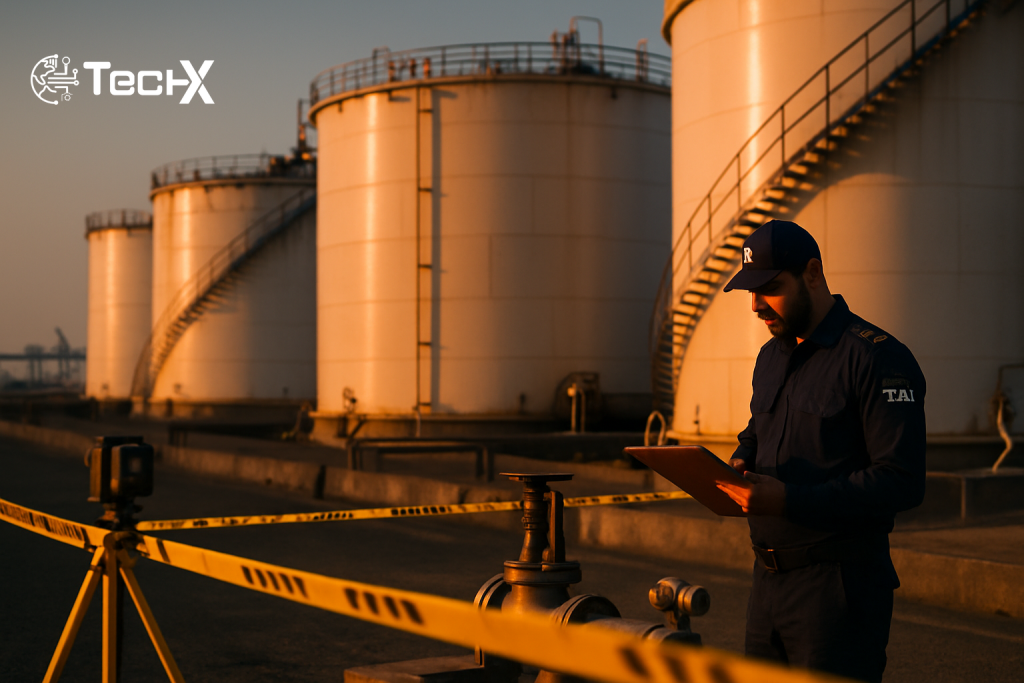
The GO Petroleum FIR registered by the Federal Investigation Agency (FIA) has put Pakistan’s petroleum sector under the spotlight. The FIA Anti-Corruption Circle in Karachi filed the case against Gas & Oil Pakistan Limited (GO Petroleum) and Terminal One Limited (TOL) over the alleged secret sale of Customs-bonded fuel, bypassing all duties and levies owed to the government.
The case is one of the most serious petroleum fraud allegations Pakistan has seen in recent years. It involves imported fuel, bonded warehouses, forged records, and what investigators describe as a deliberate scheme to cheat the national treasury of billions of rupees.
What Is the GO Petroleum FIR About?
The FIA has registered a case over alleged multi-billion-rupee tax and petroleum levy evasion involving the illegal sale of Customs-bonded petroleum products by GO Petroleum and Terminal One Limited. The FIA Anti-Corruption Circle Karachi uncovered the alleged scheme involving petroleum imports, bonded storage facilities, and fuel distribution operations.
To understand the case, you need to know how bonded fuel works. Imported petroleum products kept in Customs-bonded warehouses cannot be removed, sold, or used without filing an Ex-Bond Goods Declaration and paying Customs duties, Petroleum Levy, and Climate Support Levy. Any removal without this process is an offence.
The FIA says GO Petroleum did exactly that, on a massive scale.
How the Alleged Scheme Worked
According to the FIR, GO Petroleum imported High-Octane Blending Component (HOBC) on March 2, 2026, into TOL’s bonded tanks at Port Qasim. The company then sold approximately 4,744 metric tons of this bonded HOBC before filing its first Ex-Bond declaration on March 22, 2026, evading duties and levies in the process.
The problem did not stop at Karachi. Imported Motor Gasoline (PMG) was bonded at Port Muhammad Bin Qasim and moved upcountry via the PAPCO and PARCO pipelines to Mehmoodkot, where it was required to remain under bond. Customs records from January 1 to June 22, 2026, showed that 39,121 metric tons of bonded PMG should have been at the Mehmoodkot terminal, with no Ex-Bond declarations filed.
This figure exceeded the terminal’s licensed capacity of 26,072 metric tons. A joint FIA-OGRA-Customs inspection on June 22, 2026, found only 7,039.7 metric tons in the tanks. The inquiry concluded that approximately 32,081 metric tons of bonded PMG was clandestinely removed without filing Ex-Bond declarations or paying government dues worth billions of rupees.
Digital evidence also surfaced. A forensic analysis of a laptop seized from TOL’s Terminal Manager on April 2, 2026, recovered an Excel sheet documenting dispatches of bonded HOBC without proper Ex-Bond declarations.
Obstruction During the Inspection
Things turned hostile during the June 22 joint inspection. During the joint inspection at TOL’s Port Qasim facility, the Terminal Manager allegedly obstructed verification, refused to provide bonded-stock data and calibration charts, and refused to sign the joint stock proforma on the owner’s instruction, while threatening officials.
This alleged obstruction has added a layer of seriousness to the case, as investigators say it points to a deliberate effort to hide what was inside the tanks.
Who Has Been Named in the Case?
Seven individuals and two companies have been named in the case. They include GO Petroleum Chief Executive Khalid Riaz and Terminal One Chief Executive Fiaz Ahmed.
The FIA said the accused dishonestly removed and sold Customs-bonded petroleum entrusted to them, fabricated false stock records to conceal removals, and cheated the national exchequer of duties and levies, causing wrongful loss worth billions of rupees to the state.
The FIA alleged that company officials manipulated records and used forged documents to hide the irregularities and facilitate the sale of the petroleum products in the domestic market.
What Laws Apply and Where Is the Case Now?
The case has been registered under relevant provisions of the Customs Act 1969, the Prevention of Corruption Act 1947, and the Pakistan Penal Code.
FIA Assistant Director Umayad Arshad Butt has been assigned to lead the investigation. The case has also been forwarded to two special courts in Karachi.
The FIA’s Corporate Crime Circle Karachi has expanded the scope of the investigation to determine the full extent of the alleged financial irregularities. Officials say the inquiry is ongoing and may involve additional individuals from both the public and private sectors.
The FIA said the role of officers and officials of OGRA and any other persons found to have facilitated, abetted, or conspired in the offence will also be determined during the investigation.
Background: GO Petroleum Was Already Under Scrutiny
This FIR did not come out of nowhere. The inquiry had been building for months. The inquiry was initiated in March 2026 after government agencies identified alleged discrepancies in petroleum stock reporting, sales data, and information submitted to regulatory authorities.
Subsequent forensic audits, stock verification exercises, customs record examinations, and supply-chain analysis reportedly revealed evidence of large-scale irregularities, leading to the registration of the case.
Separately, the government had already formed a high-level committee to review a Rs14 billion price differential claim submitted by GO Petroleum. The government raised concerns over the operations of Gas and Oil Pakistan, which are under investigation by the FIA. It considered the size of the claim and the interim progress report submitted by the FIA sufficient grounds for detailed scrutiny in the public interest.
The GO Petroleum FIR is part of a wider push by Pakistani authorities to clean up the fuel supply chain. This case matters for ordinary Pakistanis because unpaid duties and petroleum levies reduce government revenue that would otherwise fund public services. It also raises concerns about fuel quality and pricing fairness across the country. For context on how petroleum prices affect everyday consumers, see our earlier coverage: Pakistan petrol prices and what government advisers are saying about future rates.
The Federal Investigation Agency (FIA) and OGRA are the two main bodies overseeing this case, and both have signalled they intend to see it through to its conclusion.
Frequently Asked Questions
What is the GO Petroleum FIR about?
The GO Petroleum FIR is a criminal case filed by the FIA against Gas & Oil Pakistan Limited and Terminal One Limited. It accuses both companies of selling Customs-bonded fuel without paying government duties and levies, causing a multi-billion-rupee loss to the national treasury.
What is ‘bonded fuel’ and why does it matter?
Bonded fuel is imported petroleum kept in a Customs-bonded warehouse. It can only be released into the domestic market after a formal declaration is filed and all taxes, Customs duties, and levies are paid. Selling it without this process is illegal under the Customs Act 1969.
Who are the main accused in the case?
The FIR names seven individuals and two companies. The most senior are GO Petroleum CEO Khalid Riaz and Terminal One CEO Fiaz Ahmed. The FIA has said more individuals from the public and private sectors may be added as the investigation progresses.
What happens next?
The case has been forwarded to two special courts in Karachi. FIA investigators are examining financial records, import documents, and transaction histories to calculate the total loss to the government. OGRA’s role in the matter is also being reviewed as part of the wider inquiry.