
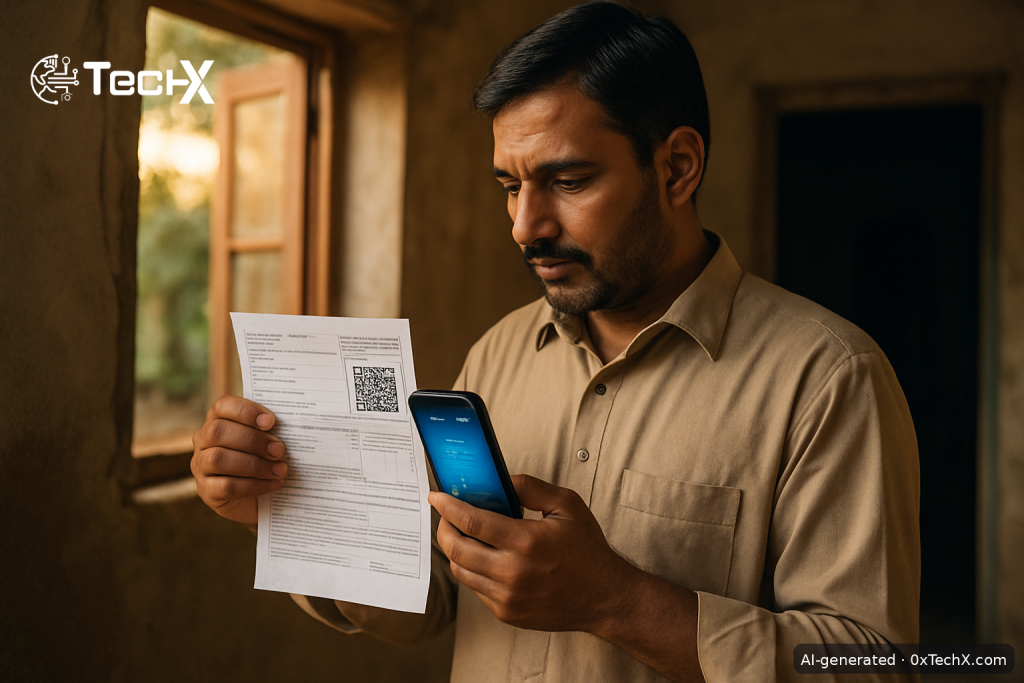
Raast QR bill payment is now live for FESCO customers across Faisalabad, Sargodha, Jhang, Toba Tek Singh and five other Punjab districts. From July 14, all 5.4 million FESCO consumers can open any mobile banking app, tap the Raast QR scanner, point it at the code on their electricity bill, and the payment is done, instantly, and at absolutely no extra cost.
What FESCO Actually Launched on July 14
Faisalabad Electric Supply Company (FESCO) is one of Pakistan’s largest power distribution companies, covering eight districts of Punjab and serving a population of more than 26 million people. On July 14, 2026, FESCO formally enabled the Raast instant payment option across its billing system.
The key detail that matters most to ordinary consumers: there is no service fee, no convenience charge, and no Inter-Bank Funds Transfer (IBFT) deduction. Unlike many third-party bill payment apps that quietly add a fee on top of your bill amount, the Raast QR bill payment route takes only what your bill says, nothing more.
Once you pay, the transaction appears in FESCO’s billing system right away. You do not need to keep a payment receipt or worry about delays. FESCO officers can verify your payment online in real time, which also means fewer disputes at customer service counters.
Beyond regular monthly bills, FESCO has extended this Raast QR bill payment option to demand notices, detection bills, and other utility charges, giving consumers one single digital method to settle almost any FESCO-related payment from their phone.
How to Pay Your FESCO Bill via Raast QR
- Get your bill: Pick up your printed FESCO bill or open your digital copy. The Raast QR code is printed clearly on the bill layout.
- Open your bank app: Launch any Raast-enabled mobile banking app, Allied Bank, Meezan Bank, HBL, UBL, and most major bank apps are already connected to the Raast network.
- Tap Scan to Pay: Find the Raast QR or Scan to Pay icon on the app’s home screen.
- Point and confirm: Aim your camera at the QR code on the bill. The app will fill in the amount automatically. Confirm and you are done.
- Keep the confirmation: Save the payment confirmation screen as proof, though FESCO’s system will also reflect it instantly.
You can also enter your reference number manually if scanning is inconvenient, FESCO supports both methods through the Raast system.
Why Raast QR Bill Payment Is Growing So Fast
FESCO’s launch is not an isolated move. The Ministry of Energy (Power Division) has directed all electricity distribution companies (Discoms) to roll out the Raast platform in phases for person-to-government (P2G), government-to-person (G2P), and government-to-government (G2G) transactions. FESCO is the latest Discom to go live under this directive.
The numbers behind Raast itself tell an even bigger story. Pakistan’s State Bank of Pakistan (SBP) reported that Raast processed 742.1 million transactions worth PKR 23.3 trillion in just the January-to-March 2026 quarter alone. Person-to-person (P2P) transfers drove most of that volume at 664 million transactions, but the faster-growing segment is person-to-merchant (P2M), which includes utility bill payments like FESCO’s new service.
P2M transactions jumped from 36.3 million in the previous quarter to 55.9 million in Q1 2026. That is a 54 percent rise in three months, a pace that shows Pakistanis are not just trying digital payments for the first time, they are making them a habit. Over 2.6 million merchants have now registered on the Raast P2M network.
To put this in a wider picture: digital channels handled 92 percent of all retail payments in Pakistan in Q1 2026, covering 3.4 billion transactions worth PKR 68 trillion. Mobile banking apps alone accounted for 78 percent of that digital activity. The shift away from cash is no longer just a goal, it is already happening at scale.
For people who are still paying their electricity bills in cash at a bank branch or through an agent, this shift carries a direct cost. Agent payments often come with a small facilitation charge. Bank branch queues waste time and often involve surcharge risk if you arrive close to the due date. Raast removes both problems: zero fees, instant settlement, available 24 hours a day from your phone.
If you have been following how Pakistan’s digital finance world is changing, the article on HBL PayPak UnionPay’s new co-badged debit card shows another side of this shift, more payment rails being connected to everyday consumers.
What This Means for the Millions Still Paying in Cash
A large number of FESCO’s customers still pay in person. They visit a bank branch, stand in a queue, hand over cash, and walk out with a paper receipt. Some use agents, small shops or payment centers, which charge a small fee per transaction. None of this is wrong, but it is slower, costs more, and creates the risk of a delay being recorded in the billing system.
With Raast QR bill payment now available, those consumers have a concrete reason to switch. There is no minimum balance needed to use Raast through your bank app. There is no separate wallet to top up. You pay directly from your bank account, the money moves instantly, and your bill is marked as cleared right away.
FESCO has also asked its officers to run public awareness campaigns so that consumers in rural parts of its service area, including Mianwali, Bhakkar, and Chiniot, know this option exists. That outreach will be critical: digital payment adoption in smaller cities and rural areas still lags behind urban centres like Faisalabad city.
Frequently Asked Questions
Which mobile banking apps can I use to pay my FESCO bill via Raast QR?
Any bank app that supports the Raast network works. This includes HBL Mobile, Meezan Bank, Allied Bank, UBL Digital, and most major Pakistani bank apps. Check your app’s home screen for a Scan to Pay or Raast QR option.
Is there any fee for using Raast QR bill payment for FESCO?
No. There are no service charges, convenience fees, or IBFT deductions when you pay through Raast. You pay exactly the amount shown on your bill, nothing extra.
How quickly does FESCO update after a Raast payment?
The payment appears in FESCO’s billing system in real time. You do not need to wait or call a helpline to confirm it, the update is instant.
Are other electricity companies in Pakistan also adding Raast QR payments?
Yes. The Ministry of Energy has directed all power distribution companies (Discoms) to roll out Raast in phases for bill payments and other government transactions. FESCO is among the latest to go live; other Discoms are expected to follow as the rollout continues.