
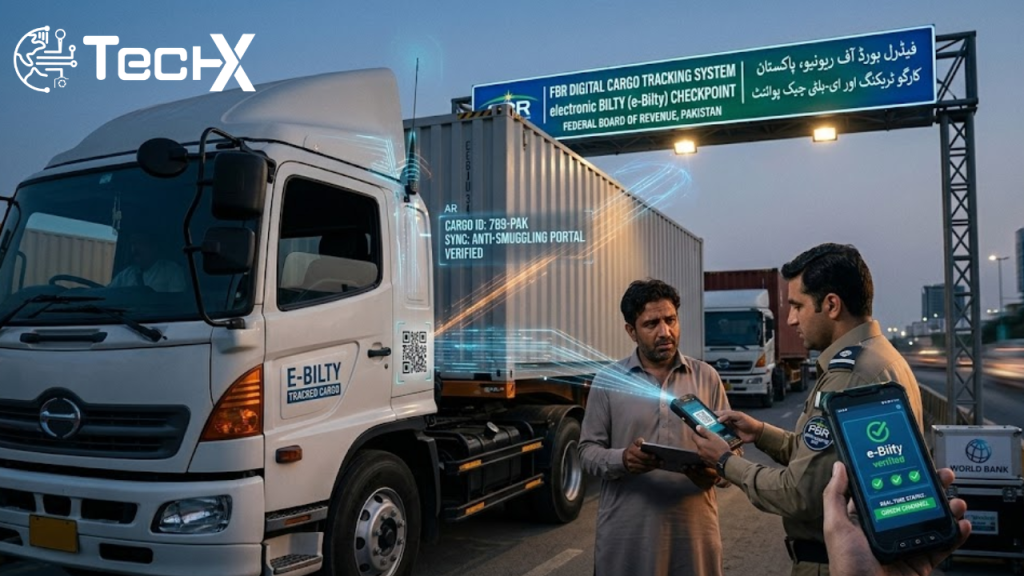
The Federal Board of Revenue (FBR) has officially initiated the design phase of a National Cargo Tracking System (CTS) along with an electronic Bilty (e-Bilty) mechanism. These initiatives aim to modernize the monitoring of goods movement across Pakistan, reduce smuggling, and improve revenue collection.
Contract Signed for Design Phase
FBR signed a contract with a consulting firm to start the strategic feasibility study and solution design for both the cargo tracking system and e-Bilty mechanism. This marks the first step toward creating a fully digital platform for tracking commercial goods nationwide.
Replacing Manual Paper Based Systems
Traditionally, goods movement in Pakistan has relied on manual paper-based bilty documents, which are slow, prone to errors, and vulnerable to misuse. The new system will replace paper forms with digital e-Bilty documents, enhancing transparency and accountability.
How the e-Bilty System Will Work?
Under the e-Bilty mechanism, each shipment will have a unique electronic waybill with a QR code, verifiable in real time by customs officials. The digital platform will track goods from origin to destination, flagging any suspicious or non-compliant movements.
Fighting Smuggling and Tax Evasion
Officials say that the system will close loopholes exploited for fake invoices, misdeclared cargo, and illegal trade, making it easier for authorities to distinguish legitimate shipments from illegal ones. Integration with platforms like WeBOC will further enhance compliance monitoring.
Phased Implementation Timeline
The design phase is expected to be completed within several months. Full implementation could take 1.5 to 3 years, as the FBR plans to deploy the system gradually across all regions, ensuring operational readiness and staff training at every stage.
Benefits for Trade and Enforcement
By moving to a digital, risk-based cargo monitoring system, FBR expects to reduce manual inspections for compliant traders while improving enforcement efficiency. The system is designed to benefit both law enforcement agencies and legitimate businesses, while curbing smuggling and improving revenue collection.