
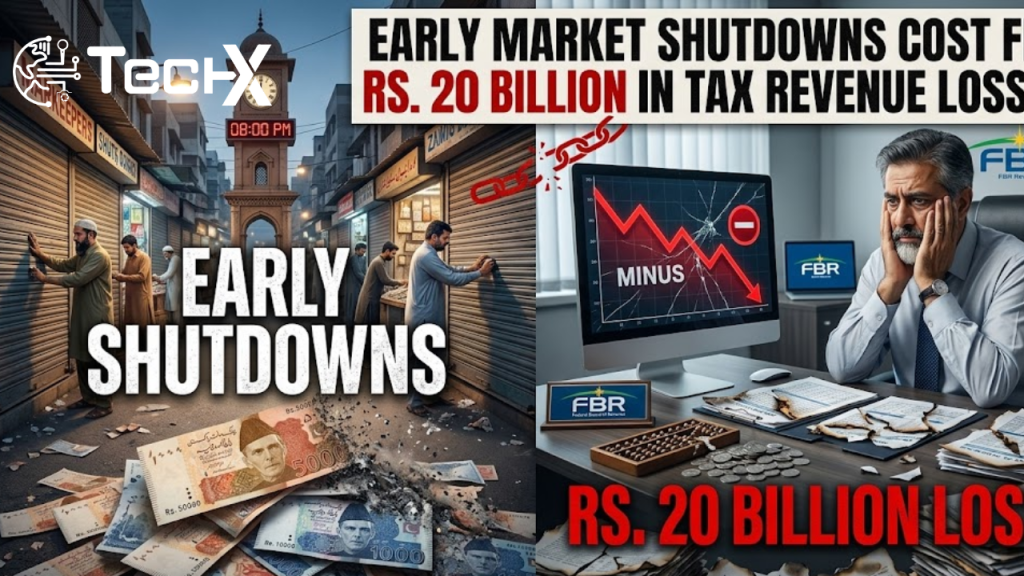
The implementation of early market shutdowns, primarily designed as an energy conservation strategy, has triggered significant fiscal repercussions for the national treasury. Reports suggest that while these measures successfully reduce the load on the national power grid, the trade-off is a substantial decline in tax collection. The restriction of commercial operating hours directly limits the window for retail and wholesale transactions, leading to a calculated contraction in the country’s economic activity.
Calculated Revenue Losses for the FBR
The Federal Board of Revenue (FBR) has reportedly suffered a massive shortfall due to these restricted hours. The financial data indicates the following:
-
Total Revenue Loss: The FBR has faced an estimated loss of approximately Rs. 20 Billion in tax revenue.
-
Sales Tax Decline: A direct drop in sales tax collection has been recorded because the volume of daily commercial transactions is significantly curtailed during peak evening hours.
-
Missed Targets: This revenue shortfall makes it increasingly difficult for the FBR to hit its annual collection targets, potentially widening the fiscal deficit.
The Energy Economy Trade off
The core of this issue lies in the conflict between energy saving and revenue generation. While closing markets by 8:00 PM or earlier saves electricity, it prevents a significant portion of the workforce and consumers from engaging in evening commerce, which traditionally accounts for a high percentage of retail turnover. The Rs. 20 Billion loss highlights that the economic cost of these shutdowns often outweighs the value of the energy saved.
Impact on Small and Medium Enterprises (SMEs)
Small businesses and local retailers are the most affected by these shutdowns. Unlike larger corporations that may have diversified sales channels, SMEs rely heavily on physical footfall during evening hours. The reduction in business hours leads to lower income for shop owners, which in turn reduces their income tax liability and further contributes to the overall decline in government revenue collection.
Industry Concerns and Future Outlook
Business associations and trade unions have expressed deep concern over the long-term sustainability of early closures. They argue that if the government continues to prioritize energy conservation without offering fiscal relief or alternative trading hours, the retail sector could face a permanent slowdown. Experts suggest that a more balanced approach such as shifting to daylight savings or incentivizing off-peak operations—might be necessary to protect the FBR’s revenue stream while still managing the energy crisis.