
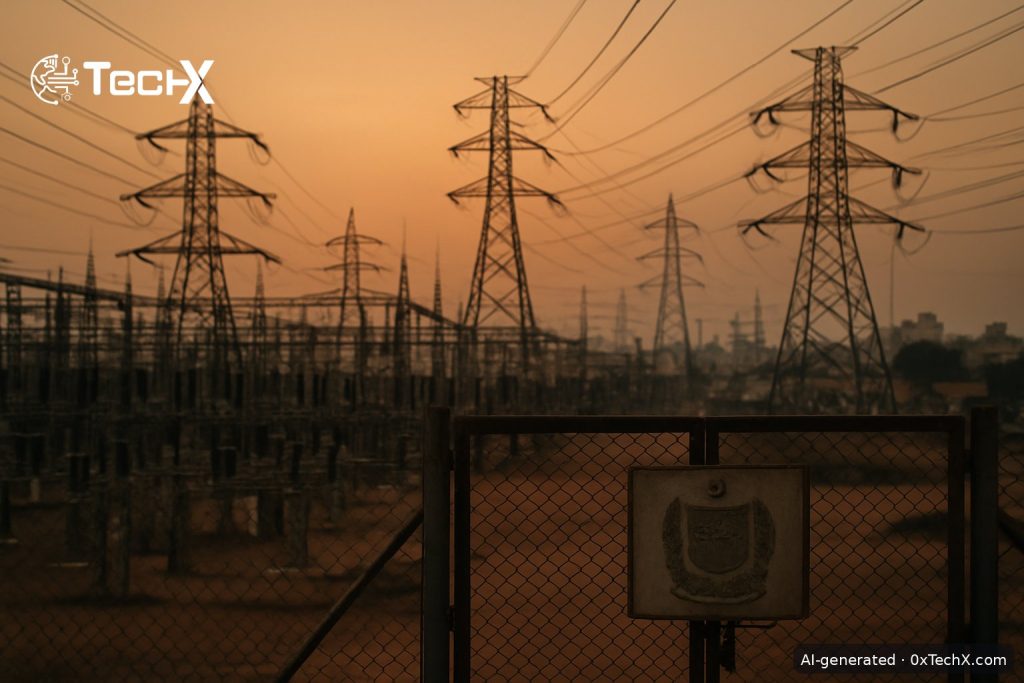
DISCO privatisation Pakistan is moving faster than most people expected. The federal government plans to set up a brand-new, government-owned Special Purpose Vehicle (SPV) with an authorised share capital of Rs250 billion to prepare three major electricity distribution companies for sale to private investors. The three companies are Faisalabad Electric Supply Company (FESCO), Gujranwala Electric Power Company (GEPCO), and Islamabad Electric Supply Company (IESCO).
If you get your power from any of these utilities, or if you run a data centre, operate 5G towers, or plan to charge an electric vehicle in central Punjab or Islamabad, this story is directly about you.
What Is the Rs250 Billion SPV and Why Does It Exist?
An SPV, or Special Purpose Vehicle, is a separate legal company created for one specific job. In this case, the proposed SPV would take over selected assets and liabilities of the three power distribution companies to create a commercially viable structure for their privatisation.
According to sources, assets worth Rs350.6 billion and liabilities of Rs313 billion, based on audited financial statements for the period ended March 31, 2026, are proposed to be transferred to the SPV, leaving equity of Rs37.6 billion. In simple words, the government is using the SPV to clean up the balance sheets of FESCO, GEPCO and IESCO before handing them over to private buyers. A clean company is easier to sell and attracts better offers.
The Securities and Exchange Commission of Pakistan (SECP) is expected to waive the applicable fee on both the establishment of the SPV and the proposed increase in the authorised share capital of the three companies. That waiver cuts red tape and speeds the whole process up.
How Did We Get Here? The DISCO Privatisation Pakistan Timeline
The Privatisation Commission Board, at its July 28, 2026 meeting chaired by Adviser to the Prime Minister on Privatisation and PC Chairman Muhammad Ali, recommended that the Cabinet Committee on Privatisation (CCoP) approve the restructuring plans and schemes of arrangement for the three DISCOs.
The three companies were not chosen at random. They were selected because their transmission and distribution losses of around 9 percent to 10 percent are considered manageable and their financial position makes them more attractive to investors. Compare that to some other Pakistani utilities where losses exceed 20 percent, and you can see why buyers would find FESCO, GEPCO and IESCO easier to work with.
According to official documents, the government plans to sell between 51 and 100 percent shares in Faisalabad Electric Supply Company, Gujranwala Electric Power Company, and Islamabad Electric Supply Company. Administrative control of the companies will also be transferred to private investors under the proposed privatisation framework.
The actual sale is targeted for the last quarter of 2026. The government will begin the privatization of three electricity distribution companies during the last quarter of 2026 after completing the bidding process, a senior Privatization Commission official told the National Assembly Standing Committee on Privatization.
Who Is Interested in Buying?
The investor interest is real and international. The privatization of Gujranwala Electric Power Company (GEPCO) attracted strong interest from domestic and international investors, with 11 prospective investors submitting Expressions of Interest (EOIs) to acquire between 51 percent and 100 percent of the company along with management control.
The interested parties include three Turkish companies, one Saudi Arabian company and several leading Pakistani business groups. The Turkish investors are Aktor Elektrik Enerji Yatırımları, Genvera Enerji, and Cengiz Enerji. Saudi Arabia’s Al Sharif Contracting and Commercial Development Company has also expressed interest. FESCO drew even more attention: 12 interested parties had submitted EOIs for FESCO by the August 7 deadline.
This is a positive signal. It shows that serious regional money sees value in Pakistan’s power sector, even with all the well-known challenges around circular debt and regulation.
What the Share Capital Increase Means
Alongside the SPV, each company is also being scaled up financially. FESCO, GEPCO and IESCO are expected to increase their authorised share capital to Rs100 billion, Rs75 billion and Rs125 billion, respectively, taking their combined authorised share capital to Rs300 billion. Raising share capital gives private investors more room to inject fresh money and expand the grid.
Why This Matters for Pakistan’s Tech and Digital Economy
Most tech coverage of this story stops at the economics. But for Pakistan’s growing digital sector, there is a more important question: will private owners actually fix the power supply?
Pakistan’s 5G network is growing fast, crossing 1.3 million users in just four months. Every 5G tower needs stable, uninterrupted electricity. Data centres that host local cloud services and e-commerce platforms cannot afford load-shedding. And as electric vehicles start arriving in Pakistan, EV charging stations in Faisalabad, Gujranwala and Islamabad will all depend on the grids run by FESCO, GEPCO and IESCO.
Private investors are likely to bring a sharper focus on fixing the network. Private investors are expected to have greater motivation to reduce losses, improve billing, control theft, and invest in the distribution network. Better investment in the network means fewer outages. Fewer outages mean data centres spend less on diesel backup, 5G towers stay online, and EV charging becomes something you can actually rely on.
Power-sector reform is a central pillar of Pakistan’s IMF bailout program, under which Islamabad has committed to restructuring state-owned enterprises, improving governance and reducing budgetary support. That external pressure means the government is not likely to slow this process down.
The Real Risk to Watch
The deal is not without risks. Experts point out that K-Electric, Pakistan’s only previous DISCO privatisation, tells a mixed story. K-Electric has reduced transmission and distribution losses meaningfully since privatisation, but its record on service, investment and reliability remains contested.
There is also the question of regulatory clarity. The privatised entities are to be allowed permission for self-generation, while both foreign and local investors expressed concerns about regulatory interference and policy continuity. If the rules keep changing after the sale, investors may hesitate to put fresh capital into grid upgrades, which means consumers and tech businesses lose out.
The National Electric Power Regulatory Authority (NEPRA) and the Privatisation Commission will both play a central role in making sure the new private owners actually improve service rather than just cut costs and protect margins.
Pakistan’s DISCO privatisation push is the biggest structural shift in its power sector in decades. How well it is handled will shape electricity supply, and therefore digital infrastructure, for millions of people across some of the country’s most economically active regions.
Frequently Asked Questions
What is the Rs250 billion SPV in Pakistan’s power privatisation?
It is a new government-owned company (Special Purpose Vehicle) that will take over selected assets and liabilities from FESCO, GEPCO and IESCO to make them easier to sell to private investors. Its authorised share capital is set at Rs250 billion.
When will the actual DISCO privatisation happen?
The government plans to complete the sale in the fourth quarter of 2026 after shortlisting bidders from the Expressions of Interest submissions, which closed in August for FESCO and GEPCO and close on September 7 for IESCO.
Who are the main investors interested in buying these DISCOs?
Eleven investors submitted interest for GEPCO and 12 for FESCO. They include three Turkish energy companies, a Saudi Arabian firm, and several major Pakistani business groups.
How does this affect ordinary tech users and businesses in Pakistan?
If private owners invest in fixing the grids, data centres, 5G towers and EV charging stations in those areas could see more reliable power, lower diesel backup costs and better connectivity overall. The risk is that without strong regulation, investors may prioritise profits over network upgrades.