
The Cashless Pakistan initiative has completed its first year with numbers that few predicted when it launched in June 2025. Annual digital transactions rose from 6.9 billion to 11.3 billion, a 64 percent increase in one year. Active digital payment merchants increased from 0.5 million to over 2 million, supported by the government’s Raast QR Code initiative, while digital banking users expanded to more than 135 million. These are not projections, they are the figures presented at a high-level government review held on July 6, 2026.
What the Cashless Pakistan One-Year Review Found
Minister of State for Railways and Finance Bilal Azhar Kayani chaired the high-level review meeting at the Finance Division on July 6, 2026, to assess one year of progress under the Cashless Pakistan initiative. Senior representatives from the State Bank of Pakistan, FBR, NADRA, Controller General of Accounts, Ministry of IT, Raast Payments Pakistan, major commercial banks, digital banks, telecom operators, and development finance organisations all attended.
The initiative was launched in June 2025 under the direct supervision of Prime Minister Shehbaz Sharif, and is built on three core pillars: enhancing public convenience, promoting transparency, and accelerating the formal documentation of the economy through digital payments.
A more recent briefing to the Prime Minister put the full-year tally even higher. Between July 2025 and June 2026, Pakistan recorded approximately 11.9 billion digital transactions. Mobile banking application users had risen from 95 million to 137 million within a year, reflecting rapid growth in digital banking services across Pakistan.
Why the Raast QR Merchant Number Matters So Much
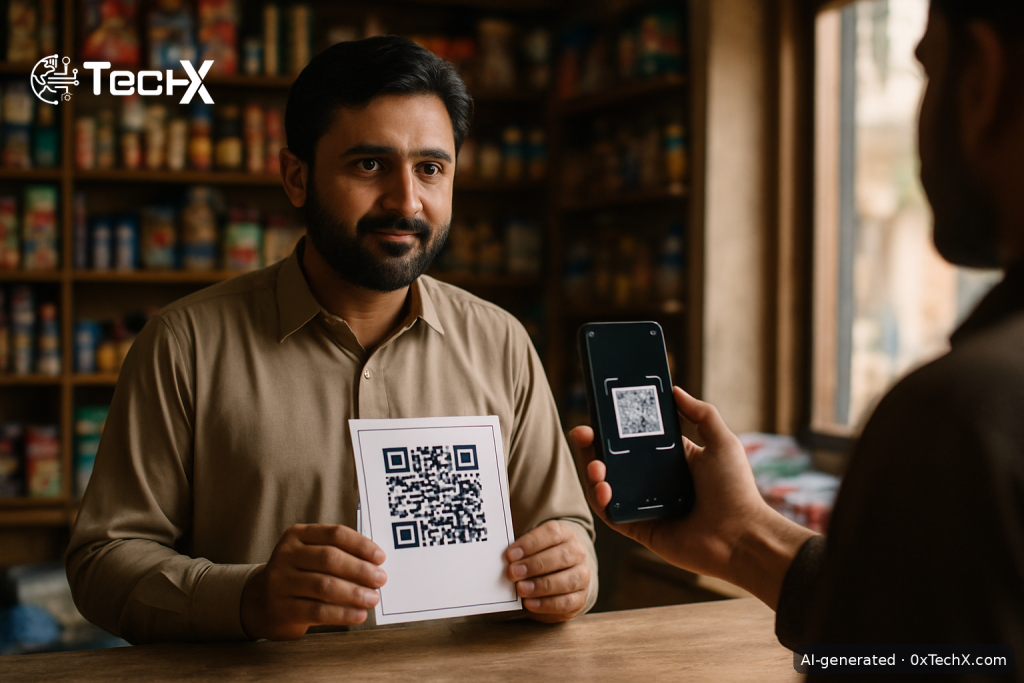
The quadrupling of active digital payment merchants, from 500,000 to over 2 million, is the initiative’s most visible retail-level achievement, largely attributable to the Raast QR Code rollout. QR-based payment acceptance removes the primary barrier that has historically prevented small and micro merchants from adopting digital payments: hardware cost. A merchant does not need a POS terminal, a card reader, or any dedicated equipment to accept Raast QR payments. A printed QR code or a smartphone screen is sufficient.
This has provided a much-needed facility to small and micro merchants and self-employed individuals to accept payments digitally, who otherwise had no mechanism to receive payments other than cash. For a street-level kiryana store or a small tailoring shop, that shift is significant. It means every sale now creates a digital record, which can over time support formal credit access.
The Cashless Pakistan push also shows up in remittances. During the same period, 92% of remittances sent by overseas Pakistanis were already received through digital channels, demonstrating growing confidence in digital payment systems.
Government Payments Are Also Moving Fast
The Cashless Pakistan programme is not only about private commerce. Government-to-people (G2P) payments are a big part of it. Nearly 75 percent of government-to-people payments are now accepted digitally across centralized and self-accounting government entities.
Two agencies in particular show what rapid digitization looks like in practice. NADRA has digitized 99% of its payments, reducing cash transactions from 71% to only 1%. The government has also shifted all payments for 10 million Benazir Income Support Programme (BISP) beneficiaries to digital wallets. For context, the BISP serves some of Pakistan’s most financially vulnerable families, moving them to digital wallets means faster, leakage-free cash transfers. You can read more about how beneficiaries can use digital tools in our guide on filing a BISP complaint online in Pakistan.
Financial inclusion increased to 69 percent, while the gender gap continued to narrow through targeted interventions. That closing gender gap matters in a country where women’s access to financial services has historically lagged well behind men’s.
The Three Committees Running the Programme
Three sub-committees operate under the main Cashless Pakistan Committee: Digital Payments, Innovation and Adoption, led by the Governor of the State Bank; Digital Public Infrastructure, led by the Minister of IT and Telecommunications; and Digitizing Government Payments, led by the Finance Secretary.
This structure means no single ministry can bottleneck progress. The State Bank of Pakistan drives merchant and consumer adoption through the Raast payment infrastructure. The IT ministry builds the underlying digital pipes. And the Finance Secretary committee targets the government’s own payment flows, which represent some of the largest individual transaction volumes in the economy.
What Comes Next, the December 2026 Deadline
Minister Kayani said the government aims to fully digitize 25 federal and provincial institutions through the Raast payment system by December 2026. This target is significant because government payment volumes, including salaries, pensions, subsidies, tax refunds, and procurement payments, represent some of the largest individual transaction flows in Pakistan’s economy. Routing these through Raast creates a documented, auditable record of public finance flows that cash and cheque-based systems cannot provide.
The December 2026 deadline is ambitious. Full digitization of a government entity involves not just payment infrastructure but also system integration, staff training, change management, and regulatory compliance work that typically takes longer than external timelines anticipate.
To keep data honest, the government has also brought in outside eyes. Kayani directed officials to validate reported progress, eliminate duplicate data, and address reporting gaps. The government has also hired an independent third party to assess the initiative’s performance and verify its reported achievements. Officials will present the final report and recommendations in November 2026.
The original targets set at the programme’s launch included doubling transactions to 15 billion annually by end-2026. The government set ambitious targets, aiming to double digital transactions to 15 billion annually, fully digitize government payments by 2026, and expand internet penetration from 60% to 80%. The Cashless Pakistan programme is tracking closer to those goals than most critics expected a year ago, though the hardest part, integrating legacy government systems, still lies ahead.
Pakistan’s broader digital momentum is worth watching alongside this. Our recent coverage of Pakistan’s ITU ICT Development Index score showed that while connectivity is improving, device gaps remain a real barrier to deeper digital adoption, a challenge that will also affect how far digital payments can reach in rural areas.
Frequently Asked Questions
What is the Cashless Pakistan initiative?
Cashless Pakistan is a government programme launched in June 2025 under Prime Minister Shehbaz Sharif. Its goal is to shift the country away from cash by expanding digital payments for individuals, businesses, and government departments, using the State Bank’s Raast instant payment system as the main platform.
What is Raast QR and who can use it?
Raast QR is a free, interoperable QR code payment system run by the State Bank of Pakistan. Any business or individual can get a Raast QR code through their bank or mobile wallet app, no card machine is needed. Customers can then pay by scanning the code through any Raast-enabled banking or wallet app.
How many digital payment merchants are there in Pakistan now?
The number of active merchants accepting QR code-based digital payments increased by 300% between June 2025 and June 2026, reaching 2.003 million. This is up from just 500,000 a year earlier, driven largely by the Raast QR rollout.
What are the next targets for Cashless Pakistan?
The government wants to complete Raast integration for 25 federal and provincial entities by December 2026. The original programme targets included annual digital transactions of 15 billion and financial inclusion of 70%. An independent audit report is expected in November 2026 to validate progress and recommend improvements.