
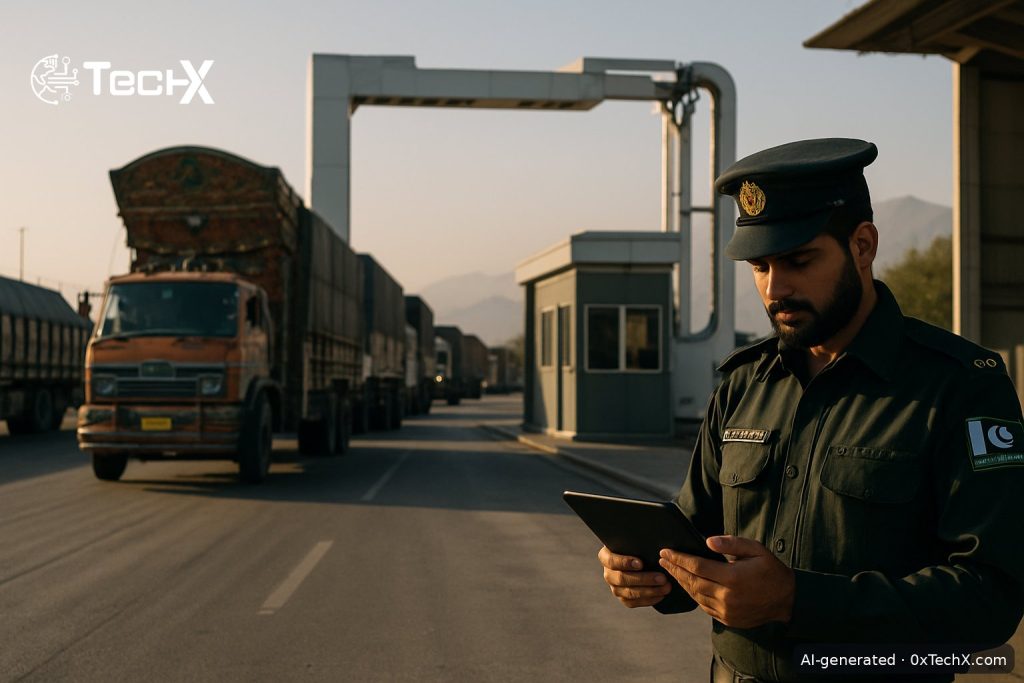
The ADB BUILD facility gives Pakistan a real shot at faster, cheaper cross-border trade. On 27 August 2026, the Asian Development Bank (ADB) approved a $400 million regional financing facility called BUILD, short for Border Upgrades for Integration, Logistics, and Development. Pakistan is one of 11 member countries of the Central Asia Regional Economic Cooperation (CAREC) programme that stands to benefit directly.
This is not just a roads-and-bridges story. The digital angle buried inside this approval is the part that matters most to Pakistan’s tech and e-commerce sector, and it has gone largely unnoticed in early coverage.
What the ADB BUILD Facility Covers
The BUILD facility will support priority investments to modernise border crossing points and strengthen connectivity and competitiveness across the CAREC region. It will support modern infrastructure, digital systems, high-tech inspection and screening equipment, and more efficient and harmonised border procedures to reduce border crossing times and costs.
The facility is structured as $320 million in ordinary capital resources and $65 million in concessional ordinary capital resources lending, along with a $15 million grant, bringing the total to $400 million. Crucially for Pakistan, the facility will finance qualifying small-value border crossing projects, with ADB financing capped at $50 million per project, over a 10-year implementation period. That means Pakistan can apply for multiple individual projects under this single umbrella, making it practical even for a country with many active border posts.
Under the implementation plan, funding proposals will be accepted over an eight-year period, from August 2026 to August 2033. That long window gives Pakistan time to prepare well-structured project proposals rather than rushing in with poorly designed applications.
Why the Digital Customs Angle Matters for Pakistan
Most coverage of this approval focuses on physical infrastructure. But the financing will also be directed toward improving customs and other border procedures, expanding digitalization, and reducing the time and costs involved in freight transportation. This is where Pakistan’s existing digital trade stack becomes highly relevant.
Pakistan already has two key systems in place. Developed by Pakistan Customs, WeBOC serves as an integrated digital platform that automates key functions such as goods declarations, cargo clearance, and risk management. Building on that, the Pakistan Single Window (PSW) goes beyond automation, integrating regulatory bodies, ports, banks, and other trade-related agencies into a unified ecosystem that enables faster, more transparent, and more efficient cross-border trade.
There is also a live proof of concept already working. Pakistan’s PSW has operationalised electronic pre-arrival customs data exchange between Pakistan and Uzbekistan, established under a memorandum of understanding between Pakistan Customs and the State Customs Committee of Uzbekistan, allowing both nations to access critical shipment information before cargo reaches the border. This initiative reduces cargo dwell time at border points and accelerates clearance procedures, and it directly aligns with Pakistan’s commitments under the CAREC Programme. The BUILD facility can now fund this kind of data-sharing model at more border posts, with more CAREC partners.
Still, a real gap exists. Pakistan Customs’ WeBOC clears 95 per cent of international exports and imports electronically, but traders must still comply with non-customs regulations set by various government agencies that mostly use paper-based systems. BUILD funding could help Pakistan close that gap by digitising the non-customs regulatory layer, something that adds hidden costs and delays for exporters today.
The ADB BUILD Facility and Pakistan’s E-Commerce Exporters
For small and medium businesses selling goods across borders, slow and unpredictable border crossings are a serious problem. Fresh produce, garments, and manufactured goods all lose value with every extra hour at a checkpoint. The ADB identified border delays as a major challenge across the CAREC region, noting that growing traffic, limited infrastructure, and outdated procedures slow the movement of goods, while raising costs for traders, transport operators, and passengers.
BUILD will also strengthen institutional capacity, support transport and logistics reforms, and create opportunities for private sector investment, particularly for micro, small, and medium-sized enterprises in agriculture, tourism, and transport services to participate in regional trade. For a Pakistani e-commerce seller exporting handmade goods to Central Asia, that institutional backing is as important as any new road.
One angle the current coverage has missed entirely is the CAREC Digital Corridor Study. Pakistan’s Commerce Minister Jam Kamal was briefed by the CAREC Secretariat on a business forum agenda that focuses on logistics, energy security, critical minerals, digital connectivity, investment opportunities, and private sector collaboration. The CAREC Secretariat also briefed the minister on the ADB-supported Digital Corridor Study involving Pakistan and other CAREC member countries to enhance regional digital connectivity. That study is a complementary track running alongside BUILD, and together they sketch out a vision of borders that are both physically modern and digitally connected.
What Pakistan Should Do Next
The BUILD programme does not hand money directly to governments with no conditions. Countries need to submit qualifying project proposals, and the quality of those proposals will determine how much Pakistan actually receives. Here is what makes this opportunity time-sensitive:
- Border post selection: Pakistan has major land border crossings at Torkham, Chaman, Wagah, and several others. Deciding which posts to prioritise and building the project case for each one will take preparation.
- PSW integration: Proposals that show how digital customs systems will connect to new physical infrastructure will score better. Pakistan’s Pakistan Single Window is a ready platform that can anchor this case.
- Private sector involvement: BUILD explicitly encourages private sector participation. Pakistani logistics and tech firms have a window to join pilot projects at upgraded border posts.
The Asian Development Bank has set clear goals: faster crossings, lower costs, and smarter borders. For Pakistan, which sits at the junction of South Asia and Central Asia, using this facility well could quietly transform the economics of cross-border trade over the next decade.
Frequently Asked Questions
What is the ADB BUILD facility?
BUILD stands for Border Upgrades for Integration, Logistics, and Development. It is a $400 million regional financing facility approved by the Asian Development Bank on 27 August 2026. It funds physical border infrastructure, digital customs systems, and inspection technology across 11 CAREC countries, including Pakistan.
How much funding can Pakistan get under BUILD?
The ADB will finance up to $50 million for each individual qualifying project under the BUILD facility. Pakistan can apply for multiple projects across different border posts during the eight-year window that runs from August 2026 to August 2033.
How does BUILD connect to digital customs in Pakistan?
BUILD specifically funds the expansion of digital border management systems. Pakistan already operates the WeBOC customs clearance platform and the Pakistan Single Window (PSW), which links customs with banks, ports, and regulatory agencies. BUILD can fund upgrades that bring more border posts and more government agencies into that digital network.
Why does this matter for Pakistani e-commerce and small exporters?
Slow, paper-based border procedures increase costs and delivery times for every Pakistani business that ships goods to Central Asia or imports raw materials from there. Faster, digitalised borders mean lower logistics costs, more predictable delivery windows, and better access to regional markets for small and medium exporters.