
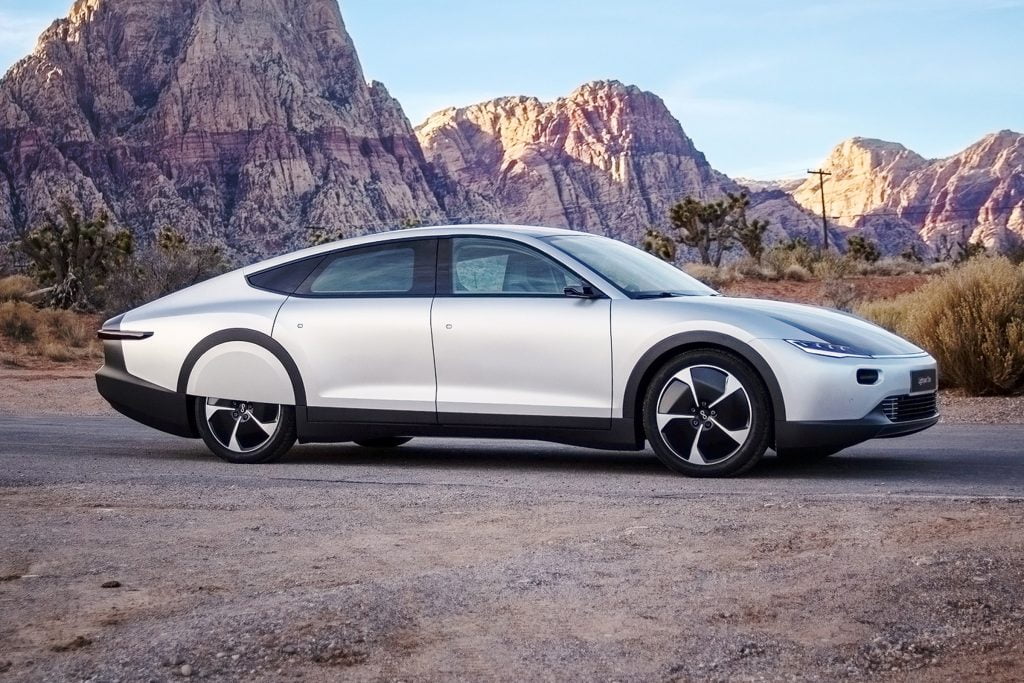
Lightyear, an electric vehicle startup, has launched the world’s first production-ready solar car.
The Lightyear 0 is aimed at a very specific buyer who prioritizes efficiency over performance and is willing to pay a premium for it. Is it going to sell? We’ll have to wait and see.
The Lightyear 0 is the culmination of six years of research and development. Lightyear first caught our attention in 2019 when it unveiled the Lightyear One, a $169,000 electric vehicle with built-in solar panels.
Since then, the project has been renamed Lightyear 0 and has changed slightly (and is also a lot more expensive).
The Lightyear 0 will have a range of 388 miles, according to the manufacturer, thanks to its 60 kWh battery system and four individually controlled in-wheel motors.
In addition, the vehicle’s solar panels can only generate roughly 43 miles of range each day in ideal conditions.
Here, too, don’t expect average EV performance. The Lightyear 0 takes a stunning 10 seconds to accelerate from a standstill to 60 miles per hour, with a top speed of only 100 miles per hour.
A Tesla Model S Plaid, by comparison, can hit 60 mph in less than two seconds and has a maximum speed of 200 mph. It’s also much less expensive.
On the other hand, scorching performance isn’t the goal here; efficiency is.
The Lightyear 0 weighs just 3,472 pounds and has a drag coefficient (Cd) of less than 0.19, which is a world record.
Its body is made partly of recovered carbon fiber, and much of the interior is made of naturally sourced materials.
Interested persons can place an order for a Lightyear 0 on the company’s website, but expect to pay a whopping 250,000 euros ($263,000) for the privilege.
According to the firm, the first cars will arrive in November.
To read our blog on “Urus is the most popular Lamborghini ever, with 20,000 units sold,” click here.