
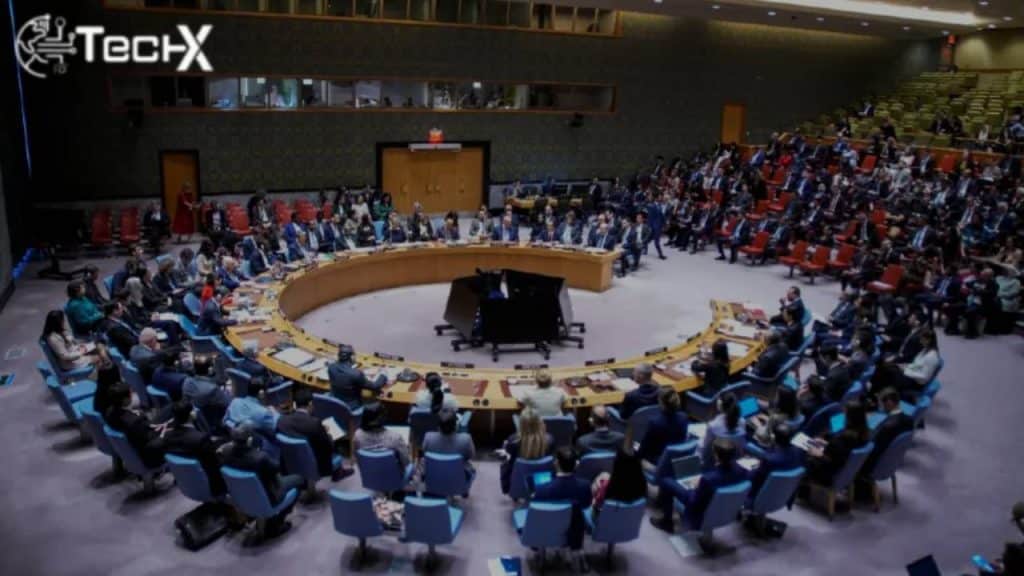
A dramatic emergency session of the United Nations Security Council witnessed a rare consensus among world powers. For the first time in recent memory, the United States joined all fifteen members in condemning Israel’s strike on Qatar. Washington’s alignment with European powers marked a significant departure from its historic practice of shielding Tel Aviv from collective criticism, signaling the seriousness of the unfolding diplomatic rift.
US Shifts Historic Position
Acting US Ambassador Dorothy Shea openly described Israel’s actions as “counterproductive.” She stressed that the strike neither advanced Israeli nor American objectives, but instead jeopardized ongoing mediation efforts led by Qatar regarding Gaza ceasefire negotiations. Shea’s comments underscored Washington’s demand for de-escalation and respect for Qatar’s sovereignty, demonstrating an unusual willingness by the United States to break ranks with its closest Middle Eastern ally.
France Condemns International Law Violation
France’s Ambassador Jérôme Bonnafont condemned the airstrikes as clear violations of international law. He reiterated that lasting peace in the region could only be achieved through a political settlement grounded in the two-state solution. Bonnafont highlighted the urgent need to recognize a sovereign Palestinian state with a reformed governance structure. France’s clear emphasis on legality and sovereignty reinforced European disapproval of Israel’s unilateral and aggressive actions against Doha.
UK Echoes Firm Disapproval
The United Kingdom’s ambassador, Dame Barbara Woodward, joined her American and French counterparts in rebuking Israel’s military operation. She argued that targeting Qatar undermined prospects for Middle East peace while simultaneously eroding Israel’s own security interests. London’s condemnation reflected a broader concern that Tel Aviv’s actions threatened both diplomatic mediation processes and the fragile stability of the Gulf region, adding to mounting international pressure against the strike.
Also Read: U.A.E. Bars Israeli Defense Firms from Dubai Airshow after Qatar Strike
Israel Defends Its Actions
Israel’s UN Ambassador Danny Danon forcefully defended the operation, ignoring the widespread criticism. He compared it to the 2011 US raid in Pakistan that killed Osama bin Laden, framing the attack as a legitimate pursuit of terrorists beyond borders. Danon claimed Hamas leaders in Doha deserved similar treatment, dismissing allegations of illegality while accusing critics of hypocrisy and selective application of counterterrorism principles across different geopolitical theaters.
Reference to Western Military Operations
Danon went further, invoking examples of French operations in Mali, Chad, and Mauritania, as well as British strikes against the Islamic State in Iraq and Syria. His remarks were intended to highlight Western precedents for cross-border counterterrorism operations. By drawing such parallels, Israel sought to normalize its actions in Qatar, yet critics argued the comparisons ignored legal distinctions and international norms governing sovereignty and territorial integrity.
Pakistan Issues Immediate Rebuttal
Pakistan promptly exercised its right of reply through Ambassador Asim Iftikhar Ahmad. He strongly rejected Danon’s analogy as “unacceptable” and “ludicrous.” Ahmad accused Israel of deliberately deflecting attention from its violations of international law and the UN Charter. He branded Israel a serial violator and occupier, arguing that Tel Aviv posed grave threats to humanitarian organizations, international peace, and even the United Nations itself, while consistently portraying itself falsely as a victim.
Pakistan’s Firm Position Highlighted
Ambassador Ahmad insisted Israel’s conduct stood fully exposed before the international community. He reminded Security Council members that Israel, despite initiating aggression, regularly manipulated global opinion by claiming defensive necessity. Pakistan, he argued, would continue resisting such narratives while exposing the hypocrisy underlying Tel Aviv’s justifications. His response reflected Islamabad’s traditional commitment to defending Muslim states facing aggression, while also aligning Pakistan with Qatar’s sovereignty and territorial integrity.
Israeli Counterattack in Debate
Following Pakistan’s intervention, Ambassador Danon returned to the floor with renewed criticism. He accused Islamabad and other nations of pursuing double standards by condemning Israel while justifying their own military interventions. Danon’s combative rhetoric failed to shift the mood in the chamber, where even Washington’s representatives appeared unmoved. Instead, his remarks intensified the debate, leaving Israel increasingly isolated within the council’s deliberations on the controversial strike.
Pakistan’s Foreign Office Reacts
At its weekly briefing, Pakistan’s Foreign Office reinforced Ambassador Ahmad’s stance by categorically condemning Israel’s actions against Qatar. Islamabad expressed “complete solidarity” with the Qatari people and government, calling the attack unlawful aggression. The statement urged the international community to hold Israel accountable for violating Doha’s sovereignty. Pakistan’s response positioned it not merely as a critic, but as an active advocate for global action against Tel Aviv’s conduct.
Qatar Prime Minister’s Strong Address
Under Rule 37, Qatar’s Prime Minister personally addressed the Security Council. He denounced Israel’s attack on Doha, explaining that it struck a residential compound used by negotiation teams, housing Hamas representatives and families. The attack, he said, terrorized civilians and violated international norms. Declaring Israel’s leadership “bloodthirsty extremists,” he warned the council that Tel Aviv’s behavior had exceeded all diplomatic limits and endangered prospects for regional peace.
Growing Rift Among Allies
The session underscored widening cracks within Israel’s traditional alliances, as even Washington abandoned its protective veto. European powers reiterated their calls for a two-state solution and international law compliance, while Muslim nations rallied behind Qatar. The clash at the Security Council marked a turning point, spotlighting Israel’s growing isolation. With Western allies censuring Tel Aviv, prospects for new diplomatic alignments in Middle Eastern conflicts became increasingly possible.