
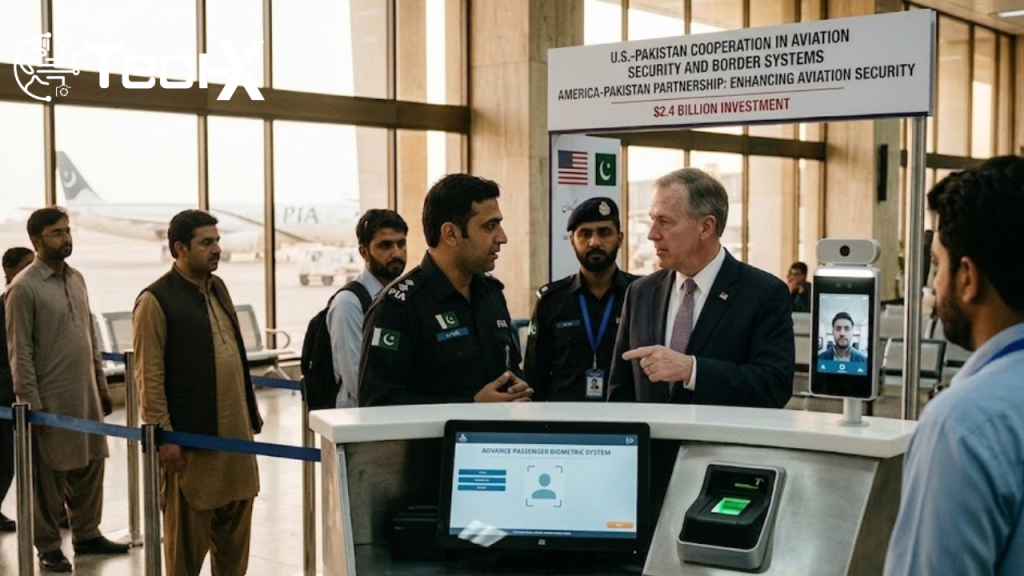
A recent development in aviation security cooperation between United States and Pakistan has gained attention after an American firm, Securiport, presented a $2.4 billion investment proposal. The project aims to upgrade Pakistan’s airport security systems using modern technologies. Although the United States has shown support for this initiative, the proposal is still under consideration and has not yet been officially approved by Pakistani authorities.
Introduction of Biometric Technologies
One of the key features of this proposal is the introduction of advanced biometric systems at airports. These include facial recognition, fingerprint scanning, and possibly iris recognition technologies. Such systems are designed to improve identity verification, reduce fraud, and enhance overall passenger experience by speeding up immigration and security processes.
Advanced Passenger Data Systems
The proposal also includes the implementation of Advanced Passenger Information (API) and Passenger Name Record (PNR) systems. These systems enable airlines to share passenger data with authorities before flights arrive or depart. This allows security agencies to identify potential risks in advance and improve coordination. It also helps Pakistan align with global standards set by organizations like the International Civil Aviation Organization.
Investment Model and Financial Structure
Unlike traditional government-funded projects, this initiative is structured as a long-term investment. Securiport is expected to finance the project initially and recover its investment over a period of approximately 25 years. This approach reduces the immediate financial burden on Pakistan but raises questions about long-term financial commitments and transparency.
Concerns About Privacy and Implementation
Despite its benefits, the proposal has raised concerns regarding data privacy and security. Collecting and storing biometric data on a large scale requires strong legal protections and cybersecurity measures. Additionally, implementing such advanced systems within existing infrastructure may pose technical and administrative challenges that need to be carefully managed.
Conclusion and Future Outlook
In conclusion, this proposed project offers Pakistan an opportunity to modernize its airport security and improve its global aviation standing. However, since the deal is not yet finalized, its success will depend on government approval, proper implementation, and how effectively concerns related to privacy, cost, and national control are addressed.