
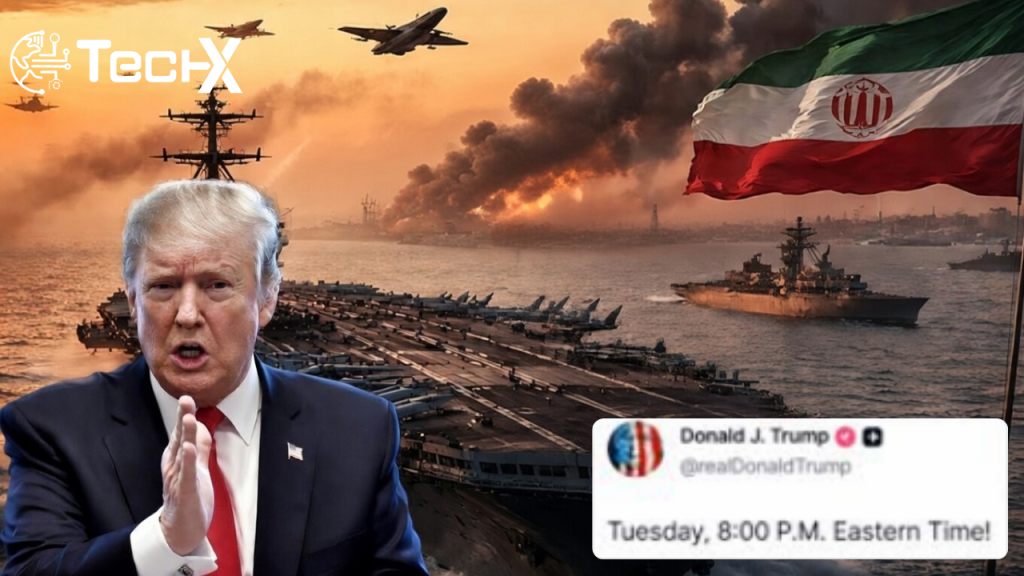
U.S. President Donald Trump has issued a strict deadline to Iran, demanding that the Strait of Hormuz be reopened by Tuesday evening, April 8, 2026. The Strait of Hormuz is a critical chokepoint for global oil shipments, and its closure has caused significant concerns in international energy markets.
Deadline and Threat of Action
Trump warned that failure to comply with the deadline could result in military action against key Iranian infrastructure, including power plants, bridges, and other strategic sites. He emphasized the urgency on social media, stating “Tuesday, 8:00 p.m. Eastern Time!” as the cutoff for Iran’s compliance.
Iran Response
Iran has rejected the U.S. ultimatum, insisting that the strait will not be reopened under external pressure. Iranian officials have described the U.S. demand as a violation of international law and reiterated their control over the waterways within their territorial jurisdiction.
Global Economic Concerns
The Strait of Hormuz is a vital route through which roughly 20% of the world’s oil passes. Any prolonged closure could spike global oil prices, disrupt energy supplies, and trigger volatility in financial markets, affecting both producers and consumers worldwide.
International Reactions
Countries dependent on Middle Eastern oil have urged calm and diplomacy, stressing that military escalation could destabilize the region. International organizations and oil-importing nations are closely monitoring developments to prevent disruptions to global trade.
Potential Outcomes and Next Steps
While the deadline is approaching, both the U.S. and Iran are weighing their next steps carefully. Analysts warn that a failure to reach a diplomatic solution could heighten tensions, while a negotiated reopening would stabilize global oil markets and reduce the risk of military conflict.