
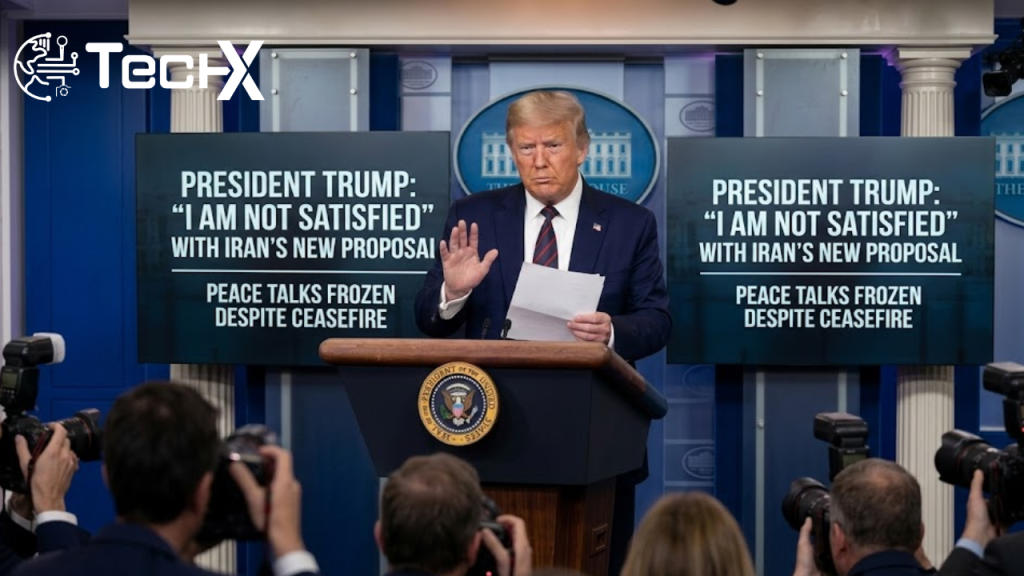
US President Donald Trump stated that he is “not satisfied” with a recent negotiating proposal submitted by Iran. His comments reflect continued tensions between the United States and Iran, where diplomatic efforts to restart formal talks remain limited and uncertain.
Iran Proposal Through Diplomatic Channels
The Iranian proposal was reportedly delivered through indirect diplomatic channels as part of ongoing efforts to revive discussions on regional security and nuclear-related issues. However, the United States has not accepted the proposal in its current form, which has contributed to the continuation of the diplomatic deadlock.
Ceasefire Status and Regional Stability
Although a fragile ceasefire situation has helped reduce immediate tensions in the region, it has not led to meaningful political progress between the two sides. The ceasefire is holding in a limited sense, but it has not evolved into a structured peace agreement or formal negotiation process.
Lack of Trust Between Both Sides
One of the major challenges in the talks is the deep lack of trust between Washington and Tehran. Both countries remain cautious and firm on their positions, which makes it difficult to move beyond initial discussions. This mistrust continues to slow down any possible diplomatic breakthrough.
Key Differences in Negotiation Demands
The negotiations are also stalled due to major differences in expectations regarding security and strategic concerns. Both sides have contrasting views on regional influence and policy conditions, which remain unresolved and act as barriers to progress.
Conclusion and Future Outlook
In conclusion, President Donald Trump’s statement highlights the ongoing uncertainty in US-Iran relations. While diplomatic communication is still active, the lack of agreement on key proposals suggests that progress will remain slow. Future developments will depend on whether both sides show flexibility in negotiations.