
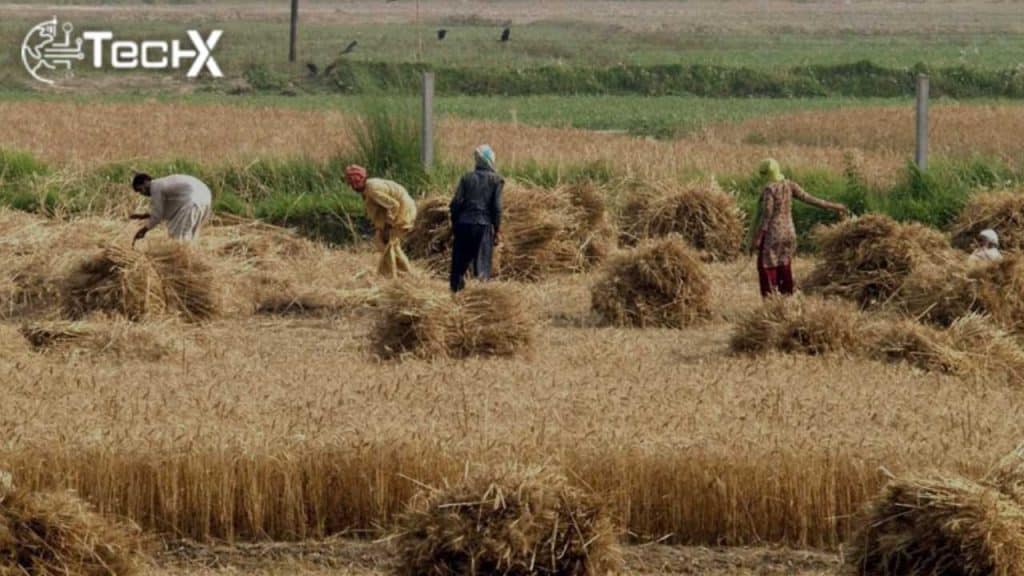
Karachi, 12 February 2025 – The Pakistan Agriculture Coalition (PAC) hosted a two-day agriculture conference and expo at the Karachi Expo Center, bringing together key stakeholders, policymakers, and international experts to discuss the future of Pakistan’s agriculture sector. The event highlighted the need for targeted subsidies, market-driven mechanisms, and private sector-led growth to revitalize the national economy.
Subsidies for Vulnerable Segments and Market-Driven Reforms: Key to Economic Growth
Deputy Governor of the State Bank of Pakistan, Salimullah, emphasized the importance of transitioning from government-led support mechanisms to market-driven approaches in the agriculture sector. Speaking at the conference, he stated, “My view is that instead of providing support price mechanisms, let the market develop. Where government interventions are not available, sectors adjust to market dynamics.”
Salimullah advocated for subsidies to be directed exclusively toward vulnerable segments of society, ensuring that support reaches those who need it most. He stressed that reducing government intervention in pricing mechanisms would allow the agriculture sector to adapt to market forces, fostering efficiency and growth.
World Bank Calls for Policy Framework Targeting Small Farmers
Olivier Durand, Lead Agriculture Specialist at the World Bank, highlighted the need for a policy framework that prioritizes small farmers. He noted that current public support systems often favor large farmers, leaving smallholders behind. “We should target small farmers to fill the large productivity gap,” Durand said.
He emphasized that empowering small farmers with access to resources, technology, and markets could significantly boost agricultural productivity and contribute to economic stability.
Historic Geo-Political Changes Present Opportunities for Pakistan’s Agriculture
In his welcome address, Kazim Saeed, Chief Executive of PAC, pointed out that global economic relations and agri-commodity flows are undergoing significant changes due to historic geo-political shifts. “This is a great opportunity for Pakistan’s agriculture sector,” he said.
Saeed called for a transition from outdated policies to a modern, private sector-driven approach. “The policies and economic structures set up in the 1960s and 1970s achieved their goals by the 1990s. To salvage our economy, we need to accelerate the transition where the private sector drives change and invests,” he added.
Sindh Government’s Initiatives to Support Farmers
Qasim Naveed Qamar, Special Assistant to the Chief Minister of Sindh on Investment and Public-Private Partnerships, outlined the provincial government’s efforts to support farmers. These include subsidized tractors, drip irrigation systems, agricultural machinery, and direct subsidies.
Qamar emphasized the need for strategic investments in modern farming techniques, precision agriculture, and sustainable irrigation methods. “We need to encourage innovation in agri-tech, climate-smart farming, and value chain development,” he said.
Corporate Farming: A Nascent Sector with Growth Potential
Matteo Lagatti, Senior Agro-Economist at FGM International, discussed the potential of corporate farming in Pakistan. He revealed that only 4% of the country’s total cultivable land (840,000 hectares) has been allocated for corporate farming, with 17 companies currently investing in the sector.
Lagatti identified several bottlenecks hindering the growth of corporate farming, including water distribution, logistics infrastructure, and regulatory challenges such as water pricing, seed registration, and tax policies. “A detailed sector policy is missing, and conflicts regarding water allocation are creating hurdles,” he said.
Despite these challenges, Lagatti expressed optimism, predicting that the area under corporate farming would increase to 80,000 hectares in the coming year.
Panel Discussion: Corporate and Contract Farming Can Transform Agriculture
A panel discussion on corporate and contract farming highlighted its potential to revolutionize Pakistan’s agriculture sector. Maria Saleem from Fatima Group shared that her company is part of a consortium working on a 50,000-acre corporate farming project. “With a growing population creating great demand, corporate farming is the solution,” she said.
Ulughbek Rahimov from Indorama Agro LLC shared insights from Uzbekistan, where corporate farming has transformed the agriculture sector over the past 15 years. “We work with thousands of farmers, guiding them and introducing modern technology. Government support has been crucial in this transition,” he said.
Conclusion
The conference concluded with a consensus on the need for innovation, collaboration, and private sector investment to drive growth in Pakistan’s agriculture sector. Speakers emphasized the importance of adopting modern technologies, improving infrastructure, and creating a favorable policy environment to unlock the sector’s full potential.