
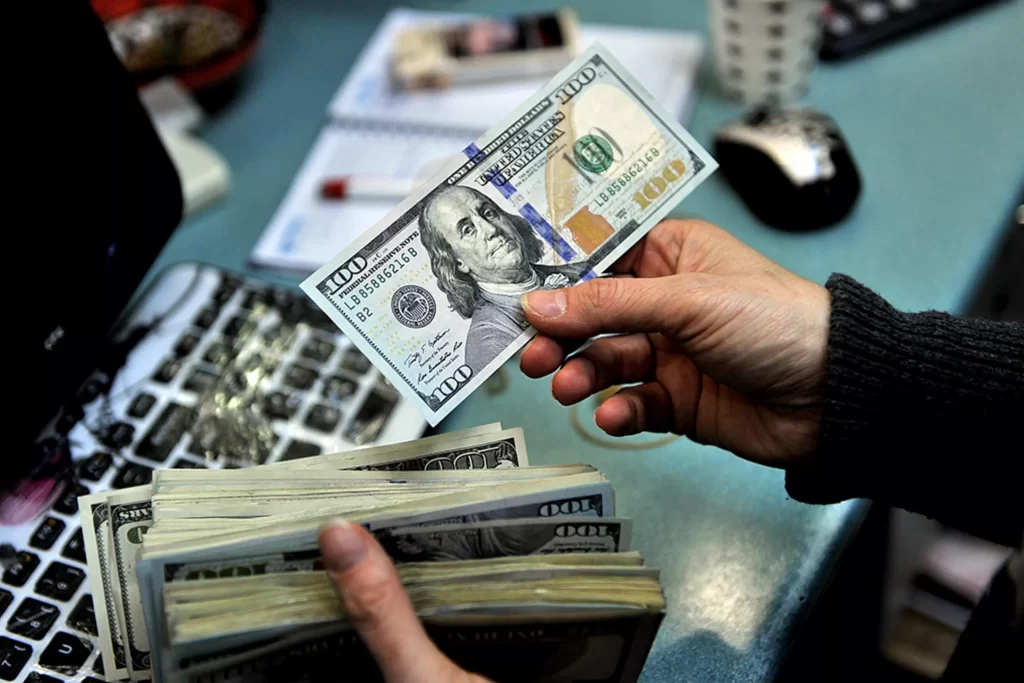
Commercial banks have been instructed to get clearance from the State Bank of Pakistan (SBP) before undertaking import transactions worth $100,000, according to sources, in an effort to alleviate dollar shortages and preserve declining foreign exchange reserves amid IMF loan uncertainty.
“Earlier, banks were needed to inform the SBP if they wanted to start processing the trade documents such as a letter of credits (LCs), other papers and making payments for the imports of certain goods worth $500,000,” a financial source acquainted with the situation told The News.
“It seems the central bank wants to discourage imports to save cash as banks are facing a dearth of dollars following a sharp depletion in the foreign currency reserves,” the insider stated.
As of June 10, the State Bank of Pakistan’s reserves has dropped by $241 million, or 2.6 percent, to $8.98 billion, enough to cover 1.32 months’ worth of imports. The SBP, on the other hand, stated that banks were still able to make import payments.
“Even today, roughly about $200 million import payments have been executed. SBP has, however, required prior approval before opening of LCs or registration of contracts for certain types of imports like Cars (CKD) [completely knocked down], cell phone (CKD) and certain types of machinery. But these instructions were issued on May 20 and not today,” the central bank responded in response to a question.
The SBP lacks the necessary resources to exert market control. It is dipping into commercial banks’ share of reserves to make payments, leading to low or negative swap premiums, due to low inflows and considerable outflows, notably end-of-June linked.
The situation is dire, yet we’ve all been in similar situations before. This is a pivotal week. Things will return to normal if we reach an agreement with the IMF, according to an analyst.
The SBP is considering a number of strategies for increasing dollar liquidity in the foreign exchange market.
According to sources, the SBP may invert the cash reserve requirement (CRR) of banks in terms of dollars, requiring banks to deposit 10% of their dollar accounts with the SBP.
By October, banks will resume depositing CRR with the SBP once more. “These are just the options and the central bank will notify banks through a circular if it takes any decision in this regard,” he said.
In May, the coalition administration placed an import ban on luxury and non-essential goods. In light of dollar depreciation, a growing current account deficit, and shrinking foreign currency reserves, this decision was made.
The country’s trade deficit widened by 57.85 percent on an annual basis to an all-time high of $43.33 billion in 11 months of the current fiscal year driven by rising imports.
The import bill increased by 44.28 percent to $72.18 billion from (July to May) the fiscal year 2022. Exports rose 27.78 percent to $28.84 billion. Widening current account deficits and increasing foreign debt repayments point to increased pressure on foreign exchange reserves, adding to concerns about the balance of payments dragging the local currency to record lows.
With low reserves, SBP does not have enough ammunition to defend the rupee.
To read our blog on “State Bank raises its interest rate to 13.75 percent,” click here.