
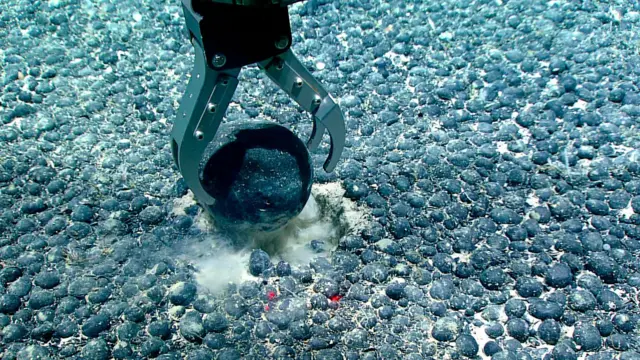
Scientists found oxygen deep in the Pacific Ocean. The oxygen came from strange metal lumps, not from living things. These lumps give off as much electricity as AA batteries.
This surprised the scientists. They might need to rethink how life started on Earth.
Before, scientists thought only living things made oxygen. Plants and algae do this with sunlight.
But, four kilometers below the Pacific Ocean, there is no sunlight. Small metal lumps called polymetallic nodules made oxygen without light. This is the first time scientists have seen this.
The lumps were found in the Clarion-Clipperton Zone (CCZ). This is a deep area between Hawaii and Mexico. Mining companies want to dig up these lumps.

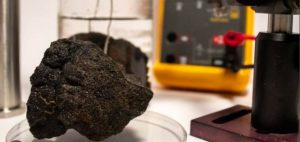
The lumps are rich in metals like cobalt, nickel, copper, and manganese. These metals are used in batteries, phones, wind turbines, and solar panels.
Scientists sent a small vessel to the CCZ. They wanted to see how mining would affect the animals living there.
Andrew Sweetman, the lead author of the study, is from the Scottish Association for Marine Science (SAMS). He said they tried to measure how much oxygen the seafloor uses.
They used a benthic chamber to collect sediment. Normally, the oxygen in the chamber goes down as organisms use it. But this time, the oxygen went up. This was strange because there is no light for photosynthesis in the deep ocean.
Table of Contents
ToggleNew Findings on Ocean Nodules Challenge Theories of Oxygen Evolution
The researchers thought their sensors were broken. So, they brought some lumps to their ship to test again. The oxygen went up again.
They found the lumps had an electric charge. On the lumps’ surface, the voltage was almost as high as an AA battery. This charge can split seawater into hydrogen and oxygen. This process is called seawater electrolysis. It happens at about 1.5 volts, like an AA battery.
Nicholas Owens, the SAMS director, said this was an exciting discovery. Finding oxygen without photosynthesis means we might need to rethink how complex life started on Earth.
Scientists think oxygen was first made by microbes called cyanobacteria 3 billion years ago. This led to complex life. But Sweetman said their discovery shows life could start in other places, not just on land.
Sweetman also wondered if this process happens on other ocean worlds, like Enceladus and Europa. These places might have oxygen and could support life.
The study was published in Nature Geoscience. It was partly funded by The Metals Company from Canada. They plan to start mining the nodules in the CCZ next year.
To read our blog on “NASA’s endurance Mars Rover well produces vital oxygen,” click here