
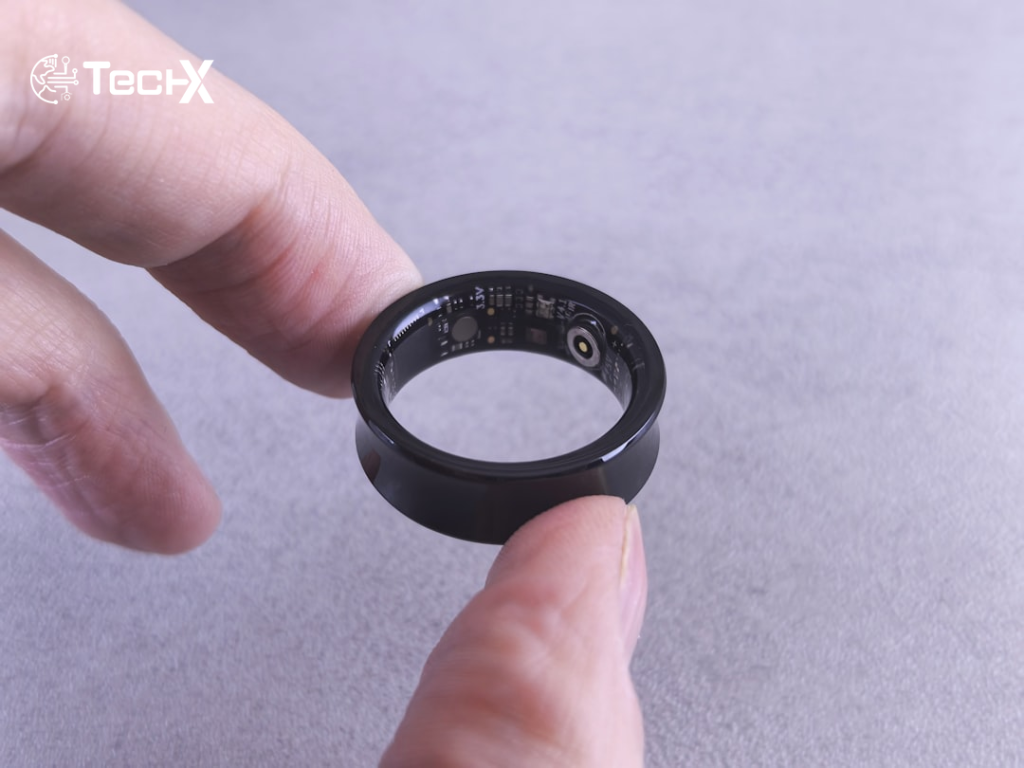
Smart ring health tracking is the buzziest category in consumer tech right now, and 2026 is the year it has moved from a niche curiosity to a mainstream product shelf. Walk into any Lahore or Karachi mobile accessories store today and you will find rings, bands, and watches all claiming to read your blood sugar, blood pressure, and stress levels without a single needle prick. But how much of this is real science, and how much is clever marketing? This article breaks it all down in plain words.
What wearables can genuinely measure in 2026
The honest answer is that wearable sensors have come a long way. The sensors that monitor your body’s data, including heart rate, recovery, and activity, are now built into everything from smartwatches and sports watches to smart rings. Fitness tracking is no longer just about counting steps; it is about gaining insights into recovery, stress levels, sleep quality, and training load.
Heart Rate Variability (HRV) is one metric where wearables now perform well. HRV simply means the tiny changes in time between your heartbeats. A higher HRV usually means your body is well-rested and recovered. Wearables are better at estimating stress and recovery patterns than they are at reading emotions. AI can relate heart rate, HRV, temperature, electrodermal activity, sleep consistency, and daily context to recovery trends, but these outputs are still proxies that work best as self-awareness tools rather than clinical judgments.
Blood pressure tracking on wrist wearables is also improving. Samsung’s Galaxy Watch line is expected to receive FDA clearance for cuff-less blood pressure estimation in 2026-2027, which would add continuous blood pressure tracking to the wearable ecosystem for the first time. Some devices already offer blood pressure trend monitoring after a one-time calibration with a traditional arm cuff, which can be useful for spotting patterns over time.
AI-driven coaching is also now a standard feature rather than a premium add-on. The integration of Large Language Models that provide personalised suggestions based on sleep, activity, and heart rate variability is now a common feature in 2026 wearables. Platforms like WHOOP Coach, Apple’s Workout Buddy, and Garmin’s readiness tools now use your own biometric history to give advice that feels personal rather than generic.
The blood glucose question: smart ring health tracking vs. the truth
This is where things get complicated, and where Pakistani consumers need to be most careful. Many cheap smartwatches and rings sold on Daraz or in Hafeez Centre markets loudly advertise blood glucose monitoring. The truth is far less exciting.
As of January 2026, no smart ring can measure blood glucose with medical-grade accuracy comparable to FDA-cleared devices. The FDA explicitly states no non-invasive smartwatch or ring has been authorised for glucose measurement. This is a hard regulatory fact, not a minor technicality. The FDA has issued a formal safety communication on this exact issue, warning that sellers of these smartwatches and smart rings claim their devices measure blood glucose levels without piercing the skin, claiming to use non-invasive techniques, but these devices do not directly test blood glucose levels.
What these devices actually do is estimate metabolic trends using optical sensors and AI algorithms. Some smart rings use optical sensors and AI algorithms to estimate glucose-related trends or provide broad category indications like Normal vs. Elevated. These estimates have accuracy rates of 70-85 percent under ideal conditions, which is insufficient for diabetes treatment but potentially useful for general wellness awareness.
This distinction matters enormously in Pakistan, where the diabetes burden is among the highest in the world. Using a cheap ring’s glucose readout to skip a doctor’s visit or adjust insulin doses could be genuinely dangerous. If you need to monitor blood sugar for diabetes management, a proper glucometer or a medically approved Continuous Glucose Monitor (CGM) is the only safe choice.
Apple, Samsung, and Rockley Photonics continue pursuing optical blood glucose sensing in wearable form factors. No product has achieved FDA clearance yet, but clinical trials are underway. So real non-invasive glucose tracking from a trusted brand is coming, but it is not here today.
Devices leading the 2026 wearable space
Despite the glucose hype, there are genuinely impressive devices in the market right now that do what they say.
- Oura Ring Gen 4: Oura’s fourth-generation ring, released in late 2025, represents the most capable ring-form health tracker on the market. A March 2026 AI update added cycle prediction, fertility window estimation, and pregnancy monitoring features using the ring’s temperature sensing. It tracks sleep, HRV, resting heart rate, body temperature, and SpO2 well. It does not track blood glucose or blood pressure.
- WHOOP 5.0: WHOOP occupies a unique position as a wearable focused entirely on performance optimisation for athletes and fitness enthusiasts. The 5.0 generation added significant AI features, including WHOOP Coach, a GPT-powered natural language health Q&A tool that uses your own data to answer questions.
- Samsung Galaxy Watch series: In June 2026, Samsung announced major AI-driven health features for Galaxy wearables, including Vitals monitoring, Heart Health Score, Daily Cardio Load, and AI-powered wellness tools. Samsung’s devices are widely available in Pakistan and offer one of the more complete health feature sets for Android users.
- Apple Watch Series 11: Remains the most feature-complete health smartwatch, with FDA-cleared ECG and irregular rhythm detection. Blood glucose is still not available despite years of rumours, and blood pressure is not yet FDA-cleared in watch form.
If you want to explore how Google’s Pixel Watch fits into this wearable ecosystem, our explainer on Pixel Watch features including left-behind alerts and Satellite SOS covers what that device actually brings to Pakistani users.
What Pakistani buyers should know before spending
Pakistan is a price-sensitive market, and the shelves are flooded with unbranded Chinese rings and watches that make bold health claims. Here is a simple checklist before you spend your money.
- Blood glucose readings on a budget ring are wellness estimates only. Do not use them for medical decisions. Full stop.
- Check for FDA or CE clearance on any health claim you care about. Blood pressure monitoring in particular varies hugely between devices. Devices using an inflatable mini-cuff mechanism are far more accurate than those using optical sensors alone.
- HRV and sleep tracking are the most reliable features you will get from a ring or band today. These are genuinely useful for recovery and stress awareness.
- AI coaching is only as good as the data behind it. AI coaching becomes genuinely useful when it is tied to workout history, recovery state, or a structured training plan rather than generic encouragement. A budget device with weak sensors will give weak AI advice, no matter how impressive the app looks.
- The global market is booming. The global wearable medical devices market was valued at USD 103 billion in 2025 and is projected to grow to USD 505 billion by 2034, at a CAGR of 20 percent. More products, more competition, and eventually more affordable legitimate options will reach Pakistan too.
- Data privacy matters. These devices collect your heart rate, sleep patterns, and location 24 hours a day. Read the app’s privacy policy before signing up, especially for less-known brands whose servers may be outside Pakistan.
The bottom line is this: smart ring health tracking and AI coaching are real and improving fast. Non-invasive biometric sensors attempting to track blood glucose trends and blood pressure without needles are now more common in wearables, though accuracy still varies significantly by manufacturer. For general wellness, recovery, and sleep, today’s rings and bands are genuinely useful tools. For blood glucose management, wait for a product that has actual regulatory clearance, or visit your doctor. That advice could save your health and your wallet.
Frequently Asked Questions
Can a smart ring measure blood glucose accurately?
No. As of mid-2026, the FDA has explicitly stated that no smartwatch or smart ring has been authorised, cleared, or approved to measure blood glucose non-invasively. Readings on consumer rings are wellness trend estimates, not medical measurements. Do not use them to manage diabetes.
Which wearables are best for HRV and sleep tracking?
The Oura Ring Gen 4 and WHOOP 5.0 are widely considered the most accurate consumer devices for HRV and sleep stage tracking. Both use optical PPG sensors and AI to produce recovery scores. Samsung Galaxy Watch and Apple Watch Series 11 also perform well for most users. For Pakistan specifically, Samsung Galaxy devices offer the widest local availability and after-sales support.
Is blood pressure monitoring on a smartwatch reliable?
It depends on the device and method. Devices that use a traditional oscillometric cuff (like the Withings ScanWatch) are more accurate. Wrist-based optical methods require regular calibration against a proper arm cuff and should be treated as trend indicators, not exact readings. Samsung’s Galaxy Watch line is expected to receive FDA clearance for cuff-less blood pressure estimation in 2026-2027.
Are cheap blood sugar rings sold in Pakistan safe to use?
They are not dangerous to wear, but relying on their glucose data for health decisions is risky. Since the safety and efficacy of unauthorised devices have not been reviewed or verified by the FDA, they may provide inaccurate blood sugar readings. For anyone managing diabetes, only use devices recommended by your doctor, such as an approved glucometer or CGM patch. The FDA safety communication on this topic is worth reading before any purchase.