
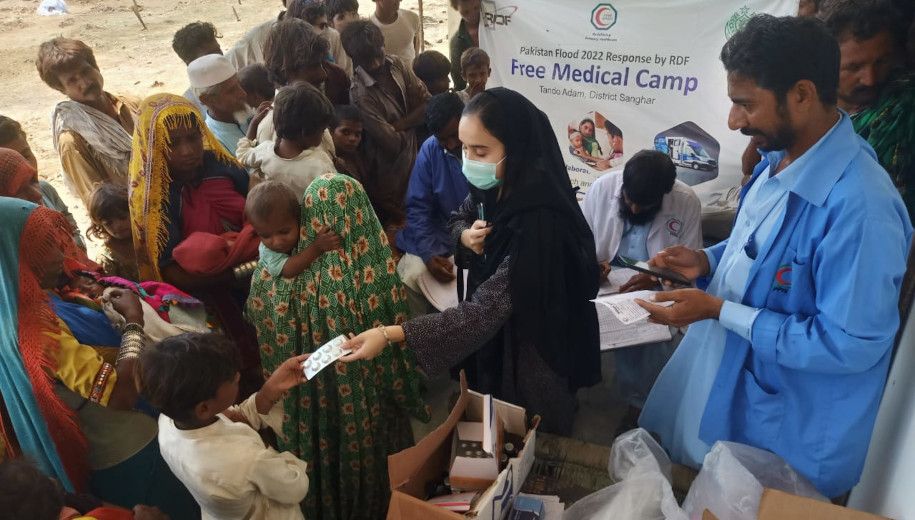
State authorities appear to be ignoring a developing health problem. Over 1.6 million women of reproductive age remained in water-filled districts in southern Pakistan, and the United Nations Population Fund (UNFPA) has voiced worry over the lack of resources to support those affected by the floods.
There is an immediate need for international cooperation due to the magnitude of the problem and Pakistan’s fiscal restrictions.
More than 130,000 women are pregnant at the moment, and over 42,000 of them are due to give birth within the next three months, according to recent statistics.
These pregnant women have a critical need for medical attention to ensure their safety throughout childbirth.
Due to the enormous nature of the destruction, financing and aid remain woefully inadequate. UN appeals have resulted in barely 40% of the needed funds being raised so far.
There is dire need for new health facilities
Although the UNFPA has reached two million women, many more in flood-affected communities still lack access to health care.
The transition from humanitarian aid to rehabilitation is still too soon at this time. The problem is that many women lack the resources to pay for or access quality treatment, therefore we need ongoing support.
More than 1,400 medical institutions have been destroyed, creating a dire health situation that will be difficult to rectify until additional money can be raised to pay for reconstruction.
More investment is needed to preserve women’s lives, and this can only happen with more participation from the private sector at the national level and from foreign donors on a global scale.
The international community has largely been silent except from few encouraging words. Due to its high susceptibility to the effects of climate change, Pakistan should receive grants rather than loans from the international community.
The welfare of women, especially their health, should be a worldwide and national priority.
To read our blog on “Sightsavers stresses to prioritize health of disable women,” click here.