
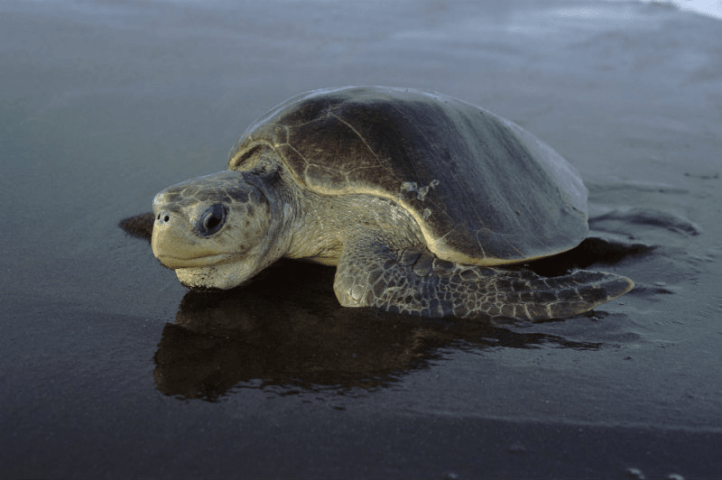
The report revealed on the occasion of World Sea Turtle Day that the development of huts along coast in Karachi and Balochistan had harmed significant sea turtle breeding places.
Every year on June 16 since 2000, World Sea Turtle Day has been commemorated to raise awareness about the falling number of sea turtles and their shrinking habitat.
Plastic garbage, crumbling huts, and rubble, according to Muhammad Moazzam Khan, technical consultant for WWF-Pakistan, represent a major hazard to nesting females and youngsters along the coastal areas.
Sandspit, Hawke’s Bay, and Cape Monz on the Sindh coast, as well as Taq (Ormara), Astola Island, Gwadar Headland, and Daran on the Balochistan coast, are known to be nesting beaches for sea turtles.
Thousands of female turtles come to lay eggs and nest on these beaches.
In 2012, the WWF-Pakistan launched research to collect data on turtle entanglement, which found that 30,000 sea turtles were taken annually in Pakistan’s tuna gillnet fishery.
In the offshore seas, there were around 25,500 Olive Ridley and 4,500 Green turtles.
The greatest major hazard to sea turtles is entanglement in fishing nets.
It was estimated that 3% of entangled turtles died as a result of drowning or mistreatment onboard fishing vessels.
To read our blog on “A huge rare whale shark accidentally caught by fishermen in Karachi,” click here.