
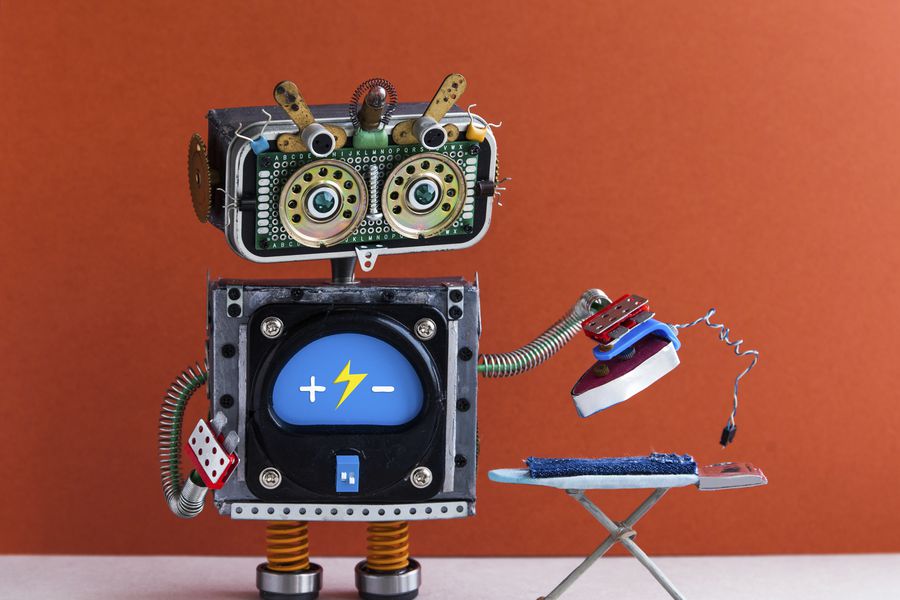
Scientists from Columbia University and the Toyota Research Institute are working together to further the development of home robots by training them to understand fundamental concepts like item preservation.
“The success that Carl Vondrick and Shuran Song have made with their study adds directly to Toyota Research Institute’s objective,“ notes Eric Krotkov, PhD, Toyota’s advisor to the Columbia University research program.
Research at TRI, both in robotics and beyond, is directed towards solving the economic problems posed by an ageing population, a lack of available workers, and the need for more environmentally responsible methods of manufacturing.
Scientists Stance on Robots
Giving robots the ability to recognize hidden items and manipulate deformable ones will allow them to enhance people’s lives.
“Some of the hardest challenges for artificial intelligence are the easiest for humans,” argues Vondrick, associate professor of computer science, of the work he and his team have been performing.
The issue is that, unlike babies, computer vision systems don’t naturally learn how to keep track of an object when it’s partially obscured from view (a skill they pick up during games of peek-a-boo with their carers).
However, it was difficult to instill a sense of object permanence in a robot, so Vondrick and his colleagues came up with the idea of showing neural network videos demonstrating the physical concepts the robots would need to understand, simulating the kind of interactive play between children and carers that would teach the same concepts naturally.
The network designed by Scientists demonstrated capable of understanding that objects still exist even when you can’t see them by transforming camera data into three dimensions plus time as the fourth.
Song, an assistant professor in computer science and the head of Columbia University’s Artificial Intelligence and Robotics (CAIR) lab, says, “In our work, we are trying to investigate how humans intuitively do things.”
However, her team’s primary area of research was the soft-body problem, or predicting the behaviour of soft objects such as a length of rope when subjected to manipulation.
Using an iterative residual policy (IRP) algorithm, Scientists group had a robot learn to hit a cup with a rope through trial and error, mimicking the way humans learn; the robot was successful in just seven tries, while the conventional machine learning algorithm required between one hundred and one thousand.
This study was then applied to the more practical task of opening a bag, something a robot used in the home could need to do frequently.
The resulting robot discovered that a well-placed puff of air could open plastic bags and unfold clothes using a self-supervised learning framework called DextAIRity.
PhD candidate Zhenjia Xu adds that one of the fascinating tactics the system evolved with the bag-opening challenge is to direct the air a little above the plastic bag to keep the bag open. It learns on its own without any annotation or training from us.
To read our blog on “Scientists fear modern robots might rebel against humans,” click here.