
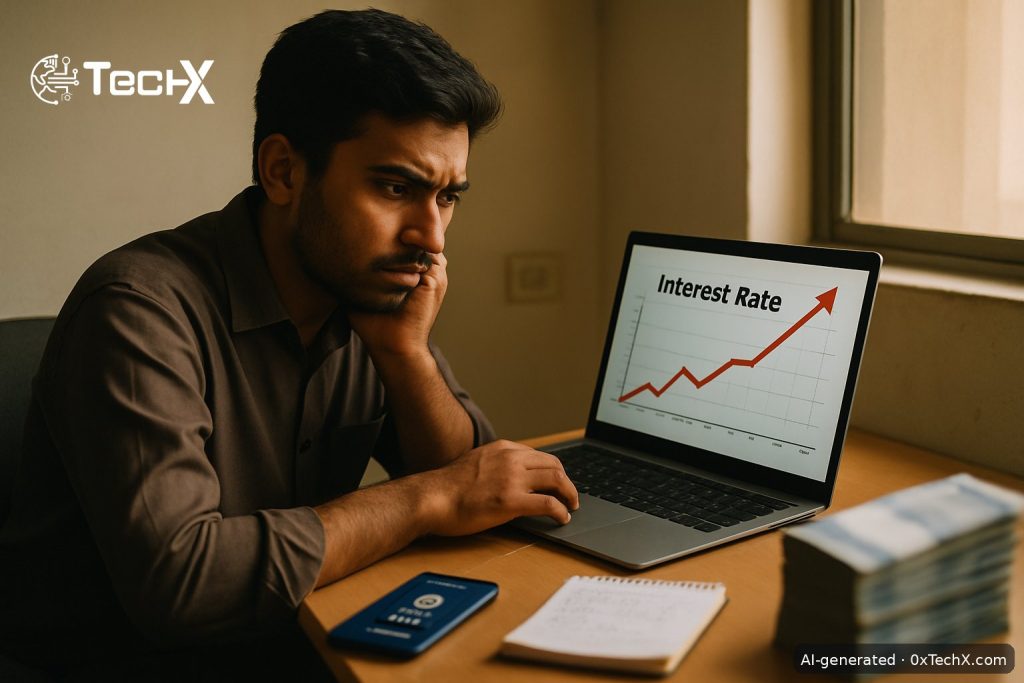
The SBP policy rate hold at 11.5%, confirmed for a second consecutive meeting in July 2026, is not just a headline for economists. For Pakistan’s fast-growing fintech sector, it is a direct signal that cheap credit will not arrive anytime soon, and that building a profitable digital lending business in this environment has become much harder.
SBP Holds Steady for the Second Meeting in a Row
The State Bank of Pakistan kept its benchmark rate unchanged at 11.5% at its July 27, 2026 meeting, citing an improving macroeconomic picture but still-elevated inflation. Headline inflation had eased to 11.1% in June from 11.7% in May, but that is still well above the SBP’s own 5% to 7% target range, which the central bank does not expect to reach until around June 2027. With geopolitical uncertainty adding to oil price risks, the Monetary Policy Committee chose caution over cuts.
This is the second pause in a row. After a long cutting cycle that brought the rate down by 1,150 basis points from a peak of 22%, the SBP has now stopped. For most businesses, a pause feels neutral. For Pakistan’s digital lenders, it is anything but.
Why the SBP Policy Rate Hold Hurts Fintech More Than Banks
Traditional banks can absorb a high-rate environment more easily. They collect deposits at low rates and lend out at higher ones, keeping a spread. A neobank or a BNPL startup does not have that cushion. Most digital lenders in Pakistan fund their loan books by borrowing from banks or raising short-term capital. When the policy rate stays at 11.5%, the cost of that funding stays high. To stay solvent, they must charge end users even more, which defeats the promise of affordable digital credit.
This creates a real squeeze. Platforms that want to offer small-ticket loans or zero-interest installment plans to young Pakistanis have to either absorb the funding cost themselves (burning cash) or pass it on in fees. Neither option helps scale a business cleanly.
Pakistan has made impressive fintech progress in recent years. The country now has around 450 fintech companies that have collectively raised roughly $391 million in venture capital. Five digital banks, including Easypaisa and Mashreq Bank, began pilot operations in early 2025 under the SBP’s new digital bank licensing framework. Neobanks such as Sadapay, Nayapay and Tag have raised institutional capital and are adding lending and BNPL features to their apps. The ambition is real. But ambition needs cheap capital to scale lending, and cheap capital is exactly what the rate hold denies.
BNPL Players Face a Tricky Balancing Act
Buy Now Pay Later (BNPL) is one of the fastest-growing segments in Pakistan’s fintech space. Local platforms and smartphone financing schemes have brought credit to users who could never qualify for a bank loan. But BNPL platforms have a specific vulnerability: their model depends on offering short, interest-free or low-interest windows to consumers while earning through merchant fees or small charges. When the underlying cost of capital is above 11%, those margins get very thin very quickly.
There is another issue. Analysts who study Pakistan’s digital credit market have raised concerns that high borrowing costs are already pushing some consumers into financial stress. Repayment rates may look healthy on paper, but that does not always mean the credit is truly affordable. When rates stay elevated for a long period, the risk of unseen financial strain in borrowers grows quietly.
For a look at how BNPL is playing out at the consumer level right now, see how Daira’s nano-lending model is using BNPL to put smartphones within reach of first-time credit users. The product is innovative, but the rate environment it operates in is not easy.
The Financial Inclusion Goal Is Now Under Pressure
Pakistan has set an ambitious target: raise adult financial inclusion from 64% in 2023 to 75% by 2028. A big part of reaching that number depends on digital credit reaching people who have never had a bank account. The SBP’s Raast instant payment system and the digital bank licensing framework were designed to power exactly this push.
But here is the gap that most coverage misses: payment infrastructure can go anywhere at any rate. Lending cannot. A wallet that moves money costs almost nothing to operate. A loan book costs whatever the central bank charges, plus a margin. When the SBP policy rate hold stretches from months into more than a year, digital lenders quietly slow down. They approve fewer loans, lower ticket sizes and tighten risk criteria. Financial inclusion stalls not because there is no demand, but because the math stops working for the lender.
Pakistan’s SMEs feel this the hardest. Small businesses already struggle to get formal credit. Digital platforms using transaction data and alternative credit scoring were supposed to fix that gap. But they can only lend what they can afford to fund, and right now, funding is expensive.
What Founders and Investors Should Watch
The SBP has said it expects inflation to gradually fall back toward its target range by mid-2027. That path, if it holds, would eventually open room for rate cuts. But fintech startups cannot wait on a forecast. They need to plan for a prolonged hold and build models that survive it.
Global funding for Pakistani fintech has also become more selective. Investors worldwide are now asking for sustainable unit economics rather than pure growth stories. A startup that can show it earns money even at an 11.5% policy rate is a far more attractive bet than one built entirely on the expectation of cheap capital returning soon.
The SBP policy rate hold is not the end of Pakistan’s fintech story. It is a stress test. The platforms that design lean, well-priced credit products and manage their cost of capital carefully will come out stronger. The ones that assumed rates would keep falling may need to rethink their runway.
Frequently Asked Questions
What is the current SBP policy rate?
The State Bank of Pakistan held its benchmark policy rate at 11.5% at its July 27, 2026 Monetary Policy Committee meeting. This was the second meeting in a row with no change.
Why does the SBP policy rate hold matter for fintech startups?
Digital lenders and BNPL platforms borrow capital to fund their loan books. When the policy rate stays high, that borrowing costs more, which squeezes profit margins and forces startups to either charge users more or slow down lending. Unlike traditional banks, most fintechs do not have a cheap deposit base to offset this cost.
How does a rate hold affect BNPL in Pakistan?
BNPL services often advertise zero or low interest for consumers, but the platform still bears a funding cost behind the scenes. A prolonged rate hold keeps that hidden cost high, making it harder to offer attractive installment deals without losing money. Platforms either narrow their product range or tighten eligibility, which reduces access for lower-income users.
When could the SBP start cutting rates again?
The SBP has forecast that inflation will gradually ease toward the 5% to 7% target range by around June 2027. Rate cuts would likely only come after inflation moves clearly and consistently inside that band. Until then, fintech founders should plan for rates to stay roughly where they are.