
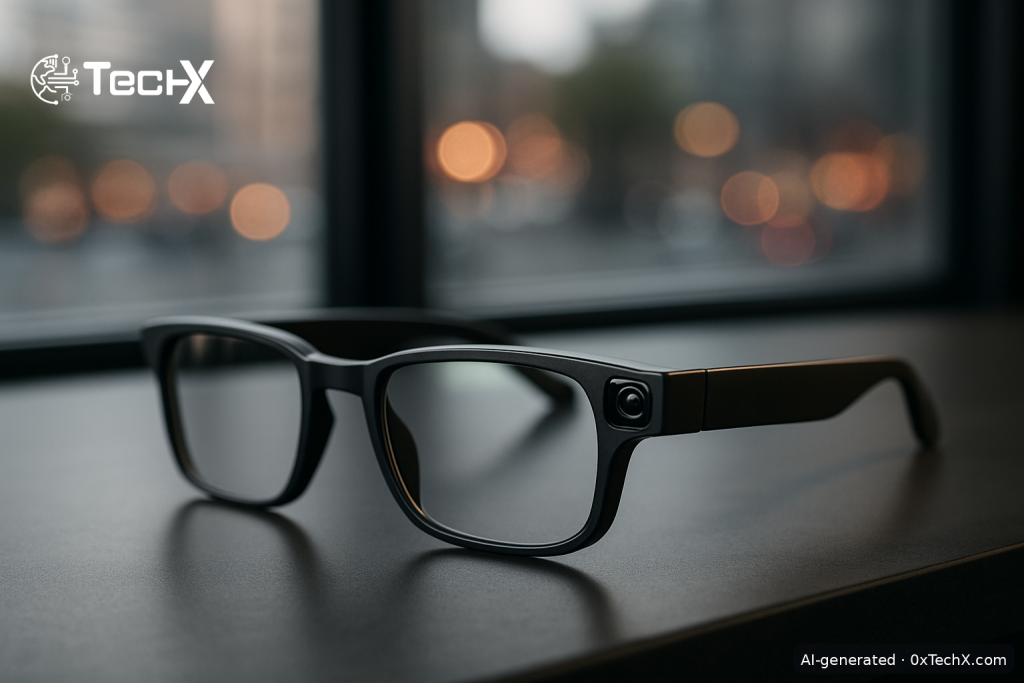
Samsung AI smart glasses are now real. Samsung announced them on July 22, 2026, at its Galaxy Unpacked event in London, officially entering a market that Meta has owned for years. The glasses are powered by Google’s Android XR platform and work with Gemini, so users can get AI help through voice and gestures without ever pulling out their phone. This is a big moment for wearable tech, and here is everything you need to know.
What Are Samsung AI Smart Glasses and How Do They Work?
The glasses do not have a display on the lenses. Instead, they use a built-in camera and microphone to read the world around you, then give answers through a speaker using Gemini and Bixby. Think of them like a very smart, always-on assistant sitting on your face.
The practical features include message summaries read aloud, live translation, notes captured from whiteboards, real-time navigation, and live visual sharing during calls, where the person on the other end can see exactly what your camera sees. For Pakistani users, the live translation feature could be especially useful. Gemini can translate spoken words on the fly, which could help in multilingual meetings or when travelling abroad.
The built-in camera also lets users share a live point-of-view during calls, photograph a whiteboard for automatic note capture, or translate text on a sign or menu in real time.
Samsung AI Smart Glasses Specs at a Glance
- Chipset: Qualcomm Snapdragon AR1 Gen 1 platform, which was specifically engineered for thin and lightweight smart eyewear.
- Camera: 12MP Sony IMX681 camera
- Battery: Up to nine hours of battery life on a single charge, with the charging case providing seven additional full top-ups.
- Weight: Approximately 50 grams
- Display: None built into the lenses
- OS: Android XR
- AI: Google Gemini, wearable version
The product was developed in collaboration with eyewear brands Gentle Monster and Warby Parker. Samsung partnered with these brands to design frames intended for everyday use, avoiding the bulky look of traditional AR hardware. Two distinct frame styles are available. The Gentle Monster edition features a slim black frame with a straight upper rim, while the Warby Parker version takes a different design direction.
You can learn more about the Android XR platform directly on the Android XR official site, and about the Snapdragon AR1 chip on the Qualcomm product page.
Samsung vs Meta Ray-Ban: How Do They Compare?
Samsung is entering a market that Meta has dominated since 2021. Meta held 69.2 percent of the smart glasses market in the first quarter of 2026, according to IDC. That is a huge gap to close, but Samsung’s entry is the strongest challenge to date.
Here is a side-by-side look at the key differences:
- AI engine: Samsung uses Google Gemini. Meta Ray-Ban uses Meta AI.
- Display: Neither the Samsung glasses nor the standard Ray-Ban Meta have a lens display. Meta does offer the $799 Ray-Ban Display glasses, which have a built-in display.
- Camera: Both the Samsung glasses and the Ray-Ban Display use a 12MP camera.
- Battery: Meta Ray-Ban Display claims up to six hours with mixed usage, with the charging case offering up to 24 hours total. Samsung’s glasses offer nine hours per charge with the case adding seven more full charges.
- Weight: Samsung comes in at around 50g. The Meta Ray-Ban Display weighs 69g.
- Price: Meta’s entry-level glasses start at $299, while the Ray-Ban Display costs $799. Samsung has not confirmed a price yet (more on this below).
One clear edge for Samsung is its translation approach. In a multilingual conversation, a display splits your attention between a screen and a person, while audio-only translation, heard only by the wearer, keeps the exchange natural. Gemini’s voice-first design leans into this well.
Price and Release Date: What We Know So Far
Samsung is keeping final launch details under wraps for now and has not yet announced pricing or an official release date. Samsung’s own executive would not disclose pricing but said the glasses would be positioned as a “premium” product.
Reports estimate a price range of $379 to $499, positioning the device as a premium competitor to Meta’s smart glasses. However, one IDC analyst said he would not be surprised if Samsung priced the device between $600 and $700 to strengthen its premium brand, but cautioned that there is a risk if they price it high without offering more than what Meta currently offers.
The glasses are confirmed for a fall 2026 retail launch. Samsung also says the device will be sold via its eyewear partners’ sales channels.
When Can Pakistani Buyers Get Them?
Samsung has not named specific markets for the fall 2026 launch. Pakistan is typically not among the first markets for Samsung’s premium wearables. Based on past patterns, Pakistani buyers should realistically expect availability in early-to-mid 2027, either through official Samsung Pakistan channels or through grey imports at a higher cost. Pricing in Pakistan will also depend on the rupee-dollar rate at the time of launch. At the rumoured $379 to $499 range, that translates to roughly PKR 105,000 to PKR 140,000 at current exchange rates, which puts the Samsung AI smart glasses firmly in premium territory here.
Pakistani tech enthusiasts interested in the broader AI wearables space can also follow how the CMF Watch Pro 2 is shaping Pakistan’s budget smartwatch market, as it shows growing local appetite for wearable tech at all price points.
Privacy: A Real Concern Worth Knowing
Wearable cameras always raise privacy questions. Samsung’s Vice President of Mobile Experience stated at a press conference that the company’s R&D team has several engineers dedicated to testing and implementing new privacy features. He also noted that consumers’ sensitivity to privacy risks varies greatly depending on culture, country, and regulations, and described this as a common industry issue. In Pakistan, where social norms around photography and personal space are strong, this could be a topic that shapes how these glasses are received when they eventually arrive.
The Bigger Picture
IDC forecasts total smart glasses shipments of approximately 13.6 million units in 2026, growing to 27.3 million by 2030 at a compound annual growth rate of 18.9 percent. Smart glasses are not a gimmick anymore. They are turning into a genuine product category, and Samsung’s entry, backed by Google’s AI and Qualcomm’s chip, makes the race much more interesting. Samsung’s entry, backed by Google’s AI platform and Qualcomm’s silicon, represents the most significant challenge yet to Meta’s market position.
Frequently Asked Questions
Do Samsung AI smart glasses have a screen on the lens?
No. The glasses do not have a display on the lenses. They use a camera and microphone to read your surroundings and give answers through a built-in speaker using Gemini and Bixby.
What chip powers Samsung’s smart glasses?
The hardware is built around Qualcomm’s Snapdragon AR1 Gen 1 platform. Qualcomm specifically engineered this processor for thin and lightweight smart eyewear.
How do Samsung’s glasses compare to Meta Ray-Ban in battery life?
Samsung claims up to nine hours of battery life on a single charge, with the charging case providing seven additional full top-ups. Meta’s Ray-Ban Display glasses offer up to six hours with mixed usage, with the charging case covering up to 24 hours total. Samsung has a clear edge on single-charge endurance.
Will Samsung AI smart glasses be available in Pakistan?
Samsung has not confirmed which markets will get the glasses at the fall 2026 launch. Pakistan is not typically among the first wave of markets for premium Samsung wearables. Buyers here should expect to wait until early-to-mid 2027, with prices likely well above PKR 100,000 depending on the final international pricing and the exchange rate at launch.