
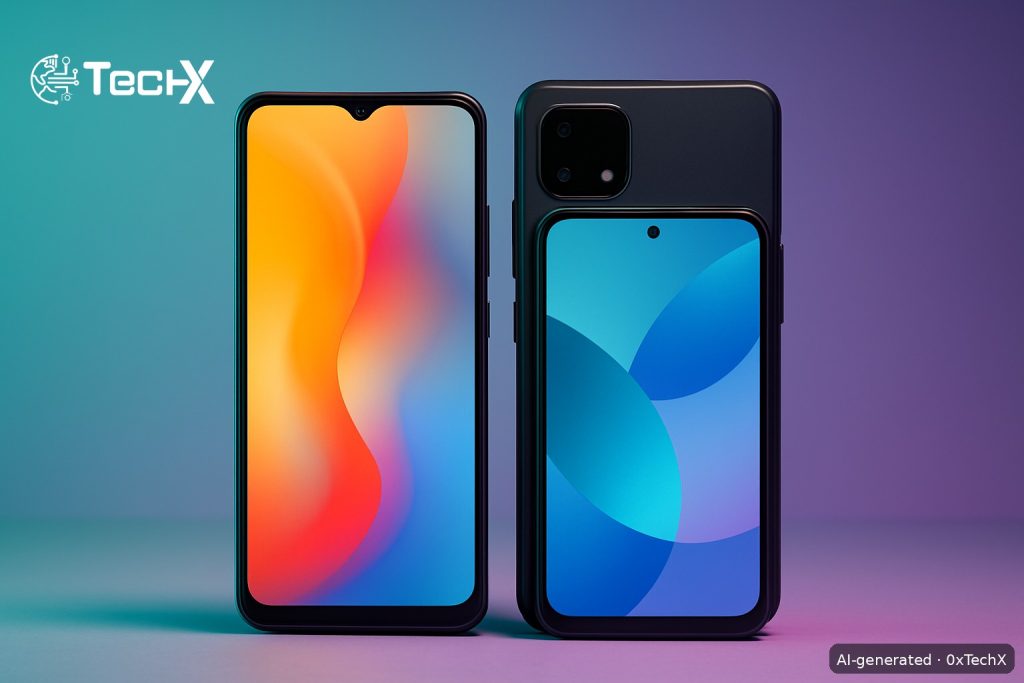
Redmi 14C vs Infinix Hot 50i is one of the most searched comparisons in Pakistan’s budget phone market right now. Both phones cost under Rs. 35,000, share the same chip family, and look very similar on paper. But they are actually quite different in ways that matter. Read on to find out which one is better for you.
Redmi 14C vs Infinix Hot 50i: Quick Specs Comparison
| Feature | Redmi 14C | Infinix Hot 50i |
|---|---|---|
| Price in Pakistan | Rs. 26,999 (4GB/128GB) Rs. 29,990 (6GB/128GB) |
Rs. 30,999 (6GB/128GB) |
| Display | 6.88-inch IPS LCD, 120Hz, HD+ (720p), water-drop notch, 600 nits peak | 6.7-inch IPS LCD, 120Hz, HD+ (720p), punch-hole, 500 nits |
| Chipset | MediaTek Helio G81 Ultra | MediaTek Helio G81 |
| RAM / Storage | 4GB or 6GB / 128GB | 6GB / 128GB or 256GB |
| Rear Camera | 50MP (f/1.8, AF) + 2MP depth | 48MP (f/1.8, AF) + auxiliary lens |
| Front Camera | 13MP | 8MP |
| Battery | 5160mAh, 18W wired charging | 5000mAh, 18W wired charging |
| Software | Android 14, Xiaomi HyperOS | Android 14 (Go edition), XOS 14.5 |
| Build / Extras | Gorilla Glass 3, side fingerprint | IP54 dust/splash rating, NFC, side fingerprint, 48-month TUV fluency cert |
| Storage Expandable | Yes (microSD) | Yes, up to 2TB |
Display: Bigger Screen vs Better Build
The Redmi 14C wins on screen size. Its 6.88-inch panel is noticeably bigger than the Hot 50i’s 6.7-inch screen. Both run at 120Hz and both are HD+ (720p), so neither is sharper than the other. If you watch a lot of YouTube, short videos, or cricket streams on your phone, the Redmi’s bigger screen feels more like a mini TV.
The Hot 50i fights back with a 500 nits display and a punch-hole design that looks a bit more modern. The Redmi uses an older water-drop notch style, which some people find less clean to look at.
Performance: Same Family, Small Difference
Both phones use MediaTek chips from the same Helio G81 family. The Redmi 14C gets the slightly newer G81 Ultra, while the Hot 50i uses the standard G81. In real daily use like WhatsApp, social media, calls, and light games such as Subway Surfers or Free Fire on medium settings, both phones feel smooth enough. Neither will handle heavy games like PUBG on high settings well. If you want a gaming phone, you need to spend more.
One practical difference: the Hot 50i comes with 6GB virtual RAM expandable on top of its 6GB physical RAM, giving it a small edge for having many apps open at once. The Redmi 14C’s 4GB base variant can feel a little slower over time if you install many heavy apps.
Camera: More Megapixels vs Better Selfies on Redmi
The Redmi 14C has a 50MP main camera with autofocus and a 2MP depth sensor for portrait mode. The Hot 50i has a 48MP main lens. In daylight, both take decent shots. Do not expect flagship results from either phone. Low-light photos on both will be average at best.
Where the Redmi 14C clearly wins is the selfie camera. It has a 13MP front camera, compared to only 8MP on the Hot 50i. If you take a lot of selfies or do video calls, the Redmi 14C gives you noticeably sharper front shots.
Battery: Both Are Good, But Redmi Has a Bigger Pack
The Redmi 14C comes with a 5160mAh battery, which is slightly larger than the Hot 50i’s 5000mAh cell. Both support 18W wired fast charging. In practice, both phones can easily last a full day on a single charge for normal use. The Redmi 14C’s extra 160mAh gives it a tiny edge, but you are unlikely to notice it in daily life. Neither phone supports wireless charging.
Software: HyperOS vs XOS
The Redmi 14C runs Xiaomi’s HyperOS on top of Android 14. HyperOS is clean, fast, and has a good reputation among Pakistani users for smooth performance and regular updates. The Hot 50i runs XOS 14.5 on Android 14 Go edition. Android Go is a lighter version of Android designed for phones with less RAM. It works fine, but you will find that some full versions of apps (like YouTube) ask you to download their Go version instead. XOS also comes with some pre-installed apps that you cannot easily remove. HyperOS is the better software experience here.
Build Quality and Extra Features
This is where the Infinix Hot 50i stands out the most. It has an IP54 rating, which means it is protected against dust and light water splashes. Drop it in a light rain or splash some water on it by accident, and it should be fine. The Redmi 14C has no official IP rating. For Pakistan, where dust on roads and unexpected rain are common, IP54 is a real practical advantage.
The Hot 50i also has NFC, which the Redmi 14C does not have. NFC lets you tap to pay or quickly share data. It is not widely used in Pakistan yet, but it is a useful feature to have as digital payments grow. Infinix also claims a 48-month TUV fluency certification, meaning the phone is tested to stay smooth for four years.
The Redmi 14C has Gorilla Glass 3 protection on the screen, which gives better scratch and drop resistance compared to the unspecified glass on the Hot 50i.
Price Difference: Is Rs. 4,000 Worth It?
The Redmi 14C starts at Rs. 26,999 (4GB model) and Rs. 29,990 (6GB model). The Hot 50i costs Rs. 30,999 for the only 6GB/128GB variant. So comparing the 6GB versions of both, the Redmi 14C costs about Rs. 1,000 less while giving you a bigger screen, bigger battery, better selfie camera, and better software. The Hot 50i fights back with IP54, NFC, and a more modern design. Whether those extras are worth Rs. 1,000 more depends entirely on what you care about.
Who Should Buy the Redmi 14C?
- You want the biggest possible screen under Rs. 30,000.
- You take a lot of selfies or do regular video calls.
- You want cleaner, faster software with HyperOS.
- You are a student or first-time smartphone buyer who just needs a reliable daily phone.
- Screen size and battery life are your top two priorities.
Who Should Buy the Infinix Hot 50i?
- You work outdoors or in dusty areas and need basic water/dust protection (IP54).
- You want NFC for future digital payments.
- You want a more modern punch-hole display design.
- You need a 256GB storage option (available on Hot 50i, not on Redmi 14C).
- Long-term durability and the 48-month smoothness guarantee matter to you.
Final Verdict
For most Pakistani buyers, the Redmi 14C is the better buy. At a lower price, you get a bigger screen, a bigger battery, a much better 13MP selfie camera, cleaner software, and Gorilla Glass protection. These are things most people use every single day.
However, if you work outdoors, do a lot of fieldwork, or are in a dusty or rainy environment often, the Infinix Hot 50i’s IP54 rating makes it the smarter pick. The NFC and 256GB option also make it a stronger choice if you want to future-proof your phone a little more.
In short: go with the Redmi 14C if you want the most phone for the least money. Go with the Hot 50i if you need toughness and extras that the Redmi simply does not offer.
Frequently Asked Questions
What is the price difference between Redmi 14C and Infinix Hot 50i in Pakistan?
The Redmi 14C starts at Rs. 26,999 for the 4GB/128GB model and Rs. 29,990 for the 6GB/128GB model. The Infinix Hot 50i costs Rs. 30,999 for its only 6GB/128GB variant. Comparing the same 6GB versions, the Redmi 14C is about Rs. 1,000 cheaper.
Does the Infinix Hot 50i have NFC?
Yes, the Infinix Hot 50i has NFC. The Redmi 14C does not. NFC is useful for tap-to-pay and quick data sharing. It is not yet common in Pakistan but is slowly growing, especially in cities.
Which phone has a better camera for selfies?
The Redmi 14C wins here clearly. It has a 13MP front camera compared to the 8MP front camera on the Infinix Hot 50i. For selfies, video calls, and online classes, the Redmi 14C gives you sharper results.
Is the Infinix Hot 50i waterproof?
It is not fully waterproof, but it has an IP54 rating. This means it can handle dust and light water splashes, like rain or a small spill. You should not submerge it in water. The Redmi 14C has no official IP rating at all, so the Hot 50i is clearly more durable in real-world conditions.