
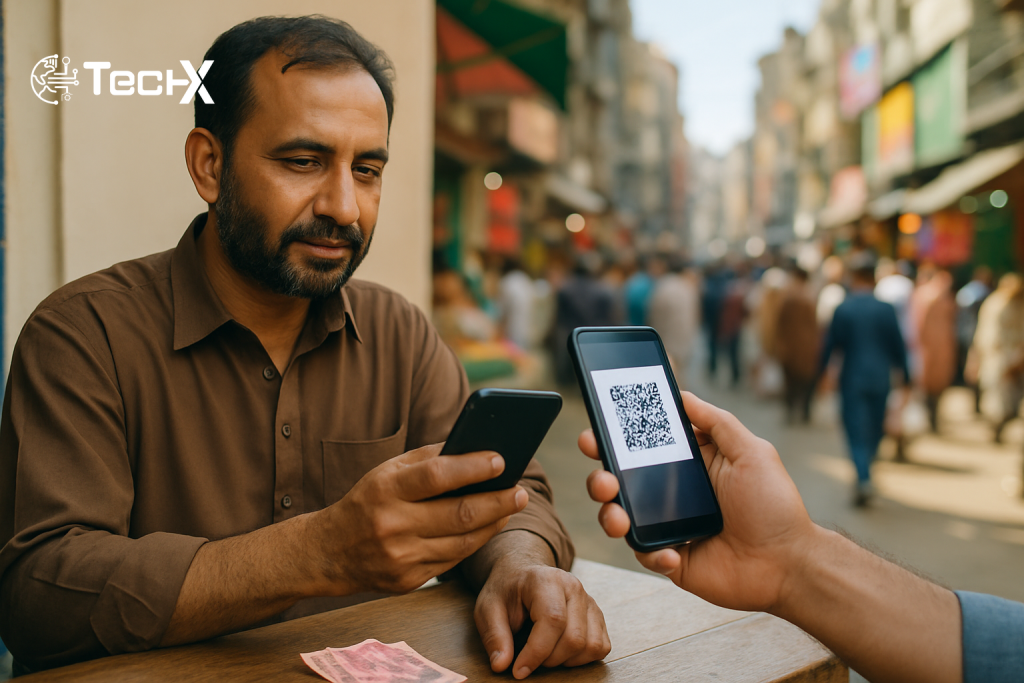
Raast 742M transactions in a single quarter marks a landmark moment for Pakistan’s cashless economy. The State Bank of Pakistan released its Quarterly Payment Systems Report for January to March 2026 this week, and the numbers tell a clear story: digital payments have quietly become the default way Pakistanis move money, not the exception.
What the Raast 742M Transactions Figure Actually Means
To put it plainly, Raast processed 742.1 million transactions worth PKR 23.3 trillion in just three months. That works out to roughly 8.2 million transactions every single day running through one instant payment rail. A year ago, comparable quarters were tracking closer to 544 million transactions. The pace of growth is not slowing down.
Within those Raast 742M transactions, the split is telling. Person-to-person (P2P) transfers made up the bulk, with 664 million transactions worth PKR 18.9 trillion, a 10 per cent jump over the prior quarter. But the more significant shift is happening in person-to-merchant (P2M) payments, which climbed to 55.9 million from 36.3 million the quarter before. That is a 54 per cent rise in a single quarter, and it is the segment that analysts have long watched as a litmus test for real economic digitisation.
92% Digital: Pakistan’s Retail Payment Shift by the Numbers
The headline figure from the SBP report is that digital channels accounted for 92 per cent of all retail transactions during Q1 2026. Total retail volumes reached 3.7 billion transactions worth PKR 168.8 trillion across formal banking and payment channels. So eight out of every nine retail transactions in Pakistan now flow through a digital channel, whether that is a mobile app, internet banking, ATM, point-of-sale terminal, or the Raast network itself.
For context, the same share stood at 88 per cent just a year earlier. Moving four percentage points in 12 months inside a system processing billions of transactions is not a small shift. It reflects structural change in how ordinary Pakistanis handle money, driven by widespread smartphone use, the expansion of branchless banking agents (now over 819,000 across the country), and continued investment in payment infrastructure by both the SBP and the banking sector.
Traditional channels are not disappearing, though. Bank branches, of which there are now 20,232, processed 128 million transactions worth PKR 99.5 trillion during the quarter. High-value transactions still lean heavily on physical infrastructure, which is why the value share of digital payments, while rising, remains lower than the volume share.
The P2M Gap: Raast’s Unfinished Business
Here is where the report’s good news comes with a genuine caveat. While P2M payments on Raast are growing fast, they still represent a small fraction of total Raast volume. At 55.9 million transactions out of 742 million total, merchant payments are under 8 per cent of Raast activity. The overwhelming majority of transactions are still peer-to-peer transfers, not retail purchases at shops.
This gap matters because P2M digitisation is where cash truly gets displaced at street level. A shopkeeper in Lahore’s Liberty Market or a vendor at Karachi’s Tariq Road accepting a Raast QR code instead of cash is a very different economic signal than two individuals transferring money between accounts. The former brings previously undocumented retail transactions into the formal system and widens the tax base. You can learn more about the SBP’s broader roadmap to close this gap in our earlier piece on Raast tokenisation and the PISP framework.
The SBP has been trying to accelerate P2M adoption with a PKR 3.5 billion subsidy approved in 2025 specifically for promoting QR-based merchant payments. In the quarter preceding this report, QR-enabled merchant locations had already expanded to 1.94 million, up from 1.41 million three months earlier. The momentum is real, but closing the volume gap between P2P and P2M will take time and sustained merchant outreach.
Government Payments and the Road to a Cashless Pakistan
One underappreciated driver of Raast’s growth is the state itself. The SBP has committed to routing all government payments through Raast by the close of fiscal year 2025-26. Major disbursement programmes including the Benazir Income Support Programme, the Pakistan Military Accounts Department, and the Central Directorate of National Savings have each set internal deadlines between March and June 2026 to achieve full digitisation of their payment flows through the platform.
This is significant. When salaries, pensions, welfare transfers, and government vendor payments all move through Raast, the transaction volumes will rise further and, more importantly, large pools of money that currently re-enter the informal cash economy will start leaving digital footprints. Pakistan’s broader cashless strategy, overseen by a Prime Ministerial steering committee, targets digital financial inclusion for over 70 per cent of adults by 2030 and aims to shift the economy away from its historically cash-heavy structure.
The fintech landscape feeding into this ecosystem is also evolving fast. Ongoing regulatory changes around digital financial services, including the PVARA licensing framework for crypto and the restructuring of players like Easypaisa, are reshaping who participates in digital payments and how. For more on one significant shift in that space, see our analysis of the Easypaisa Bank stake sale and what it signals for Pakistan’s fintech sector.
What the Rs 140 Trillion Projection Signals
Extrapolating from the current trajectory, annualised Raast transaction values based on Q1 2026’s PKR 23.3 trillion figure would put full-year Raast volume in the range of PKR 90 to 100 trillion if growth holds. Combine that with continued expansion in mobile banking, QR payments, and government disbursements, and analysts tracking Pakistan’s payment system have pointed to overall digital transaction values potentially approaching PKR 140 trillion across all channels by end of calendar year 2026. That would represent a near-doubling compared to where Pakistan stood just two years ago.
The number to watch in the next quarterly report is not the headline P2P volume but rather whether P2M transactions sustain or accelerate their recent 54 per cent quarter-on-quarter growth rate. If they do, Pakistan’s cashless narrative stops being about moving money between people and starts being about displacing cash at the point of sale, which is where the real economic transformation happens.
Frequently Asked Questions
What did Raast process in Q1 2026?
Raast processed 742.1 million transactions worth PKR 23.3 trillion during January to March 2026, according to the SBP’s latest Quarterly Payment Systems Report. Person-to-person transfers made up 664 million of those transactions, with P2M merchant payments reaching 55.9 million.
What percentage of Pakistan’s retail payments are now digital?
Digital channels accounted for 92 per cent of all retail transactions by volume in Q1 2026, up from 88 per cent in the same quarter a year earlier. Total retail volumes for the quarter reached 3.7 billion transactions worth PKR 168.8 trillion through formal channels.
Why is the P2M gap important for Pakistan’s cashless economy?
Person-to-merchant payments are where cash physically gets replaced at shops, markets, and service outlets. While Raast’s P2M segment grew 54 per cent in a single quarter, it still represents under 8 per cent of total Raast activity. Expanding P2M brings informal retail commerce into the documented economy and widens the tax base, which is why the SBP has prioritised QR merchant onboarding and dedicated a PKR 3.5 billion subsidy to that effort.
How is the government using Raast?
Major state bodies including the Benazir Income Support Programme, the Pakistan Military Accounts Department, and the Central Directorate of National Savings are moving all disbursements onto Raast by mid-2026. The SBP aims to route all government payments through the platform by the close of fiscal year 2025-26, which would add substantial transaction volumes and bring large public payment flows into the digital record.